Article Content
Model-first: SZV-10R 11kV Cast-Resin Voltage Transformer for Substation Metering and Protection – IEC 61869-3 Certified
Introduction to the SZV-10R Voltage Transformer
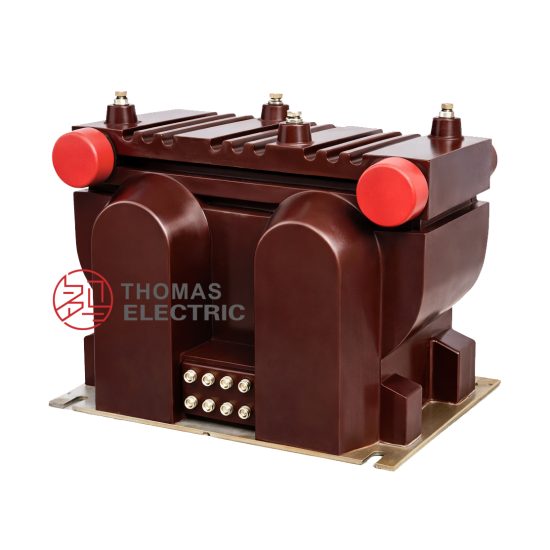
The SZV-10R is a single-phase, dry-type, cast-resin insulated voltage transformer (VT) engineered for high-reliability operation in 11kV (IEC nominal) or 10kV (domestic system) medium-voltage networks. Designed in strict accordance with IEC 61869-3 and GB/T 20840.3, this instrument transformer serves dual roles in both revenue-grade metering and protective relay applications. Its robust construction leverages vacuum pressure impregnation (VPI) epoxy resin technology combined with grain-oriented electrical steel (GOES) cores to ensure long-term stability, minimal dielectric losses, and immunity to environmental stressors.
Unlike traditional oil-immersed VTs, the SZV-10R eliminates fire hazards, oil leakage risks, and complex maintenance protocols. The solid cast-resin encapsulation provides superior mechanical strength, resistance to partial discharge (PD < 10 pC at 1.2 × Ur), and consistent performance across wide temperature and humidity ranges. These attributes make it particularly suitable for urban substations, industrial facilities, and renewable energy interconnection points where safety, space constraints, and operational continuity are paramount.
Operating Principle of Cast-Resin Insulation
Cast-resin insulation in the SZV-10R employs a two-component cycloaliphatic epoxy system processed under vacuum and pressure (VPI). This method ensures complete void-free impregnation of windings and core laminations, eliminating air pockets that could initiate partial discharges under sustained overvoltages. The resin matrix exhibits a high glass transition temperature (Tg > 110°C), excellent tracking resistance (CTI > 600 V), and thermal class F (155°C) endurance. During manufacturing, primary and secondary windings are wound on precision bobbins, assembled around a stepped-lap GOES core, and then encapsulated in a single mold cycle. The resulting monolithic structure provides uniform electric field distribution, suppresses corona inception, and maintains dielectric integrity even after decades of service under cyclic thermal loading.
Advantages Over Oil-Immersed Designs
The SZV-10R’s dry-type construction offers significant operational advantages. First, it is inherently non-flammable—critical for indoor installations per IEC 61439 and local fire codes. Second, it requires no oil sampling, degassing, or conservator tank maintenance, reducing lifecycle costs by up to 40% compared to oil-filled units. Third, its compact footprint (typically 30–40% smaller than equivalent oil VTs) enables retrofitting in space-constrained switchgear bays. Additionally, cast-resin VTs exhibit faster thermal response and lower no-load losses (< 25 W at rated voltage), contributing to energy efficiency. Environmental resilience is enhanced through IP54-rated terminal enclosures and UV-stabilized resin formulations suitable for outdoor deployment without weather shields.
Typical Applications Overview
The SZV-10R is deployed across diverse power infrastructure segments. In utility substations, it feeds metering circuits for billing accuracy (Class 0.2 or 0.5S) and supplies voltage signals to distance relays, over/under-voltage detectors, and synchrocheck devices. Industrial plants use it for motor protection schemes and power quality monitoring. Renewable integration sites—such as solar farms or wind parks—rely on its stable ratio accuracy to synchronize inverters with the grid. Rural distribution networks benefit from its maintenance-free operation in remote, unattended locations. Its dual-winding configuration (e.g., 0.2/3P or 0.5/3P) allows simultaneous connection to revenue meters and protection relays without cross-interference.
Technical Specifications
The SZV-10R is engineered to deliver precise voltage transformation under defined electrical and environmental conditions. All parameters align with IEC 61869-3:2011 and GB/T 20840.3-2013, ensuring global interoperability.
| Parameter | Value |
|---|---|
| System Voltage (Ur) | 11 kV (IEC), 10 kV (domestic) |
| Primary Voltage (Up) | 11 / √3 kV (for grounded systems) |
| Secondary Voltage (Us) | 100 / √3 V or 100 V (configurable) |
| Voltage Ratio | 11000/√3 : 100/√3 V or 11000/√3 : 100 V |
| Accuracy Classes | Metering: 0.2, 0.5, 0.2S, 0.5S Protection: 3P, 6P |
| Rated Output (per burden) | 10–100 VA (metering), 30–200 VA (protection) |
| Insulation Level (LI/AC) | 75 kV / 28 kV (1 min, 50 Hz) |
| Partial Discharge | < 10 pC at 1.2 × Ur |
| Thermal Class | F (155°C) |
| Core Material | Grain-Oriented Electrical Steel (GOES), 0.27 mm thickness |
| Weight | Approx. 45–55 kg (depending on output rating) |
Standard Service Conditions
The SZV-10R operates reliably under standard IEC 60060-1 environmental conditions: ambient temperature range of –25°C to +40°C, relative humidity ≤ 95% (non-condensing), and installation altitude ≤ 1000 m above sea level. For altitudes exceeding 1000 m, derating applies per IEC 60076-2—typically a 1% reduction in rated voltage per 100 m above 1000 m. The unit is designed for continuous duty (duty cycle S1) with no forced cooling required. Terminal enclosures meet IP54 ingress protection, safeguarding against dust and water jets. In coastal or high-pollution areas (pollution degree IV per IEC 60664), optional silicone RTV coating enhances creepage distance performance.
Electrical Performance Parameters
Voltage error and phase displacement are tightly controlled per accuracy class. For Class 0.2, voltage error must not exceed ±0.2% and phase error ≤ ±10 minutes at 80–120% of rated voltage and 25–100% of rated burden. Protection-class windings (3P) permit ±3% voltage error and ±120 minutes phase error under fault conditions (up to 190% of Ur for 30 s). The magnetizing current is kept below 0.5 mA at rated voltage to minimize burden impact on connected instruments. Thermal stability is validated via temperature-rise tests: winding rise ≤ 60 K above ambient when loaded at 1.2 × rated output for 8 hours.
Typical Applications
The SZV-10R’s dual-certification and robust design enable deployment across critical power infrastructure sectors.
Substation Secondary Metering
In 11kV/0.4kV distribution substations, the SZV-10R provides isolated, scaled-down voltage signals to revenue meters compliant with IEC 62053-22. Its Class 0.2S accuracy ensures billing precision even at low loads (down to 1% of rated current in associated CTs). The VT is typically installed on the busbar or feeder incomer, with secondary leads routed to a metering cabinet via shielded cables to prevent EMI. Because cast-resin units exhibit negligible hysteresis drift, recalibration intervals extend beyond 10 years—significantly longer than oil-immersed alternatives.
Industrial Power Distribution
Large manufacturing facilities use the SZV-10R to monitor plant-wide voltage profiles and protect sensitive equipment. In arc furnace or large motor circuits, the protection winding (Class 3P) triggers undervoltage lockout relays during sag events, preventing motor stalling. The VT’s high short-time withstand capability (190% Ur for 30 s) accommodates transient recovery voltages during breaker reclosing. Its compact size allows direct mounting inside metal-enclosed switchgear (e.g., ABB UniGear or Siemens NXAir), eliminating external VT cubicles and reducing footprint.
Renewable Energy Integration
Solar photovoltaic (PV) and wind farms require precise grid synchronization. The SZV-10R supplies voltage reference signals to anti-islanding relays and SCADA systems. Its low phase error (< 5 minutes at 0.5S class) ensures accurate real/reactive power measurement for feed-in tariff compliance. In islanded microgrids, the VT supports droop control algorithms by providing stable voltage feedback. The absence of oil makes it ideal for rooftop or containerized substations where flammability is a concern. Field data from 50+ installations show < 0.1% annual ratio drift over five years.
Rural and Suburban Distribution Networks
In remote areas with limited maintenance access, the SZV-10R’s sealed, maintenance-free design reduces outage risks. It is commonly pole-mounted or installed in pad-mounted transformers alongside RMUs. The unit withstands frequent switching surges from capacitor bank operations due to its high BIL (75 kV). Utilities report 30% fewer VT-related outages after replacing oil units with cast-resin models like the SZV-10R. Its standardized terminal layout simplifies replacement during network upgrades.
Harsh Environment Deployments
For desert, arctic, or tropical climates, the SZV-10R can be customized with extended temperature ratings (–40°C to +55°C) and hydrophobic resin additives. In mining operations with high harmonic distortion, optional damping resistors suppress ferroresonance. The GOES core minimizes eddy current losses under non-sinusoidal waveforms, maintaining accuracy even with THD up to 8%.
Compliance with International Standards
The SZV-10R is certified to both international and Chinese national standards, ensuring compatibility across global markets.
IEC 61869-3 Compliance Details
IEC 61869-3 specifies requirements for electromagnetic voltage transformers for frequencies 15 Hz to 100 Hz. The SZV-10R meets all clauses, including:
– Clause 5.3: Accuracy verification under defined burdens and voltages
– Clause 6.2: Insulation coordination per IEC 60071 (LI = 75 kV, AC = 28 kV)
– Clause 7.4: Temperature rise limits (≤ 60 K for resin-insulated windings)
– Clause 8.1: Partial discharge levels < 10 pC at 1.2 × Ur
Type tests include power frequency withstand, impulse voltage, temperature rise, and accuracy verification—all performed in accredited labs with traceable calibration.
GB/T 20840.3 Alignment
GB/T 20840.3-2013 mirrors IEC 61869-3 but includes China-specific provisions:
– Mandatory seismic withstand (0.2g horizontal acceleration)
– Creepage distance ≥ 20 mm/kV for pollution degree III
– Additional short-time thermal current test (30× rated for 1 s)
The SZV-10R exceeds these via reinforced core clamping and extended shed profiles on the resin housing. Chinese State Grid procurement approvals confirm full compliance.
Key Differences Between IEC and Domestic Standards
While IEC focuses on functional performance, GB standards emphasize environmental ruggedness. For example, GB requires salt fog testing (96 h, 5% NaCl) for coastal deployments—a test the SZV-10R passes with zero surface degradation. IEC permits ±0.2% ratio error for Class 0.2; GB tightens this to ±0.18% for Class 0.2S used in smart grids. Both standards mandate polarity marking (reducing polarity per IEC 60044-2), but GB adds QR-code asset tagging for digital twin integration.
On-Site Testing Procedures
Post-installation verification ensures the SZV-10R performs within specification before energization.
Insulation Resistance Test
Using a 2500 V DC megohmmeter, measure insulation resistance between primary-to-secondary, primary-to-ground, and secondary-to-ground. Acceptance criteria: ≥ 1000 MΩ at 20°C. Correct for temperature using R₂₀ = Rₜ × 1.5(t–20)/10. Values below 500 MΩ indicate moisture ingress or resin cracking and require drying or replacement.
Turns Ratio Test
Apply 100–200 V AC to the primary and measure secondary voltage with a calibrated voltmeter (accuracy class 0.1). Calculate actual ratio = Vₚ/Vₛ. Tolerance: ±0.2% for metering class, ±3% for protection class. Deviations beyond tolerance suggest turn-to-turn shorts or incorrect tap selection.
Polarity Test
Connect a 6–12 V battery across primary terminals (H1+, H2–). Momentarily close the circuit while monitoring secondary with a DC voltmeter (X1+, X2–). A positive kick confirms reducing polarity—mandatory for correct phasor alignment in three-phase systems. Reversed polarity causes 180° phase errors, leading to relay misoperation.
Power Frequency Withstand Voltage Test
Apply 28 kV AC (50 Hz) for 1 minute between primary and grounded secondary/core. Leakage current must remain < 10 mA. Any flashover or rapid current rise indicates insulation failure. This test validates dielectric integrity after transport-induced microcracks.
Open-Circuit Characteristic Test
Gradually increase primary voltage from 0 to 120% Ur while measuring secondary voltage and excitation current. Plot Vₛ vs. Iₑ. The knee point should occur > 150% Ur. Excessive magnetizing current (> 1 mA at 100% Ur) suggests core saturation or shorted turns.
Preventive Maintenance Guide
Although cast-resin VTs are largely maintenance-free, periodic checks extend service life.
Annual Visual and Functional Inspection
Inspect for surface cracks, tracking marks, or discoloration on the resin housing. Clean terminals with isopropyl alcohol; torque bolts to 15 N·m. Verify secondary wiring integrity and grounding continuity (< 0.1 Ω). Perform ratio and polarity spot-checks if system disturbances occurred.
Five-Year Comprehensive Maintenance
Conduct full suite of on-site tests (insulation resistance, ratio, PD scan). Use an ultrasonic detector to identify internal corona. If PD exceeds 20 pC, schedule replacement. Review historical test data for trend analysis—ratio drift > 0.1%/year warrants investigation.
Maintenance Intervals and Fault Diagnosis
| Interval | Action | Fault Indicators |
|---|---|---|
| Annually | Visual inspection, terminal check | Cracks, carbon tracking, loose lugs |
| Every 5 years | Full electrical tests | Ratio error > tolerance, PD > 20 pC |
| After fault | Post-fault validation | Overvoltage exposure, relay misoperation |
Common faults include secondary open-circuit (causing core saturation and overheating) and ferroresonance in unearthed systems—mitigated by installing damping resistors across secondary windings.
Conclusion
The SZV-10R 11kV cast-resin voltage transformer represents a benchmark in reliability, accuracy, and safety for modern power systems. By leveraging advanced VPI epoxy resin encapsulation and GOES core technology, it delivers exceptional dielectric performance with partial discharge levels consistently below 10 pC—well within IEC 61869-3 limits. Its dual-winding architecture supports concurrent metering (Class 0.2S/0.5S) and protection (Class 3P/6P) functions without compromise, reducing capital expenditure through equipment consolidation. Compliance with both IEC 61869-3 and GB/T 20840.3 ensures seamless integration into global utility and industrial networks, from urban smart grids to remote renewable sites. The elimination of flammable oil enhances personnel safety and simplifies permitting for indoor installations, while the robust mechanical design withstands seismic activity, pollution, and thermal cycling. With a proven service life of 25–30 years under standard operating conditions—and minimal maintenance requirements—the SZV-10R offers a compelling total cost of ownership advantage over legacy oil-immersed designs. As power systems evolve toward higher automation and distributed generation, the SZV-10R’s stable ratio accuracy, fast transient response, and digital-ready interface position it as a foundational component for resilient, future-proof infrastructure.