Article Content
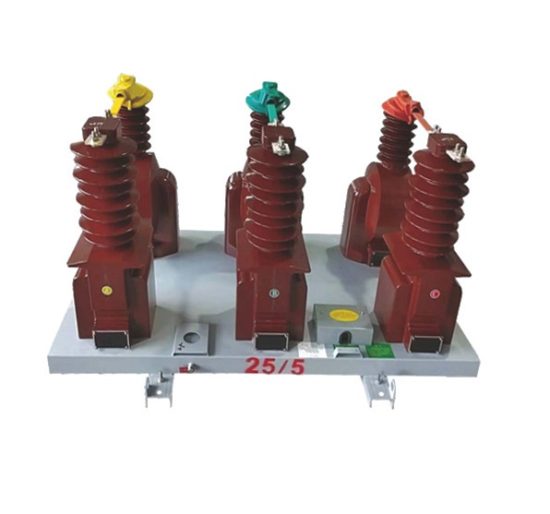
LSZY-35 33kV Cast-Resin Voltage Transformer for Substation Metering and Protection – IEC 61869-3 Certified
Introduction to the LSZY-35 Voltage Transformer
The LSZY-35 is a single-phase, indoor/outdoor-rated cast-resin voltage transformer (VT) engineered for reliable operation in 33kV (IEC) / 35kV (domestic) medium-voltage networks. Designed in strict compliance with IEC 61869-3 and GB/T 20840.3, this instrument transformer provides accurate voltage scaling for metering, protection, and monitoring systems. Its primary function is to step down high system voltages to standardized secondary values—typically 100 V or 110 V phase-to-phase—enabling safe interfacing with relays, revenue meters, fault recorders, and SCADA systems.
Operating Principle of Cast-Resin Insulation
Cast-resin insulation in the LSZY-35 employs vacuum pressure impregnation (VPI) technology using cycloaliphatic epoxy resin. This process fully encapsulates the primary and secondary windings along with the magnetic core, eliminating air voids that could lead to partial discharges under sustained overvoltage conditions. The resin matrix provides superior dielectric strength (≥20 kV/mm), excellent tracking resistance (CTI ≥600), and mechanical rigidity. Unlike oil-filled units, the solid insulation system is non-flammable, requires no maintenance for fluid levels, and exhibits minimal aging under thermal cycling between –25°C and +40°C ambient temperatures. The homogeneous structure also ensures consistent thermal conductivity, preventing hot spots during continuous operation at rated burden.
Advantages Over Oil-Immersed Designs
Compared to traditional oil-immersed VTs, the LSZY-35 offers significant operational and safety benefits. It eliminates fire hazards associated with mineral oil, making it suitable for urban substations, indoor switchgear rooms, and environmentally sensitive areas. The absence of oil also removes risks of leakage, contamination, and the need for periodic oil testing or replacement. Additionally, the compact footprint—enabled by higher insulation efficiency of epoxy resin—reduces space requirements by up to 30%. The LSZY-35’s design supports direct mounting on busbars or support insulators without additional foundations, streamlining installation. Its robust construction withstands seismic loads up to 0.5g and resists pollution in industrial atmospheres (creepage distance ≥25 mm/kV).
Typical Applications Overview
The LSZY-35 is deployed across diverse power infrastructure segments where precision, reliability, and long-term stability are paramount. In utility substations, it feeds revenue-class metering circuits and differential protection schemes. Industrial facilities use it for power quality monitoring and motor protection relaying in 35kV distribution networks. Renewable energy plants—particularly solar farms with 33kV collector systems—rely on its stable ratio accuracy under variable load conditions. Rural electrification projects benefit from its maintenance-free operation in remote locations with limited technical support. The transformer’s dual secondary windings (e.g., 0.5/3P accuracy classes) allow simultaneous connection to metering and protection devices without cross-interference.
Technical Specifications
The LSZY-35 is engineered to meet stringent performance criteria under both international and domestic standards. Below is a comprehensive specification table followed by environmental and operational parameters.
| Parameter | Value |
|---|---|
| System Voltage (IEC) | 33 kV |
| System Voltage (Domestic) | 35 kV |
| Primary Voltage (Rated) | 33,000 / √3 V (phase-to-ground) |
| Secondary Voltage(s) | 100 / √3 V or 110 / √3 V (standard); customizable |
| Voltage Ratio | 33,000/√3 : 100/√3 (i.e., 330:1) |
| Accuracy Classes | Metering: 0.2, 0.5; Protection: 3P, 6P |
| Rated Output (per winding) | 10–100 VA (configurable per class) |
| Insulation Level (LI/AC) | 170 kV / 70 kV (per IEC 60071-1) |
| Short-Time Withstand Current | Not applicable (VTs are not designed for fault current) |
| Core Material | Grain-Oriented Electrical Steel (GOES), 0.27 mm thickness |
| Insulation System | VPI cycloaliphatic epoxy resin, UL 94 V-0 rated |
| Ambient Temperature Range | –25°C to +40°C |
| Altitude Limit | ≤1,000 m (derating required above) |
| Relative Humidity | ≤95% (non-condensing) |
Standard Service Conditions
The LSZY-35 is rated for standard service conditions as defined in IEC 61869-3: ambient temperature between –25°C and +40°C, daily average not exceeding +35°C. Relative humidity may reach 95% provided condensation does not occur on the surface—a condition ensured by the hydrophobic nature of the epoxy resin. Installation altitude must not exceed 1,000 meters above sea level; for altitudes between 1,000 m and 3,000 m, the insulation withstand voltage must be derated by 1% per 100 m increment. The transformer is suitable for both indoor switchgear compartments and outdoor installations with IP23 ingress protection when mounted vertically with terminal covers secured.
Electrical Performance Parameters
Under rated burden and sinusoidal excitation at 50 Hz (or 60 Hz upon request), the LSZY-35 maintains ratio error within ±0.2% and phase displacement ≤±10 minutes for 0.2-class windings. For protection-class (3P) windings, composite error remains below 3% at 5% to 100% of rated voltage and up to 100% of rated burden. The magnetizing current at rated voltage is typically ≤0.5 mA, ensuring minimal loading on the primary system. Thermal stability is verified through temperature-rise tests: windings exhibit ≤55 K rise above ambient when operated continuously at 120% of rated voltage and 100% burden. Partial discharge levels are guaranteed ≤10 pC at 1.2 × Ur/√3 during factory testing.
Typical Applications
The LSZY-35 voltage transformer serves critical roles across modern power systems due to its accuracy, durability, and compliance with global standards.
Substation Secondary Metering
In transmission and distribution substations operating at 33/35kV, the LSZY-35 supplies scaled-down voltages to revenue metering panels. Its 0.2 or 0.5 accuracy class ensures billing precision within regulatory limits (e.g., ±0.5% total error). Dual secondary windings allow one output to feed tariff meters while another connects to SCADA RTUs for real-time voltage monitoring. The transformer’s low phase displacement (<5 arcminutes for 0.2 class) prevents reactive energy measurement errors. Installations often include fuse protection on the primary side (e.g., 0.5 A expulsion fuses) and short-circuit protection on secondaries via miniature circuit breakers rated at 6 A.
Industrial Power Distribution
Large manufacturing complexes with internal 35kV ring-main units utilize the LSZY-35 for motor protection and power factor correction control. Protection-class (3P) windings drive over/under-voltage relays (e.g., ANSI 27/59) with guaranteed operation at 80–120% of nominal voltage. The cast-resin body resists chemical vapors and dust common in cement, steel, and petrochemical plants. In arc-furnace facilities, the LSZY-35’s robust core design minimizes harmonic distortion effects, maintaining accuracy even with 5–10% THD on the primary side.
Renewable Energy Integration
Solar photovoltaic and wind farms frequently employ 33kV collector systems where the LSZY-35 interfaces with grid-tie inverters and synchrophasor measurement units (PMUs). Its fast transient response (<2 ms settling time after voltage step change) supports grid code compliance for ride-through events. The transformer’s low capacitance (<50 pF between windings) reduces resonance risks with cable capacitance in long feeder runs. In offshore wind substations, the LSZY-35’s salt-spray resistance (tested per IEC 60068-2-52) ensures decades of corrosion-free operation.
Rural and Suburban Distribution Networks
For rural electrification in emerging markets, the LSZY-35 provides a maintenance-free solution for pole-mounted or pad-mounted 35kV distribution transformers. Its lightweight design (≈85 kg) simplifies handling in areas with limited crane access. The unit supports remote telemetry via integrated Rogowski coil options (for hybrid CT/VT functions) and can be retrofitted with IoT sensors for predictive maintenance. In suburban ring networks, it enables automated sectionalizing by feeding voltage signals to recloser controllers that detect islanding conditions.
Compliance with International Standards
The LSZY-35 is certified to both global and Chinese national standards, ensuring interoperability and regulatory acceptance worldwide.
IEC 61869-3 Compliance Details
IEC 61869-3 governs the performance, testing, and marking of inductive voltage transformers. The LSZY-35 meets all mandatory clauses, including: ratio and phase error limits under defined burdens; temperature-rise limits (≤55 K for resin-insulated VTs); insulation coordination per IEC 60071; and partial discharge thresholds (≤10 pC at 1.2 × Ur/√3). Factory tests include power frequency withstand (70 kV rms for 1 min), impulse withstand (170 kV peak BIL), and accuracy verification at 20%, 50%, 80%, 100%, and 120% of rated voltage. Type tests—conducted every five years or after design changes—validate short-circuit behavior, seismic resilience, and environmental endurance.
GB/T 20840.3 Alignment
GB/T 20840.3 is the Chinese national adoption of IEC 61869-3 with minor modifications. Key differences include: slightly higher creepage distance requirements for polluted environments (≥31 mm/kV vs. IEC’s 25 mm/kV for medium pollution); mandatory lightning impulse test at 185 kV for 35kV class (vs. 170 kV in IEC); and stricter phase error tolerance for 0.2S class (±5 minutes vs. ±10). The LSZY-35 exceeds both sets of requirements, carrying dual certification marks from CEPREI (China) and TÜV SÜD (Europe). All nameplates display dual voltage ratings (33kV/35kV) and comply with GB/T 11022 for terminal markings.
Testing and Certification Requirements
Certification involves three tiers: routine tests (100% production), type tests (design validation), and special tests (customer-requested). Routine tests include visual inspection, winding resistance measurement (tolerance ±2%), ratio verification (±0.1% of nominal), and insulation resistance (>10,000 MΩ at 2,500 V DC). Type tests add thermal stability, short-circuit withstand (simulated via open-circuit test), and environmental chamber cycling (–40°C to +70°C, 10 cycles). Certificates issued include IEC 61869-3 Test Report, GB/T 20840.3 Conformity Certificate, and RoHS compliance documentation.
On-Site Testing Procedures
Post-installation verification ensures the LSZY-35 performs within specifications before energization.
Insulation Resistance Test
Using a 2,500 V DC megohmmeter, measure insulation resistance between primary winding and ground, secondary windings and ground, and inter-winding. Acceptance criterion: ≥10,000 MΩ at 20°C. Correct for temperature using RT = R20 × 1.5(20–T)/10. Low readings indicate moisture ingress or resin cracking—requiring drying or replacement. Perform before and after power frequency withstand test to detect insulation degradation.
Turns Ratio Test
Apply 100–200 V AC (50 Hz) to the primary and measure secondary voltage with a calibrated voltmeter (accuracy class 0.1). Calculate actual ratio and compare to nameplate. Tolerance: ±0.2% for metering class, ±0.5% for protection class. Use a dedicated ratio tester (e.g., Omicron CT Analyzer) for automated comparison. Deviations beyond tolerance suggest turn-to-turn shorts or incorrect tap selection.
Polarity Test
Verify reducing polarity per IEC 61869-3: connect a 6–12 V battery momentarily between primary terminals H1 (+) and H2 (–). Observe secondary voltage spike on a DC voltmeter connected to X1 (+) and X2 (–). A positive deflection confirms correct polarity. Incorrect polarity causes 180° phase reversal, leading to relay misoperation or metering errors. Document results with oscillogram if available.
Power Frequency Withstand Voltage Test
Apply 70 kV rms (50 Hz) between primary and grounded secondary/core for 1 minute. Ramp voltage at 1–2 kV/s. No flashover or disruptive discharge permitted. Secondary windings must be short-circuited and grounded during test. Use a calibrated HV test set with overcurrent trip (≤100 mA). This validates insulation integrity after transport and installation stresses.
Open-Circuit Characteristic Test
Gradually increase primary voltage from 0 to 150% of rated (49.5 kV) while measuring secondary voltage and excitation current. Plot Vsec vs. Imag. Knee point should exceed 120% of rated voltage. Excessive magnetizing current (>1 mA at 100% Ur) indicates core saturation or shorted turns. This test is critical for protection applications to ensure linear response during overvoltage events.
Preventive Maintenance Guide
Although cast-resin VTs require minimal maintenance, scheduled inspections extend service life beyond 30 years.
Periodic Inspection Protocol
Conduct annual visual and electrical checks: inspect for surface tracking, cracks, or discoloration on resin housing; verify terminal tightness (torque: 15 N·m for M10 bolts); clean with dry cloth or mild detergent (no solvents); measure insulation resistance. Check secondary wiring for loose connections or overheating signs. Record ambient temperature and compare to historical data—sudden increases may indicate internal faults. Replace silica gel breathers if fitted (though most LSZY-35 units are fully sealed).
Maintenance Intervals and Fault Diagnosis
Follow this schedule:
| Interval | Action |
|---|---|
| Annually | Visual inspection, IR thermography, insulation resistance |
| Every 5 Years | Full accuracy re-verification, partial discharge measurement (if equipment available) |
| After Fault Events | Ratio test, open-circuit test, withstand voltage test |
Common faults include: (1) Secondary open-circuit during operation—causes core saturation and overheating; always short secondaries before disconnecting loads. (2) Moisture ingress at terminal box—evidenced by fogging or reduced IR; seal with silicone compound. (3) External flashover—clean with isopropyl alcohol and inspect for damaged sheds.
Conclusion
The LSZY-35 33kV cast-resin voltage transformer represents a benchmark in medium-voltage instrumentation, combining IEC 61869-3 and GB/T 20840.3 compliance with field-proven reliability. Its VPI epoxy resin insulation eliminates fire risks and maintenance burdens inherent in oil-filled alternatives, while the GOES core ensures metrological stability across temperature and load variations. With dual secondary windings supporting concurrent metering (0.2/0.5 class) and protection (3P/6P class) functions, it delivers operational flexibility for utilities, industries, and renewable energy developers. Rigorous factory and on-site testing protocols guarantee performance within ±0.2% ratio error and ≤10 pC partial discharge—critical for revenue accuracy and protection dependability. Designed for 25–30 years of service under standard conditions, the LSZY-35 reduces lifecycle costs through zero fluid management, compact installation, and resilience in harsh environments. As power systems evolve toward digital substations and distributed generation, this transformer’s compatibility with modern relays and PMUs ensures continued relevance in next-generation grids.