Article Content
SEL-751 11kV Cast-Resin Current Transformer for Substation Metering and Protection – IEC 61869-2 Certified
Introduction to the SEL-751 Current Transformer
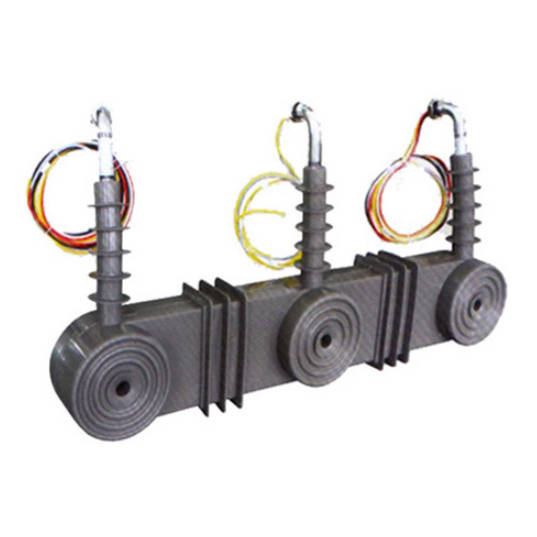
The SEL-751 is a high-accuracy, cast-resin insulated current transformer (CT) engineered for dual-purpose applications in electrical power systems: revenue-grade metering and protective relaying. Designed for operation on 11kV (IEC standard) or 10kV (domestic equivalent) networks, this device leverages advanced vacuum pressure impregnation (VPI) epoxy resin technology to ensure long-term dielectric integrity, mechanical robustness, and environmental resilience. Unlike traditional oil-immersed CTs, the SEL-751 eliminates fire hazards, oil leakage risks, and complex maintenance protocols, making it ideal for indoor substations, urban distribution networks, and space-constrained industrial facilities.
Operating Principle of Cast-Resin Insulation
Cast-resin insulation in the SEL-751 employs a thermosetting epoxy compound that fully encapsulates the primary conductor, secondary windings, and magnetic core under vacuum conditions. This VPI process removes air voids and moisture, resulting in a homogeneous, void-free dielectric barrier with a relative permittivity (εr) of approximately 4.2 and volume resistivity exceeding 1×10¹⁴ Ω·cm at 20°C. The resin matrix provides excellent tracking resistance (compliant with IEC 60587), withstands thermal cycling from –40°C to +120°C without cracking, and exhibits superior arc resistance (>180 seconds per ASTM D495). This construction ensures stable partial discharge levels below 10 pC at rated voltage, critical for long-term reliability in polluted or humid environments.
Advantages Over Oil-Immersed Designs
Compared to oil-filled CTs, the SEL-751 offers significant operational and safety benefits. It is inherently non-flammable (UL 94 V-0 rated), requires no oil sampling or gas monitoring, and has no risk of environmental contamination during service life or decommissioning. Its compact footprint—typically 30–40% smaller than equivalent oil units—facilitates retrofitting into legacy switchgear. Additionally, the absence of liquid insulation eliminates thermal stratification issues, enabling consistent performance across load cycles. The solid dielectric also provides higher short-circuit withstand capability; the SEL-751 is rated for 20 kA/1s thermal current and 50 kA peak dynamic current, meeting IEC 61869-2 Clause 6.4 requirements without derating.
Typical Applications Overview
The SEL-751 is deployed across medium-voltage infrastructure where accuracy, safety, and longevity are paramount. Primary use cases include 11kV/10kV substation incomers and feeders for energy billing (Class 0.2S or 0.5S), motor protection circuits requiring Class 5P or 10P accuracy, and renewable interconnection points (e.g., solar farms) needing harmonics-resistant cores. Its IP54-rated enclosure supports both indoor and outdoor installations when housed in weatherproof cabinets. The transformer’s low remanence (<10% of saturation flux density) ensures fast reset after fault clearance, critical for directional overcurrent and differential protection schemes using SEL-751 relays .
Q1: Can the SEL-751 be used on 10kV domestic systems?
Yes. While rated for 11kV (IEC Um = 12 kV), the SEL-751 is fully compatible with 10kV systems (GB Um = 11.5 kV). Its insulation level (28 kV/75 kV) exceeds both IEC and GB requirements for 10kV networks.
Q2: What is the maximum secondary burden for Class 0.2S?
For 5 A secondary, max burden is typically 10 VA; for 1 A, it is 2.5 VA. Exceeding this degrades accuracy—always verify burden calculation includes wiring resistance (Rwire = ρL/A, ρ = 0.0178 Ω·mm²/m for Cu).
Q3: Is the SEL-751 suitable for outdoor use?
Yes, when installed in an IP54-rated enclosure or RMU. The resin is UV-stabilized, but direct rain exposure should be avoided to prevent surface tracking in polluted areas.
Q4: How to handle multiple secondary windings?
Unused secondaries must be short-circuited and grounded. Never leave open—this risks dangerous overvoltages during primary faults.
Q5: What causes ratio error drift over time?
Core aging (minimal in GOES), temperature effects (compensated in design), or mechanical stress on terminals. Annual ratio tests detect drift >0.1%.
Q6: Can it measure DC components?
No. Like all AC CTs, it saturates under DC offset. For hybrid AC/DC systems, use a Hall-effect sensor instead.
Q7: What’s the lead time for custom ratios?
Standard ratios (e.g., 400/1, 600/5) ship in 2 weeks. Custom ratios (e.g., 1250/1) require 6–8 weeks for core recalibration and type-test documentation.