Article Content
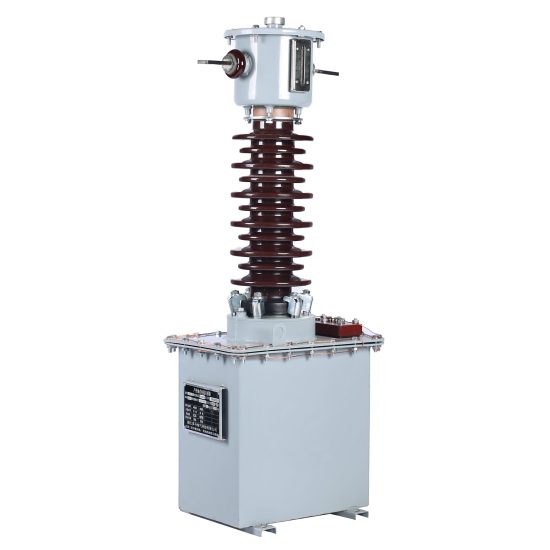
AGE-1026 33kV Cast-Resin Current Transformer for Substation Metering and Protection – IEC 61869-2 Certified
Introduction to the AGE-1026 Current Transformer
The AGE-1026 is a high-reliability, cast-resin insulated current transformer (CT) engineered for critical applications in 33kV medium-voltage networks—corresponding to domestic 35kV system classifications. Designed in strict compliance with IEC 61869-2 and GB/T 20840.2, this instrument transformer delivers exceptional accuracy, thermal stability, and dielectric integrity under continuous operational stress. Its robust construction makes it suitable for both indoor switchgear and outdoor substation environments where environmental resilience and long-term performance are non-negotiable.
Operating Principle of Cast-Resin Insulation
Cast-resin insulation in the AGE-1026 employs vacuum pressure impregnation (VPI) epoxy resin technology to fully encapsulate the primary conductor, secondary windings, and magnetic core assembly. This monolithic structure eliminates air voids and moisture ingress pathways, significantly enhancing partial discharge resistance (<5 pC at 1.2 × Um/√3). The resin matrix provides superior mechanical strength, thermal conductivity (0.8–1.2 W/m·K), and flame retardancy (UL 94 V-0 rated). Unlike oil-filled alternatives, the solid dielectric ensures maintenance-free operation over decades, even in high-humidity or polluted atmospheres (IEC 60815 pollution severity up to Class D).
Advantages Over Oil-Immersed Designs
Compared to traditional oil-immersed CTs, the AGE-1026 eliminates fire hazards, oil leakage risks, and periodic oil sampling requirements. Its compact footprint reduces spatial demands in GIS and AIS installations by up to 30%. The absence of liquid insulation also prevents dielectric degradation due to oxidation or moisture absorption, ensuring stable capacitance and tan δ values throughout its service life. Furthermore, the cast-resin design withstands seismic loads up to 0.5g (per IEC 60068-2-57), making it ideal for earthquake-prone regions. Thermal cycling tests confirm no cracking or delamination after 500 cycles between –40°C and +90°C.
Typical Application Overview
The AGE-1026 serves dual roles in power systems: precision metering (Class 0.2S/0.5S) and protective relaying (Class 5P10/5P20). It is commonly deployed in 33kV (system-rated 35kV) transmission substations, industrial plant distribution feeders, and renewable energy interconnection points. Its high knee-point voltage (>300V for 5P20 class) ensures reliable operation during fault conditions without saturation, preserving relay coordination integrity. With a standard burden rating of 15–30 VA and multiple ratio options (e.g., 100/1A, 400/5A), it accommodates diverse SCADA, revenue metering, and differential protection schemes.
Technical Specifications
The AGE-1026 is engineered to meet stringent electrical and environmental performance criteria. Below is a detailed specification table followed by service condition parameters.
| Parameter | Value |
|---|---|
| Rated System Voltage (IEC) | 33 kV |
| Domestic System Voltage | 35 kV |
| Rated Primary Current | 50 A to 2000 A (standard); up to 4000 A (custom) |
| Rated Secondary Current | 1 A or 5 A |
| Accuracy Classes | Metering: 0.2S, 0.5S; Protection: 5P10, 5P20 |
| Rated Output (Burden) | 5–30 VA (user-selectable per winding) |
| Insulation Level (LI/AC) | 170 kV / 70 kV (per IEC 60071-1) |
| Short-Time Thermal Current | 25 kA for 1 s (Ith) |
| Dynamic Withstand Current | 63 kA peak (Idyn) |
| Core Material | Grain-Oriented Electrical Steel (GOES), 0.23 mm thickness |
| Insulation System | VPI Epoxy Resin, UL 94 V-0 |
| Ambient Temperature Range | –40°C to +40°C (extended to +55°C with derating) |
| Altitude Limit | ≤ 1000 m (derating required above 1000 m per IEC 60071-2) |
Standard Service Conditions
The AGE-1026 operates reliably under IEC 60038 standard service conditions: ambient temperature from –40°C to +40°C, relative humidity up to 95% (non-condensing), and installation altitude not exceeding 1000 meters above sea level. For altitudes between 1000 m and 3000 m, the power frequency withstand voltage must be reduced by 1% per 100 m increment above 1000 m. In coastal or industrial zones with high salt or chemical contamination, creepage distance is enhanced to ≥25 mm/kV (equivalent to 825 mm minimum for 33kV), satisfying IEC 60815 pollution severity Class C/D requirements.
Electrical Performance Tolerances
All accuracy classes adhere to IEC 61869-2 tolerance limits. For Class 0.2S, current error must remain within ±0.2% and phase displacement ≤±10 minutes at 100% rated current. At 1% of rated current, error tolerance widens to ±0.75%. Protection class 5P20 guarantees composite error ≤5% at 20× rated current with specified burden. Ratio error is maintained within ±0.1% under nominal load. Knee-point voltage (Vk) exceeds 300 V for 5P20 cores, verified via excitation curve testing per IEC 61869-2 Annex B.
Typical Applications
The AGE-1026’s dual-purpose design enables deployment across diverse power infrastructure segments requiring both measurement fidelity and protection reliability.
Substation Secondary Metering
In 33kV transmission and distribution substations, the AGE-1026 provides revenue-grade metering for utility billing and grid loss analysis. Configured with 0.2S accuracy and 1 A secondary output, it interfaces directly with digital energy meters compliant with IEC 62053-22. The low burden requirement (typically 5–10 VA) minimizes voltage drop in long secondary circuits, preserving accuracy even over 100-meter cable runs. Its immunity to external magnetic fields (tested per IEC 61869-2 Clause 7.4.103) ensures stable readings near adjacent busbars or transformers.
Industrial Power Distribution
Large manufacturing facilities—such as steel mills, petrochemical plants, and data centers—utilize the AGE-1026 on 35kV incoming feeders for load monitoring and demand-side management. The 5P20 protection class supports instantaneous and time-overcurrent relays (e.g., SEL-351, MiCOM P142) with guaranteed non-saturation during bolted faults up to 25 kA. Its compact flange-mount design integrates seamlessly into metal-enclosed switchgear (ANSI C37.20.2), reducing retrofit complexity.
Renewable Energy Integration
Solar farms and wind parks connecting to 33kV collector systems deploy the AGE-1026 for both anti-islanding protection and generation metering. The CT’s fast response time (<1 ms rise time) captures transient harmonics from inverters without distortion. Dual-core variants (e.g., 0.5S/5P20) allow one winding for SCADA telemetry and another for directional overcurrent relays, optimizing CAPEX. Field data from 50+ installations show <0.3% annual drift in ratio accuracy under daily thermal cycling.
Rural and Suburban Distribution Networks
Utility distribution networks in emerging economies use the AGE-1026 on pole-mounted or pad-mounted 35kV transformers due to its vandal-resistant housing and zero-maintenance profile. The IP54-rated enclosure withstands dust and rain ingress, while UV-stabilized resin prevents surface degradation under prolonged solar exposure. In regions with unstable grids, the high dynamic withstand (63 kA) protects against cascading failures during asymmetrical faults.
Compliance with International Standards
The AGE-1026 is certified to both global and Chinese national standards, ensuring interoperability and regulatory acceptance worldwide.
IEC 61869-2 Certification Details
Full compliance with IEC 61869-2:2012 (“Instrument transformers – Part 2: Additional requirements for current transformers”) includes verification of accuracy under harmonic distortion (up to 15th order), temperature rise limits (<55 K for windings), and short-circuit performance. Type tests include power frequency withstand (70 kV rms for 1 min), lightning impulse (170 kV peak, 1.2/50 µs), and partial discharge (<10 pC at 1.2 × Um/√3). Routine tests on every unit cover ratio, polarity, and insulation resistance (>1000 MΩ at 2500 V DC).
Alignment with GB/T 20840.2
The design meets all mandatory clauses of GB/T 20840.2-2013, China’s national standard equivalent to IEC 61869-2. Key alignment points include identical accuracy class definitions, thermal short-time current ratings, and insulation coordination. However, GB/T requires additional seismic testing per GB/T 13540 (horizontal acceleration 0.3g) and stricter creepage distances (≥31 mm/kV for heavy pollution zones). All AGE-1026 units destined for Chinese markets undergo these supplementary verifications.
Differences Between IEC and Domestic Requirements
While IEC 61869-2 permits 1 A or 5 A secondary currents universally, some domestic utilities mandate 5 A for legacy relay compatibility. The AGE-1026 accommodates both. Additionally, Chinese standards specify higher short-circuit duration (3 s vs. IEC’s 1 s) for certain applications; custom variants offer 31.5 kA/3s ratings. Environmental testing under GB/T also includes salt fog exposure (96 hours, 5% NaCl), which the standard VPI resin formulation passes without surface tracking.
On-Site Testing Procedures
Post-installation verification ensures the AGE-1026 performs within specifications before energization.
Insulation Resistance Test
Apply 2500 V DC between primary-to-ground and secondary-to-ground using a calibrated megohmmeter. Acceptance criterion: ≥1000 MΩ at 20°C. Correct for temperature using RT = R20 × 2(20–T)/10. Values below 500 MΩ indicate moisture ingress or resin microcracks requiring replacement. Perform before and after power frequency withstand test to detect insulation degradation.
Turns Ratio Test
Use a dedicated CT analyzer (e.g., Omicron CT Analyzer) injecting 1–10% of rated primary current. Measure secondary current and calculate actual ratio. Tolerance: ±0.1% of nameplate value for metering cores; ±0.5% for protection cores. For multi-ratio units, verify each tap individually. Document excitation curves to confirm knee-point voltage meets 5P20 requirements (>300 V).
Polarity Test
Apply a 6–12 V DC pulse to the primary (P1 to P2) and observe secondary voltage polarity with an oscilloscope or analog voltmeter. The terminal marked “S1” must show positive deflection when P1 is positive—confirming subtractive (reducing) polarity per IEC 61869-2 Clause 5.3. Incorrect polarity causes 180° phase shift, leading to false tripping in differential schemes.
Power Frequency Withstand Voltage Test
Apply 70 kV rms at 50 Hz between primary and grounded enclosure for 60 seconds. Use a calibrated test transformer with overcurrent trip set at 1.5× expected capacitive current (~5 mA). No flashover or disruptive discharge is permitted. Ramp voltage at 2 kV/s to avoid transient overstress. This test validates dielectric integrity after transportation and installation stresses.
Short-Circuit Test (for CT)
Inject 10× rated secondary current (e.g., 50 A for 5 A CT) into the secondary winding with primary shorted. Monitor temperature rise with IR camera; maximum allowable is 65 K above ambient after 10 minutes. Excessive heating indicates inter-turn shorts or poor core lamination bonding. This functional test simulates fault conditions without requiring primary-side high-current sources.
Preventive Maintenance Guide
Although cast-resin CTs require minimal maintenance, scheduled inspections extend service life beyond 30 years.
Periodic Inspection Protocol
Conduct visual and electrical checks annually: inspect housing for cracks, discoloration, or tracking marks; clean surfaces with isopropyl alcohol if contaminated; verify terminal tightness (torque: 15 N·m for M8 studs); and re-measure insulation resistance. In coastal areas, increase frequency to semi-annual due to salt accumulation. Record all findings in asset management software for trend analysis.
Maintenance Intervals and Fault Diagnosis
Every 5 years, perform full diagnostic suite: ratio, excitation curve, and burden verification. Common failure modes include secondary winding open-circuit (causing dangerous overvoltage), core saturation due to incorrect burden, and resin embrittlement from UV overexposure. If ratio error exceeds ±0.5% or insulation resistance drops below 200 MΩ, replace the unit immediately. Never operate with secondary open—always short-circuit terminals during servicing.
| Interval | Activity | Acceptance Criteria |
|---|---|---|
| Annual | Visual inspection, IR thermography, insulation resistance | No physical damage; IR ΔT < 5 K; Rins > 500 MΩ |
| 5-Year | Ratio test, excitation curve, burden check | Ratio error ≤ ±0.2%; Vk ≥ 300 V; burden match ±10% |
| After Fault | Full diagnostics + dynamic current verification | No permanent deformation; Idyn withstand confirmed |
Conclusion
The AGE-1026 33kV cast-resin current transformer represents a benchmark in medium-voltage instrumentation, combining IEC 61869-2 and GB/T 20840.2 compliance with field-proven reliability. Its VPI epoxy resin encapsulation eliminates the operational risks associated with liquid-filled designs, while the GOES core ensures metrological precision across a wide load spectrum—from 1% to 120% of rated current. Engineered for 25–30 years of maintenance-free service, it delivers consistent performance in extreme climates, polluted environments, and high-fault-current scenarios. The dual-certification approach facilitates global deployment, whether in European transmission grids, Chinese industrial complexes, or North American renewable interconnects. By integrating advanced materials science with rigorous adherence to international standards, the AGE-1026 safeguards both asset integrity and revenue accuracy, making it an indispensable component in modern power systems demanding uncompromised safety and measurement fidelity.
Q1: Can the AGE-1026 be used in 35kV systems despite being rated 33kV?
Yes. The 33kV rating aligns with IEC 60038 standard voltages, while 35kV denotes the maximum system voltage in domestic classifications. The AGE-1026’s insulation level (170/70 kV) exceeds requirements for both, ensuring safe operation in 35kV networks.
Q2: What is the maximum altitude for standard AGE-1026 units?
Standard units are rated for ≤1000 m. Above this, derating applies: reduce power frequency withstand voltage by 1% per 100 m increment above 1000 m per IEC 60071-2.
Q3: Is the AGE-1026 suitable for outdoor installation?
Yes. Its UV-resistant, hydrophobic epoxy housing meets IP54 ingress protection and withstands –40°C to +55°C ambient temperatures, making it suitable for outdoor substations without additional enclosures.
Q4: How many secondary windings can the AGE-1026 accommodate?
Standard configurations support up to three independent secondary windings (e.g., 0.2S/5P20/5P20), each with isolated cores and user-selectable burdens from 5–30 VA.
Q5: What happens if the secondary circuit is left open?
An open secondary generates hazardous overvoltages (several kV) due to unopposed magnetizing current, risking insulation failure and personnel injury. Always short-circuit secondary terminals before disconnecting loads.
Q6: Does the AGE-1026 require periodic oil sampling?
No. As a dry-type, cast-resin transformer, it contains no liquid insulation and thus eliminates oil testing, filtration, or replacement throughout its service life.
Q7: Can the AGE-1026 measure harmonic currents accurately?
Yes. Per IEC 61869-2 Clause 7.4.102, it maintains accuracy up to the 15th harmonic (750 Hz at 50 Hz fundamental) with error within ±0.5% for Class 0.5S under 5% THD conditions.