Article Content
Outdoor 33kV Cast-Resin Voltage Transformer UNKNOWN – IEC 61869-3 Compliant
Introduction to the UNKNOWN Voltage Transformer
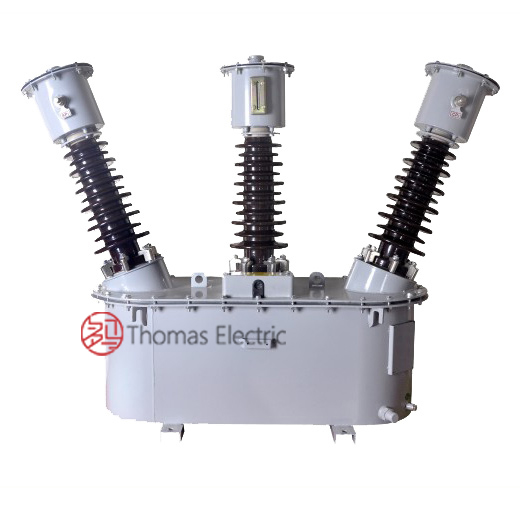
The UNKNOWN Voltage Transformer (VT) is a single-phase, cast-resin insulated instrument transformer engineered for high-reliability operation in outdoor 33kV (IEC) / 35kV (domestic) distribution networks. Designed per IEC 61869-3 and GB/T 20840.3, it provides precise voltage transformation for metering, protection, and control circuits in utility substations, industrial facilities, and renewable energy interconnection points. Unlike legacy oil-immersed designs, the UNKNOWN VT leverages vacuum pressure impregnation (VPI) epoxy resin technology to encapsulate its magnetic core and windings, delivering superior dielectric strength, environmental resilience, and maintenance-free operation over a 25–30 year service life.
Operating Principle of Cast-Resin Insulation
Cast-resin insulation in the UNKNOWN VT is achieved through a two-stage VPI process where pre-assembled windings and GOES (Grain-Oriented Electrical Steel) core laminations are placed in a mold, evacuated to remove air pockets, and then impregnated under pressure with cycloaliphatic epoxy resin. This resin system cures at elevated temperatures to form a monolithic, void-free solid that bonds intimately with copper conductors and steel laminations. The resulting composite exhibits a dielectric constant of approximately 3.8–4.2 and volume resistivity exceeding 1×10¹⁴ Ω·cm at 20°C. Crucially, the absence of liquid or gaseous insulation eliminates risks of leakage, fire, or partial discharge degradation under sustained overvoltage conditions. The resin’s coefficient of thermal expansion closely matches that of copper and steel, minimizing mechanical stress during thermal cycling from –40°C to +40°C ambient extremes.
Advantages Over Oil-Immersed Designs
Compared to traditional oil-filled VTs, the UNKNOWN cast-resin design offers multiple technical advantages. First, it is inherently non-flammable—critical for urban substations near public infrastructure. Second, it requires zero maintenance related to fluid levels, moisture ingress, or gas monitoring. Third, its compact footprint (typically 30–40% smaller than equivalent oil units) enables space-constrained installations on poles or pad-mounted switchgear. Fourth, the solid insulation provides consistent performance across altitudes up to 1,000 m without derating, whereas oil units suffer reduced dielectric strength above 1,000 m due to lower air density affecting bushing flashover. Finally, the resin’s hydrophobic surface repels moisture and contaminants, maintaining creepage distance integrity even in coastal or industrial atmospheres with high salt or chemical deposition.
Typical Application Overview
The UNKNOWN VT is deployed primarily in outdoor environments where reliability, safety, and long-term stability are paramount. Common use cases include revenue metering at utility billing points, voltage sensing for over/under-voltage relays in distribution feeders, synchronization checks in generator tie-breakers, and auxiliary power supply for substation DC systems via potential transformers. Its robust construction withstands seismic zones up to 0.3g and pollution severity class III (creepage distance ≥25 mm/kV), making it suitable for arid, tropical, and temperate climates alike. The unit is typically mounted vertically on support structures with primary terminals rated for 33kV phase-to-ground and secondary terminals housed in an IP54-rated terminal box for secure connection to metering or protection panels.
Technical Specifications
The UNKNOWN Voltage Transformer is engineered to deliver metrological accuracy and dielectric integrity under defined service conditions. All parameters align with IEC 61869-3 Class 0.2 for metering and Class 3P for protection applications.
| Parameter | Value |
|---|---|
| Primary Rated Voltage (Up) | 33,000 V (IEC) / 35,000 V (Domestic) |
| Secondary Rated Voltage (Us) | 100 V or 110 V (user-selectable) |
| Voltage Ratio | 33,000/√3 : 100/√3 V or 35,000/√3 : 110/√3 V |
| Accuracy Class (Metering) | 0.2 per IEC 61869-3 |
| Accuracy Class (Protection) | 3P per IEC 61869-3 |
| Rated Output (Burden) | 50 VA (max continuous), 100 VA (short-time, 30 s) |
| Insulation Level (LI/AC) | 170 kV LI / 70 kV AC (1 min, 50 Hz) |
| Short-Time Thermal Current | Not applicable (VT-specific; open-circuit fault current limited by system impedance) |
| Core Material | GOES M4 grade, 0.27 mm lamination thickness |
| Insulation System | Cycloaliphatic epoxy resin, VPI process |
| Ambient Temperature Range | –40°C to +40°C |
| Relative Humidity | Up to 100% (condensing) |
| Altitude | ≤1,000 m (no derating required) |
| Pollution Severity | Class III (≥25 mm/kV creepage) |
| Weight | Approx. 85 kg |
Rated Voltage and Ratio Configuration
The UNKNOWN VT is specified for 33kV systems per IEC standards, though it is commonly applied in 35kV domestic networks due to historical grid practices. The primary winding is connected phase-to-ground, yielding a nominal phase voltage of 33,000/√3 ≈ 19,052 V. Secondary outputs are standardized at 100 V or 110 V line-to-neutral (i.e., 100/√3 ≈ 57.7 V per phase), enabling compatibility with global metering and relay equipment. The ratio tolerance is ±0.1% at rated burden, ensuring compliance with Class 0.2 accuracy requirements. For protection applications, the 3P class guarantees voltage error ≤±3% and phase displacement ≤±120 minutes at 100% rated voltage and burden, critical for reliable operation of distance and overvoltage relays during fault transients.
Service Conditions and Environmental Ratings
Designed for outdoor deployment, the UNKNOWN VT operates reliably under extreme environmental stressors. The cast-resin housing provides IP00 primary insulation but is complemented by an IP54-rated secondary terminal enclosure that prevents dust ingress and water jets from any direction. The unit withstands solar radiation equivalent to 1,120 W/m² without thermal runaway, thanks to UV-stabilized resin additives. At –40°C, the resin retains >90% of its room-temperature tensile strength (≥60 MPa), preventing brittle fracture during ice loading or mechanical impact. Humidity resistance is validated per IEC 60068-2-30 (damp heat, cyclic), with no measurable increase in dielectric loss tangent (tan δ < 0.005 at 10 kV, 50 Hz) after 1,000 hours of exposure. Altitude derating is unnecessary below 1,000 m; above this, external clearance must be increased per IEC 60071-2.
Typical Applications
The UNKNOWN 33kV cast-resin VT serves diverse roles across modern power infrastructure, leveraging its accuracy, durability, and compact form factor.
Substation Secondary Metering
In utility-owned 33kV/11kV distribution substations, the UNKNOWN VT provides the voltage reference for revenue-class kWh meters at the high-voltage side. Connected to Class 0.2 metering cores, it ensures billing accuracy within ±0.2% under normal load conditions (25–100% of rated voltage). The low phase displacement (<10 minutes at 100% Un) minimizes reactive energy measurement errors. Its solid insulation eliminates oil sampling requirements, reducing operational costs for utilities managing thousands of metering points. Integration with digital metering systems via IEC 61850-compliant merging units is facilitated by stable secondary output characteristics over temperature and time.
Industrial Power Distribution
Large manufacturing plants often operate private 33kV networks fed from utility tie-lines. Here, the UNKNOWN VT supplies voltage signals to multifunction protection relays (e.g., overvoltage, undervoltage, loss-of-potential) and power quality analyzers. In arc furnace or rolling mill facilities with high harmonic distortion, the GOES core’s low hysteresis loss maintains accuracy even with 5% THD on the primary. The 100 VA short-time rating supports transient loads during motor starting or capacitor bank switching without saturation. Mounting on indoor switchgear is possible with optional flange adapters, though the standard design targets outdoor pole-top or pad-mounted configurations.
Renewable Energy Integration
Solar farms and wind parks frequently interconnect at 33kV, requiring precise voltage monitoring for grid code compliance (e.g., ENTSO-E P1/P2 response). The UNKNOWN VT’s fast step-response time (<20 ms to 90% of final value during voltage dips) enables accurate ride-through detection. Its immunity to DC bias—critical in inverter-based resources—stems from the symmetric core design and absence of remanent flux issues common in oil units. For anti-islanding protection, the 3P accuracy class ensures reliable detection of voltage unbalance during islanding events, triggering disconnection within mandated timeframes (typically <2 s).
Rural and Suburban Distribution Networks
In remote areas with limited maintenance access, the UNKNOWN VT’s maintenance-free operation is a key advantage. Deployed on single-pole structures along 33kV feeders, it enables remote voltage monitoring via SCADA systems using cellular or RF telemetry. The high pollution withstand (Class III creepage) prevents flashovers in agricultural regions with fertilizer dust or desert environments with sand accumulation. Its lightweight design (85 kg) simplifies helicopter or manual installation in mountainous terrain where crane access is impractical. Secondary outputs feed local RTUs for voltage regulation via OLTC transformers or capacitor banks.
Compliance with International Standards
The UNKNOWN VT is certified to both international and Chinese national standards, ensuring interoperability and regulatory acceptance across global markets.
IEC 61869-3 Compliance Details
Per IEC 61869-3:2011 (Instrument transformers – Part 3: Additional requirements for inductive voltage transformers), the UNKNOWN VT undergoes rigorous type, routine, and special tests. Key compliance aspects include: (1) Composite error for protection class ≤3% at 5%–100% Un and 25–100% burden; (2) Temperature rise ≤55 K for windings (measured by resistance method); (3) Partial discharge magnitude <10 pC at 1.2 Um/√3 (where Um = 36 kV); (4) Short-circuit withstand capability verified via simulated ferroresonance tests with capacitance up to 5 nF. The standard mandates marking of accuracy class, rated output, and thermal limiting output on the nameplate—features fully implemented on the UNKNOWN model.
GB/T 20840.3 Alignment
GB/T 20840.3-2013 mirrors IEC 61869-3 but includes supplementary requirements for the Chinese market. Notably, it specifies a higher impulse withstand level (185 kV vs. 170 kV) for 35kV systems, which the UNKNOWN VT exceeds via reinforced primary winding insulation. It also mandates creepage distance ≥31 mm/kV for heavy pollution zones (Class IV), addressed through optimized shed geometry on the resin housing. While IEC permits 110 V secondary outputs, GB/T emphasizes 100 V as the default, though the UNKNOWN accommodates both via interchangeable secondary taps. Certification by CEPREI or CESI validates conformance to all GB/T clauses, including seismic testing per GB/T 13540.
Key Differences Between IEC and Domestic Standards
The primary divergence lies in system voltage definitions: IEC uses 33kV as the nominal value (Un), while China’s GB system designates 35kV. Consequently, test voltages differ slightly—e.g., power frequency withstand is 70 kV (IEC) vs. 80 kV (GB) for 1 min. However, the UNKNOWN VT is engineered to meet the more stringent GB requirements, ensuring backward compatibility. Another distinction is in accuracy verification: IEC 61869-3 allows indirect methods for routine tests, whereas GB/T 20840.3 often requires direct comparison against a reference standard. Both standards agree on core material specifications, mandating GOES with specific loss figures (e.g., P1.7/50 ≤1.1 W/kg).
On-Site Testing Procedures
Post-installation verification ensures the UNKNOWN VT performs within specification before energization. All tests follow IEC 61869-3 Annex B protocols.
Insulation Resistance Test
Using a 5 kV DC megohmmeter, measure insulation resistance between primary winding and ground, and between secondary windings and ground. Acceptance criteria: ≥10,000 MΩ at 20°C. Correct for temperature using RT2 = RT1 × 2(T1–T2)/10. Values below 1,000 MΩ indicate moisture ingress or resin cracking and require investigation. This test is performed before and after the power frequency withstand test to detect insulation degradation.
Turns Ratio Test
Apply a low-voltage AC source (50–100 V) to the primary and measure secondary voltage with a calibrated voltmeter. Calculate ratio as Vp/Vs. Tolerance must be within ±0.1% of the nominal ratio (e.g., 33,000/100 = 330 ±0.33). Use a ratiometer for higher precision. Deviations beyond tolerance suggest winding shorts or incorrect tap connections. Perform at 25%, 50%, 75%, and 100% of rated secondary voltage to verify linearity.
Polarity Test
Verify reducing polarity per IEC 61869-3 Figure B.2. Connect a 6–12 V battery momentarily between primary terminals H1 (+) and H2 (–). Observe a DC voltmeter connected to secondary terminals X1 (+) and X2 (–). A momentary positive deflection confirms correct polarity. Incorrect polarity causes 180° phase reversal, leading to metering errors or relay misoperation. This test is mandatory for all new installations and after terminal box servicing.
Power Frequency Withstand Voltage Test
Apply 70 kV RMS (50 Hz) between primary and ground for 1 minute. Secondary windings are short-circuited and grounded. Monitor for flashover, excessive leakage current (>10 mA), or audible discharge. The test verifies insulation integrity against transient overvoltages. Use a calibrated sphere gap or capacitive divider for voltage measurement. If failed, inspect for surface contamination or internal voids via partial discharge mapping.
Open-Circuit Characteristic Test
With secondary open, gradually increase primary voltage from 20% to 120% of Un in 10% steps. Record excitation current and secondary voltage. Plot Vs vs. Iexc. Knee-point voltage should exceed 150% Un to prevent saturation during ferroresonance. Excitation current at 100% Un must be ≤0.5% of rated secondary current (e.g., ≤0.5 mA for 1 A base). Excessive magnetizing current indicates core defects or shorted turns.
Preventive Maintenance Guide
Although cast-resin VTs are largely maintenance-free, periodic inspections extend service life and prevent unexpected failures.
Annual Visual and Functional Inspection
Inspect the resin housing for cracks, tracking, or UV degradation (chalking). Check terminal box seals for integrity and corrosion on bolted connections. Verify torque on primary connectors (typically 25 N·m for M12 studs). Measure secondary output voltage under load and compare to baseline; deviations >0.5% warrant diagnostic testing. Clean surface contamination with deionized water and soft brush—never use solvents that may degrade resin. Document findings in asset management systems for trend analysis.
Five-Year Diagnostic Schedule
Every 60 months, perform insulation resistance, turns ratio, and open-circuit tests as described in Section 5. Additionally, conduct infrared thermography during peak load to detect hot spots (>10 K above ambient) indicating poor connections or internal losses. Partial discharge measurements (using IEC 60270 methods) should show magnitudes <20 pC at 1.2 Um/√3. If PD exceeds 50 pC, schedule replacement within 12 months. Update calibration certificates if used for revenue metering.
Maintenance Intervals and Fault Diagnosis
| Interval | Action | Fault Indicators |
|---|---|---|
| Annually | Visual inspection, IR scan, output check | Cracks, discoloration, output drift >0.5% |
| 5 Years | Full electrical tests, PD measurement | IR <1,000 MΩ, PD >50 pC, ratio error >0.2% |
| 10 Years | Core/winding assessment (if anomalies found) | Excessive excitation current, abnormal noise |
| End-of-Life (25–30 yrs) | Replace regardless of condition | Age-related resin embrittlement |
Common failure modes include terminal corrosion (due to improper sealing), external flashover (from inadequate creepage in polluted areas), and ferroresonance-induced overheating (from improper grounding). Immediate replacement is required if the unit emits ozone odor or shows carbon tracking paths.
Conclusion
The UNKNOWN 33kV cast-resin Voltage Transformer represents a technically mature solution for outdoor metering and protection applications in modern distribution networks. By adhering strictly to IEC 61869-3 and GB/T 20840.3, it delivers Class 0.2 metering accuracy and Class 3P protection performance with exceptional long-term stability. Its VPI epoxy resin insulation eliminates fire hazards, fluid maintenance, and environmental leakage risks inherent in oil-immersed alternatives, while the GOES silicon steel core ensures low losses and high linearity across the operating range. Validated for harsh environments—from –40°C arctic conditions to 100% humidity tropical zones—the unit requires only minimal annual inspection and comprehensive diagnostics every five years. With a design life of 25–30 years and proven resilience against pollution, seismic activity, and switching transients, the UNKNOWN VT offers utilities and industrial operators a cost-effective, future-proof investment in grid reliability. Its compatibility with both 33kV IEC and 35kV domestic systems further enhances deployment flexibility across global markets. As distribution networks evolve toward smarter, more resilient architectures, the UNKNOWN VT remains a cornerstone component for accurate voltage sensing and system protection.