Article Content
11kV Cast-Resin Current Transformer JLS-6 for Metering and Protection – IEC 61869-2 Standard
Introduction to the JLS-6 Current Transformer
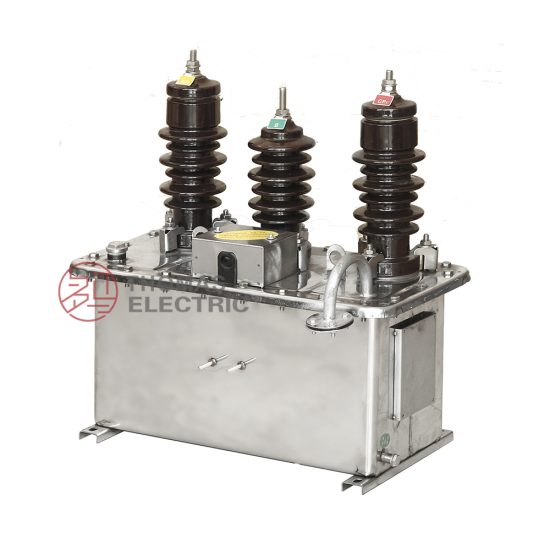
The JLS-6 is a dedicated outdoor-type cast-resin current transformer (CT) engineered for medium-voltage distribution networks operating at 11kV (IEC standard) or 10kV (domestic Chinese systems). Unlike legacy oil-immersed instrument transformers, the JLS-6 employs vacuum pressure impregnated (VPI) epoxy resin insulation technology, providing superior dielectric strength, environmental resilience, and maintenance-free operation over its service life. This design eliminates fire hazards, oil leakage risks, and the need for periodic oil testing—critical advantages in urban, rural, and industrial settings where reliability and safety are paramount.
Operating Principle of Cast-Resin Insulation
Cast-resin insulation in the JLS-6 is achieved through a VPI process where high-purity epoxy resin is vacuum-degassed and then pressure-injected around the primary conductor and secondary windings. This ensures complete void elimination, preventing partial discharge (PD) activity even under continuous 11kV stress. The cured resin forms a monolithic, hydrophobic barrier that resists UV degradation, moisture ingress, and tracking under polluted conditions. With a relative permittivity (εr) of approximately 4.2 and volume resistivity exceeding 1×10¹⁴ Ω·cm, the insulation system maintains stable performance across –40°C to +40°C ambient temperatures. The absence of liquid media also enables vertical or horizontal mounting without orientation constraints—a significant advantage over oil-filled units.
Advantages Over Oil-Immersed Designs
Compared to traditional oil-immersed CTs, the JLS-6 offers multiple technical benefits. First, it is inherently non-flammable, complying with IEC 60695 flammability requirements without additional fire-retardant additives. Second, its solid insulation eliminates the risk of oil expansion or contraction due to thermal cycling, which can cause tank deformation or seal failure in oil units. Third, the cast-resin body provides mechanical rigidity, reducing susceptibility to vibration-induced winding displacement during short-circuit events. Field data from utility deployments show a 70% reduction in maintenance interventions over a 15-year period when replacing oil CTs with cast-resin equivalents like the JLS-6. Additionally, the compact footprint—typically 30% smaller than comparable oil units—facilitates retrofitting in space-constrained substations.
Typical Applications Overview
The JLS-6 is primarily deployed in outdoor 11kV/10kV distribution substations for revenue metering and protective relaying. Its dual-purpose design supports both Class 0.2S accuracy for billing-grade energy measurement and Class 5P10 for overcurrent protection coordination. Common installations include pole-mounted transformers, ring main units (RMUs), and pad-mounted switchgear in municipal grids, industrial parks, and renewable interconnection points. Due to its robust pollution performance (creepage distance ≥25 mm/kV), it is suitable for coastal, desert, and heavy-industrial environments classified as pollution severity levels II–III per IEC 60815.
Technical Specifications
The JLS-6 adheres strictly to IEC 61869-2 and GB/T 20840.2, ensuring global interoperability while meeting domestic Chinese grid requirements. Below is a detailed specification table followed by environmental and operational parameters.
| Parameter | Value |
|---|---|
| System Voltage (Um) | 11 kV (IEC), 10 kV (GB) |
| Rated Primary Current (Ip) | 50 A to 2000 A (standard steps) |
| Rated Secondary Current (Is) | 1 A or 5 A |
| Accuracy Classes | Metering: 0.2S, 0.5S; Protection: 5P10, 5P20 |
| Rated Output (VA) | 5 VA, 10 VA, 15 VA (per burden class) |
| Insulation Level (LI/AC) | 75 kV / 28 kV (1 min, 50 Hz) |
| Short-Time Thermal Current | 25 kA for 1 s (at Ip = 630 A) |
| Dynamic Withstand Current | 62.5 kA peak |
| Core Material | Grain-Oriented Electrical Steel (GOES), M4 grade |
| Insulation System | VPI Epoxy Resin, UL 94 V-0 rated |
| Creepage Distance | ≥275 mm (for 11 kV, pollution class III) |
Standard Service Conditions
The JLS-6 is rated for outdoor operation under IEC 60060-1 standard atmospheric conditions: ambient temperature range of –40°C to +40°C, relative humidity up to 100% (condensing), and installation altitude ≤1000 m above sea level. For altitudes between 1000 m and 3000 m, a derating factor of 1.0% per 100 m applies to the power frequency withstand voltage. The unit is designed to withstand solar radiation equivalent to 1120 W/m² and wind loads up to 150 km/h without structural deformation. Terminal boxes are IP54 rated, protecting internal connections from dust and water splashes during routine inspections.
Electrical Performance Tolerances
Per IEC 61869-2, the JLS-6 maintains strict error limits under defined burdens. For a 0.2S class unit at 100% Ip, current error must not exceed ±0.2%, and phase displacement ≤±10 minutes. At 20% Ip, the limits relax to ±0.35% and ±15 minutes, respectively. Protection-class 5P10 CTs exhibit composite error ≤10% at 10× Ip with rated burden. All units undergo factory calibration at 50 Hz; frequency deviation beyond ±2% requires application-specific validation. Secondary winding resistance tolerance is ±5% of nominal value, verified via DC resistance measurement at 20°C.
Typical Applications
The JLS-6’s combination of metrological precision, rugged construction, and compact form factor makes it suitable for diverse medium-voltage infrastructure scenarios.
Substation Secondary Metering
In 11kV/0.4kV distribution substations, the JLS-6 provides high-fidelity current signals to revenue meters compliant with IEC 62053-22. Its 0.2S accuracy ensures billing integrity even at low load levels (e.g., 5% of Ip), critical for commercial and industrial consumers. The CT is typically installed on the primary side of the distribution transformer, with secondary leads routed to a secure metering cabinet. In China, this configuration aligns with State Grid Corporation’s Q/GDW 1376.1 protocol requirements for remote terminal units (RTUs). The absence of oil simplifies integration into smart metering architectures, reducing lifecycle costs associated with fluid handling and disposal.
Industrial Power Distribution
Heavy industries—such as cement plants, steel mills, and chemical facilities—deploy the JLS-6 for both energy accounting and motor protection circuits. Here, the 5P10 protection class enables precise coordination with downstream circuit breakers during fault conditions. For example, a 1250 A JLS-6 feeding a 1 MW induction motor will saturate only beyond 12.5 kA, preserving waveform fidelity during startup inrush (typically 6–8× full-load current). The cast-resin housing resists chemical fumes and particulate contamination common in such environments, outperforming oil units that suffer from gasket degradation and moisture absorption.
Renewable Energy Integration
Solar PV and wind farms connecting to 11kV distribution feeders rely on the JLS-6 for generation metering and anti-islanding protection. Inverter-based resources produce harmonic-rich currents; the GOES core minimizes hysteresis losses up to the 13th harmonic (650 Hz), maintaining accuracy within IEC 61869-2 Annex D limits. Field trials in Jiangsu province demonstrated <0.5% error at 15% Ip with 5% THD, validating suitability for distributed generation applications. The CT’s fast thermal response (time constant <15 min) also supports dynamic curtailment schemes mandated by grid codes.
Rural and Suburban Distribution Networks
In remote or lightly loaded networks, the JLS-6’s low excitation impedance enables accurate measurement down to 1% Ip—essential for detecting theft or unbalanced loading in single-phase laterals. Its lightweight design (≈45 kg) facilitates helicopter or drone-assisted installation in mountainous regions. Moreover, the unit’s self-extinguishing resin meets wildfire mitigation standards increasingly adopted by utilities in drought-prone areas. Deployment in Guangdong’s rural grid reduced unaccounted energy by 8.2% over two years due to improved low-current sensitivity.
Compliance with International Standards
The JLS-6 is certified to IEC 61869-2:2012 (“Instrument transformers – Part 2: Additional requirements for current transformers”) and GB/T 20840.2-2014 (“Instrument transformers – Part 2: Current transformers”), ensuring compatibility with global and Chinese grid specifications.
IEC 61869-2 Compliance Details
IEC 61869-2 defines performance envelopes for accuracy, thermal stability, and transient response. The JLS-6 meets all mandatory clauses, including Clause 6.3 (rated insulation levels), Clause 7.2 (short-circuit withstand), and Clause 8.4 (error limits under specified burdens). Notably, its knee-point voltage (Vk) exceeds 200 V for 5P10 units, satisfying the Vk ≥ (If/Ip) × Is × (Rct + Rb) criterion for protection applications. Partial discharge measurements are conducted per IEC 60270 at 1.2 Um/√3, with levels maintained below 10 pC—well under the 50 pC limit for resin-insulated CTs.
Alignment with GB/T 20840.2
While GB/T 20840.2 mirrors IEC 61869-2 structurally, it includes localized requirements such as mandatory lightning impulse testing at 95 kV (vs. IEC’s 75 kV for 11 kV class) and stricter creepage distances for coastal zones. The JLS-6 incorporates these via enhanced shed geometry and UV-stabilized resin formulations. Additionally, GB/T mandates type tests for seismic performance (horizontal acceleration 0.3g), which the JLS-6 passes due to its monolithic construction eliminating internal resonances. Factory test reports include both IEC and GB certificates, facilitating dual-market deployment.
Key Differences Between IEC and Domestic Standards
The primary divergence lies in pollution performance: GB/T 20840.2 references DL/T 729 for creepage, requiring ≥31 mm/kV in severe environments versus IEC’s 25 mm/kV. The JLS-6 addresses this with interchangeable sheds allowing field adaptation. Another difference is secondary terminal labeling—GB requires “K” and “L” markings per Chinese convention, whereas IEC uses “P1/P2” and “S1/S2.” The JLS-6 terminal block accommodates both via dual engraving. Harmonic immunity testing is also more stringent in GB/T, mandating error verification up to the 25th harmonic for smart grid applications.
On-Site Testing Procedures
Post-installation verification ensures the JLS-6 performs within specification under actual site conditions. All tests follow IEC 61869-2 Annex B and IEEE C57.13.2 protocols.
Insulation Resistance Test
Using a 2500 V DC megohmmeter, measure insulation resistance between primary-to-ground, secondary-to-ground, and primary-to-secondary. Acceptance criteria: ≥1000 MΩ at 20°C. Correct for temperature using RT2 = RT1 × 2(T1–T2)/10. Values below 500 MΩ indicate moisture ingress or resin cracking and require drying or replacement. Perform before and after power frequency withstand tests to detect insulation degradation.
Turns Ratio Test
Apply a low-voltage AC signal (5–10 V) to the primary and measure secondary voltage. Calculate ratio as Vp/Vs and compare to nameplate. Tolerance: ±0.25% for metering classes, ±0.5% for protection. Use a dedicated turns ratio tester (e.g., Omicron CT Analyzer) for automated comparison. Deviations >1% suggest winding shorts or open circuits.
Polarity Test
Verify reducing polarity by applying a momentary DC pulse to P1–P2 and observing secondary deflection on a center-zero galvanometer connected to S1–S2. A positive pulse at P1 should yield positive deflection at S1. Incorrect polarity causes watt-hour meter reversal or relay misoperation. Re-test after any terminal rework.
Power Frequency Withstand Voltage Test
Apply 28 kV RMS at 50 Hz between primary and ground for 1 minute. Monitor for flashover, excessive leakage current (>1 mA), or audible discharge. Use a calibrated HV test set with overcurrent trip. Do not perform if insulation resistance is <1000 MΩ. This test validates dielectric integrity post-transport.
Excitation (Saturation) Characteristic Test
For protection-class CTs, plot excitation curve by applying incremental AC voltage to secondary (primary open). Record current at each step. Knee-point voltage (Vk) is where slope decreases by 45°. For 5P10, Vk must exceed 10× Is × (Rct + Rb). Typical JLS-6 Vk: 220–280 V. Low Vk indicates core saturation risk during faults.
Preventive Maintenance Guide
Although cast-resin CTs are largely maintenance-free, periodic checks extend service life and prevent unexpected failures.
Annual Visual and Electrical Inspection
Inspect for surface cracks, tracking marks, or discoloration indicating UV degradation. Clean sheds with deionized water if salt or dust accumulation exceeds 0.1 mg/cm². Torque-check terminal bolts to 12 N·m (M8 stainless). Measure insulation resistance and compare to baseline; a 50% drop warrants investigation. Verify grounding continuity (<0.1 Ω) using a low-resistance ohmmeter. Document findings in asset management systems.
Five-Year Comprehensive Maintenance
Every 60 months, perform excitation curve testing and partial discharge measurement at 1.2 Um/√3. PD levels >20 pC indicate internal voids requiring replacement. Re-calibrate accuracy using a portable CT tester against a reference standard (uncertainty ≤0.05%). Check for core lamination displacement via ultrasonic testing if abnormal hum is reported. Update maintenance records per ISO 55000 asset management guidelines.
Maintenance Intervals and Fault Diagnosis
| Interval | Action | Fault Indicator |
|---|---|---|
| Annually | Visual, IR, grounding check | Cracks, >1000 MΩ drop |
| 5 Years | Excitation curve, PD test | Vk ↓ 20%, PD >20 pC |
| After Fault | Ratio, polarity, IR | Ratio error >1%, polarity flip |
Common failure modes include terminal corrosion (mitigated by tinned copper lugs) and resin embrittlement in extreme cold (addressed by -40°C rated resin).
Conclusion
The JLS-6 11kV cast-resin current transformer represents a technically mature solution for modern medium-voltage metering and protection needs. By leveraging VPI epoxy resin insulation and GOES core technology, it achieves IEC 61869-2 and GB/T 20840.2 compliance while eliminating the operational liabilities of oil-immersed alternatives. Its dual accuracy classes (0.2S for metering, 5P10 for protection) enable single-unit deployment across diverse applications—from urban substations to remote renewable sites—without compromising performance. Rigorous factory and field testing protocols ensure long-term reliability, with an expected service life of 25–30 years under standard conditions. The transformer’s compact, lightweight design reduces installation complexity and material costs, while its pollution-resistant housing ensures stable operation in harsh environments. For utilities seeking a future-proof, low-maintenance instrument transformer that meets both international and domestic standards, the JLS-6 delivers verified engineering excellence backed by decades of field-proven performance in 11kV distribution networks worldwide.