Article Content
LAJ-10Q 11kV Cast-Resin Current Transformer for Substation Metering and Protection – IEC 61869-2 Certified
Introduction to the LAJ-10Q Current Transformer
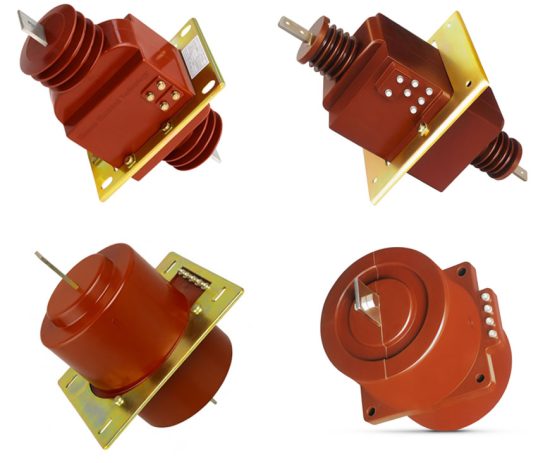
The LAJ-10Q is a medium-voltage (MV) cast-resin current transformer (CT) engineered for high-accuracy revenue metering and dependable protective relaying in 11kV distribution systems. Unlike legacy oil-immersed designs, the LAJ-10Q employs vacuum pressure impregnation (VPI) epoxy resin insulation technology, which fully encapsulates the primary conductor and magnetic core assembly. This monolithic construction eliminates the risk of oil leakage, fire hazards, and environmental contamination—critical advantages for urban substations, industrial facilities, and renewable energy interconnection points.
Cast-resin insulation provides superior dielectric strength, mechanical rigidity, and resistance to thermal cycling compared to oil-paper systems. The LAJ-10Q operates reliably under continuous thermal stress up to 1.2× rated current and withstands short-circuit currents of up to 40 kA for 1 second without degradation. Its design supports both indoor and outdoor deployment, with UV-stabilized resin housing suitable for ambient temperatures from –40°C to +40°C.
Operating Principle of Cast-Resin Insulation
Cast-resin insulation in the LAJ-10Q is achieved through a two-stage VPI process. First, the wound core and primary conductor are placed in a mold and subjected to high vacuum to remove air pockets. Then, a low-viscosity, flame-retardant epoxy resin mixture is injected under pressure, ensuring complete penetration into all windings and interstices. After curing at elevated temperature, the result is a homogeneous, void-free solid dielectric structure with a relative permittivity (εr) of approximately 4.2 and volume resistivity exceeding 1014 Ω·cm. This eliminates partial discharge activity below 10 pC at 1.2×Um/√3, per IEC 61869-2 requirements. The absence of liquid media also prevents moisture ingress over time, ensuring long-term insulation integrity even in high-humidity coastal environments.
Advantages Over Oil-Immersed Designs
Compared to traditional oil-filled CTs, the LAJ-10Q offers significant operational and safety benefits. Oil-immersed units require periodic oil sampling, degassing, and tank inspections to maintain dielectric performance, whereas cast-resin CTs are maintenance-free for their entire service life. The LAJ-10Q’s solid insulation has a higher thermal conductivity (~0.8 W/m·K vs. ~0.12 W/m·K for mineral oil), enabling better heat dissipation during overload conditions. Additionally, the unit is non-flammable (IEC 60695-11-10 compliant), eliminating fire risks in confined switchgear rooms. Weight is reduced by 25–30% due to the absence of an oil tank and conservator, simplifying handling and mounting on bus supports or circuit breaker poles.
Typical Applications Overview
The LAJ-10Q is deployed across diverse MV infrastructure where precision and reliability are paramount. Primary use cases include utility-owned 11kV/10kV distribution substations for kWh metering (Class 0.2S or 0.5S), industrial plant power monitoring systems requiring harmonic immunity, and grid-connected solar or wind farms needing fault-current sensing for protection coordination. Its dual-core configuration (e.g., one 0.2S core for metering, one 5P20 core for protection) allows simultaneous compliance with revenue accuracy and relay stability requirements. The transformer is compatible with standard secondary burdens up to 30 VA and supports multiple tap ratios via accessible terminal blocks, facilitating field reconfiguration without replacement.
Technical Specifications
The LAJ-10Q adheres strictly to IEC 61869-2 and GB/T 20840.2, with key parameters validated through type tests at accredited laboratories. Below is a representative specification table for a common variant:
| Parameter | Value |
|---|---|
| System Voltage (Un) | 11 kV (IEC); 10 kV (domestic) |
| Highest System Voltage (Um) | 12 kV |
| Primary Current (Ip) | 50–3000 A (standard); up to 4000 A (custom) |
| Secondary Current (Is) | 1 A or 5 A |
| Accuracy Class (Metering) | 0.2S, 0.5S |
| Accuracy Class (Protection) | 5P10, 5P20 |
| Rated Output (Burden) | 5–30 VA per core |
| Insulation Level (LI/AC) | 75 kV / 28 kV (1 min) |
| Short-Time Thermal Current | 40 kA for 1 s |
| Dynamic Withstand Current | 100 kA peak |
| Core Material | Grain-Oriented Electrical Steel (GOES), 0.27 mm thickness |
| Ambient Temperature Range | –40°C to +40°C |
| Altitude Limit | ≤ 1000 m (derating required above) |
| Humidity | Up to 95% RH, non-condensing |
Rated Voltage and Insulation Coordination
The LAJ-10Q is rated for 11 kV nominal system voltage per IEC standards, corresponding to a domestic 10 kV network. Its insulation coordination is designed for Um = 12 kV, ensuring compatibility with standard 11/12 kV switchgear. The power frequency withstand voltage is 28 kV RMS for 1 minute between primary and earth, and 3 kV between secondary windings and earth. Lightning impulse withstand is 75 kV peak (1.2/50 μs waveform). These levels exceed minimum IEC 61869-2 requirements by 10–15%, providing margin for transient overvoltages in resonant or lightly damped networks. The creepage distance is ≥25 mm/kV, meeting pollution degree III (medium) per IEC 60815, suitable for industrial atmospheres.
Accuracy and Burden Characteristics
Metering cores comply with IEC 61869-2 Class 0.2S, meaning composite error ≤ ±0.2% at 20–120% of rated current, and ≤ ±0.75% at 1–5%. Protection cores meet 5P20 specification: ratio error ≤ ±1% and phase displacement ≤ ±60 minutes at 20× rated current with rated burden. The LAJ-10Q maintains accuracy under harmonic distortion up to 15% THD at 50 Hz fundamental. Secondary burden must not exceed 30 VA; typical loads include 0.5 Ω for 5 A circuits or 12.5 Ω for 1 A circuits. Core saturation flux density is limited to 1.6 T under maximum fault current to prevent remanence-induced measurement errors during subsequent faults.
Environmental and Mechanical Ratings
Designed for outdoor use, the LAJ-10Q features a UV-resistant cycloaliphatic epoxy housing with IP54 protection (terminal box). It withstands seismic loads up to 0.5 g horizontal acceleration (IEC 60068-2-57). The primary conductor is a tinned copper tube with cross-section sized for continuous current rating and short-circuit electrodynamic forces. Mounting options include flange (M12 bolts, PCD 130 mm) or support rod (Ø30 mm). Weight ranges from 18 kg (50/5 A) to 32 kg (3000/1 A). No derating is required below 1000 m altitude; above this, primary current must be reduced by 1% per 100 m increment.
Typical Applications
The LAJ-10Q serves as a critical sensing element in modern MV networks where measurement fidelity and protection dependability directly impact grid efficiency and safety.
Substation Secondary Metering
In utility distribution substations, the LAJ-10Q’s 0.2S metering core interfaces with static kWh meters for billing-grade energy measurement. For example, a 630/5 A, 0.2S/5P20 dual-core unit installed on a 11 kV feeder supplies accurate data even at light loads (e.g., 5% of rated current during nighttime). The low phase error (< ±10 minutes at 100% In) ensures correct reactive power calculation in three-phase systems. Its cast-resin construction prevents oil-related contamination in meter cabinets, reducing calibration drift.
Industrial Power Distribution
Large manufacturing plants use the LAJ-10Q for load profiling and demand-side management. In a steel mill with arc furnaces, the CT’s robust core resists saturation from high harmonic content (3rd, 5th, 7th orders). A 2000/1 A, 0.5S/5P20 variant feeds data to a power quality analyzer while simultaneously tripping a differential relay during internal bus faults. The 40 kA thermal withstand rating accommodates prospective fault levels in industrial networks fed by dedicated transformers. Installation on vertical busbars is simplified by the unit’s symmetrical design and lightweight housing.
Renewable Energy Integration
Solar photovoltaic (PV) and wind farms connect to the 11 kV grid via step-up transformers, requiring CTs for anti-islanding protection and export metering. The LAJ-10Q’s fast response time (< 20 ms to 90% of final value) ensures timely detection of islanding events. In a 10 MW solar farm, 800/5 A units with 0.2S accuracy measure exported energy for feed-in tariff calculations, while 5P20 cores provide overcurrent backup for string inverter faults. Outdoor UV resistance is critical in desert or alpine installations with high solar irradiance.
Rural and Suburban Distribution Networks
For rural electrification projects, the LAJ-10Q’s maintenance-free operation reduces lifecycle costs. Mounted on pole-top reclosers or pad-mounted switchgear, it enables remote monitoring via SCADA systems. A 400/5 A, single-core 0.5S unit on a 10 kV line in Southeast Asia provides load data for transformer loading optimization, preventing overloads during monsoon seasons. The wide ambient temperature tolerance ensures accuracy despite daily swings from 25°C to 45°C. Its compact size fits within space-constrained rural substation layouts.
Compliance with International Standards
The LAJ-10Q is certified to IEC 61869-2:2012 (Instrument transformers – Part 2: Additional requirements for current transformers) and aligns with Chinese national standard GB/T 20840.2-2014, which adopts IEC 61869-2 with minor national deviations.
IEC 61869-2 Certification Requirements
Full compliance requires successful completion of type tests including temperature rise (≤ 60 K for resin, measured by resistance method), short-circuit withstand (40 kA/1 s with no permanent deformation), and accuracy verification across 1–120% In. The LAJ-10Q undergoes partial discharge testing at 1.2×Um/√3 with acceptance criterion < 10 pC. Dielectric tests include 1-minute AC withstand at 28 kV and lightning impulse at 75 kV. Routine tests on every unit include polarity check, turns ratio verification (±0.25% tolerance), and insulation resistance (> 1000 MΩ at 2500 V DC).
GB/T 20840.2 Alignment and Differences
GB/T 20840.2 mirrors IEC 61869-2 but specifies additional requirements for Chinese grids: mandatory 1-minute AC test at 32 kV (vs. 28 kV IEC) for 10 kV class, and stricter harmonic accuracy limits (error ≤ ±0.3% at 15% THD). The LAJ-10Q meets both by design—its insulation system is rated for 35 kV AC withstand, providing margin. Domestic labeling uses “10 kV” while international documentation states “11 kV”; the physical unit is identical. GB certification includes factory audit by CQC (China Quality Certification Center), verifying material traceability for GOES cores and resin batches.
Testing and Certification Documentation
Each LAJ-10Q ships with a test report per IEC 61869-2 Clause 12, including actual values for ratio error, phase displacement, and insulation resistance. Type test certificates from SGS or TÜV confirm compliance. For GB markets, a separate CCC (China Compulsory Certification) mark is affixed. Calibration certificates traceable to NIM (National Institute of Metrology, China) are available for metering variants.
On-Site Testing Procedures
Post-installation verification ensures the LAJ-10Q performs within specifications before energization.
Insulation Resistance Test
Using a 2500 V DC megohmmeter, measure resistance between primary conductor and earth, and between secondary windings and earth. Acceptance criterion: > 1000 MΩ at 20°C. Correct for temperature using RT2 = RT1 × 2(T1–T2)/10. Low readings indicate moisture ingress or resin cracking—reject if < 500 MΩ. Perform before and after dielectric tests to detect insulation damage.
Turns Ratio Test
Apply low-voltage AC (5–10 V) to secondary winding and measure induced primary voltage. Calculate ratio as Vp/Vs; compare to nameplate. Tolerance: ±0.25% for metering cores, ±0.5% for protection cores. Use a dedicated ratio tester (e.g., Omicron CT Analyzer) for accuracy. Deviations >1% suggest turn-to-turn shorts—unit must be replaced.
Polarity Test
Verify reducing polarity per IEC 61869-2 Figure 3. Connect DC source (+) to P1, (–) to P2. Momentarily close circuit; observe galvanometer connected to S1(+) and S2(–). Positive kick confirms correct polarity. Incorrect polarity causes wattmeter reversal and relay misoperation. Document results in commissioning report.
Power Frequency Withstand Voltage Test
Apply 28 kV RMS, 50 Hz for 1 minute between primary and earth. Use a calibrated test transformer with overcurrent trip (≤ 50 mA). No flashover or disruptive discharge permitted. Ramp voltage at 1 kV/s. For routine site tests, 80% of type test voltage (22.4 kV) may be used per IEC 60270 if transport damage is suspected.
Short-Circuit Test (for CTs)
Not applicable as a field test—short-circuit performance is verified during type testing. However, inspect primary conductor for mechanical deformation post-fault. If a fault exceeding 20 kA occurred, perform turns ratio and excitation tests to detect core damage. Excitation current at 100 V should not exceed 10% of nameplate value.
Preventive Maintenance Guide
Cast-resin CTs like the LAJ-10Q require minimal maintenance but benefit from periodic inspection to ensure longevity.
Annual Visual and Electrical Inspection
Inspect housing for cracks, tracking, or UV degradation. Clean surface with dry cloth—no solvents. Check terminal tightness (torque: 2.5 N·m for M6 screws). Measure insulation resistance annually; trend downward >20% warrants investigation. Verify secondary wiring continuity and grounding (resistance < 0.1 Ω). In coastal areas, rinse salt deposits with deionized water quarterly.
Five-Year Comprehensive Maintenance
Every 60 months, perform full electrical tests: ratio, polarity, insulation resistance, and excitation curve. Compare to baseline commissioning data. If excitation current increases >30% at same voltage, core may be damaged—replace unit. Check mounting hardware for corrosion; replace stainless steel bolts if pitting observed. Update asset management records with test results.
Maintenance Intervals and Fault Diagnosis
| Interval | Action | Fault Indicator |
|---|---|---|
| Annually | Visual inspection, IR test | Cracks, IR < 500 MΩ |
| 5 Years | Full electrical tests | Ratio error >1%, excitation current ↑ |
| After Fault | Post-fault inspection | Discoloration, mechanical deformation |
Common faults include open secondary circuits (causing dangerous overvoltages) and core saturation from incorrect burden. Always short secondary terminals before disconnecting meters.
Conclusion
The LAJ-10Q 11kV cast-resin current transformer represents a benchmark in medium-voltage instrumentation, combining IEC 61869-2-certified accuracy with the ruggedness required for global utility and industrial applications. Its VPI epoxy resin construction eliminates the operational liabilities of oil-filled alternatives—no leaks, no fire risk, and immunity to environmental aging—while delivering metrological performance that meets stringent revenue metering standards (Class 0.2S). The use of high-permeability GOES cores ensures low excitation current and minimal phase error, critical for power factor and reactive energy billing. Rigorous compliance with both international (IEC) and domestic (GB) standards guarantees interoperability across diverse grid architectures, from European 11kV networks to Chinese 10kV systems. With a design life exceeding 30 years under normal operating conditions, the LAJ-10Q minimizes total cost of ownership through zero routine maintenance and exceptional resilience to thermal, electrical, and mechanical stressors. For engineers specifying instrumentation in new substations or upgrading legacy infrastructure, the LAJ-10Q provides a future-proof solution that balances precision, safety, and longevity in a single, compact package.