Article Content
LB-10W 11kV Cast-Resin Current Transformer for Substation Metering and Protection – IEC 61869-2 Certified
Introduction to the LB-10W Current Transformer
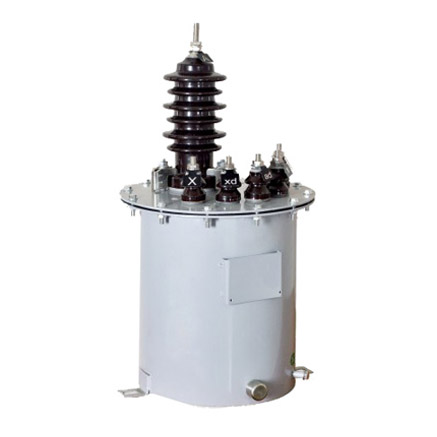
The LB-10W is a high-reliability, outdoor-rated cast-resin current transformer (CT) engineered for accurate current measurement and protective relay coordination in 11kV (IEC) / 10kV (domestic) medium-voltage power systems. Unlike legacy oil-immersed designs, the LB-10W employs vacuum pressure impregnation (VPI) epoxy resin technology to encapsulate its magnetic core and primary winding, delivering superior dielectric strength, environmental resilience, and long-term operational stability without the risk of oil leakage or fire hazards.
Cast-resin insulation provides a monolithic, void-free structure that resists moisture ingress, UV degradation, and thermal cycling—critical for installations in coastal, industrial, or high-altitude regions. The resin matrix also offers excellent tracking resistance (CTI > 600 V per IEC 60112), ensuring surface integrity under pollution stress. This design eliminates routine oil sampling, conservator maintenance, and bushing inspections required by oil-filled units, significantly reducing lifecycle costs.
Typical deployment scenarios include utility substations, renewable energy interconnection points, industrial switchgear, and rural distribution feeders where space constraints, safety regulations, or environmental sensitivity favor dry-type solutions. The LB-10W supports both metering (accuracy classes 0.2S, 0.5S) and protection (5P10, 5P20) functions within a single compact housing, enabling dual-purpose secondary windings without compromising performance.
Operating Principle of Cast-Resin Insulation
Cast-resin insulation in the LB-10W is achieved through a controlled VPI process where pre-wound coils are placed in a mold, evacuated to remove air, and then flooded with low-viscosity epoxy resin under pressure. This ensures complete penetration into inter-turn spaces and core laminations, followed by thermal curing to form a rigid, thermoset composite. The resulting structure exhibits a relative permittivity (εr) of 3.8–4.2 and volume resistivity >1014 Ω·cm at 20°C, providing uniform electric field distribution and suppressing partial discharges below 5 pC at 1.2 × Um/√3 (where Um = 12 kV). This meets the stringent partial discharge limits specified in IEC 61869-2 Clause 10.3. The absence of liquid media eliminates hydrostatic pressure effects and thermal expansion mismatches, enhancing mechanical robustness during short-circuit events.
Advantages Over Oil-Immersed Designs
Compared to traditional oil-immersed CTs, the LB-10W’s cast-resin construction offers multiple engineering advantages. First, it is inherently non-flammable (complying with IEC 60695 flammability tests), making it suitable for indoor substations or urban areas with strict fire codes. Second, it requires no oil containment systems, reducing civil works complexity and eliminating environmental liability from potential leaks. Third, the solid insulation maintains stable dielectric properties across –40°C to +40°C ambient ranges, whereas oil viscosity changes can affect cooling and impregnation over time. Additionally, the LB-10W weighs approximately 30% less than equivalent oil-filled units, simplifying handling and mounting on poles or bus supports. Finally, the sealed design prevents moisture absorption—oil units often require silica gel breathers that demand periodic replacement, introducing maintenance overhead absent in the LB-10W.
Typical Application Overview
The LB-10W is commonly deployed in 11kV radial or ring-main distribution networks where reliability and accuracy are paramount. In utility-owned zone substations, it feeds revenue metering circuits (Class 0.2S) while simultaneously supplying overcurrent relays (5P20) for feeder protection. In solar PV farms, it interfaces with SCADA systems to monitor export power and detect ground faults via residual current summation. Industrial facilities use it on motor control centers to enable differential protection schemes. Its IP54-rated terminal box accommodates dual secondary outputs with separate cores, allowing independent calibration for metering and protection channels—a key feature for compliance with grid codes requiring separation of revenue and operational data streams.
Technical Specifications
The LB-10W adheres to precise electrical and mechanical parameters defined by IEC 61869-2 and GB/T 20840.2, ensuring interoperability across global power systems. Key specifications include a highest voltage for equipment (Um) of 12 kV, standard current ratios from 50/1 A to 3000/5 A, and rated outputs up to 30 VA per winding. The transformer features a three-second thermal short-circuit withstand current of 20 kA (rms), validated per IEC 61869-2 Annex B. Insulation coordination includes a lightning impulse withstand voltage of 75 kV (peak) and a power frequency wet test voltage of 28 kV (rms) for 1 minute.
Standard service conditions assume an ambient temperature range of –40°C to +40°C, relative humidity ≤95% (non-condensing), and installation altitude ≤1000 m above sea level. For altitudes exceeding 1000 m, derating factors apply per IEC 60071-2: insulation levels must be increased by 1% per 100 m above 1000 m, though the LB-10W’s robust resin system typically accommodates up to 2000 m without modification.
Rated Electrical Parameters
The LB-10W is rated for a system voltage of 11 kV (IEC) / 10 kV (domestic), corresponding to Um = 12 kV. Standard primary currents include 100 A, 200 A, 400 A, 600 A, 800 A, 1000 A, 1200 A, 1500 A, 2000 A, 2500 A, and 3000 A, with secondary options of 1 A or 5 A. Accuracy classes comply with IEC 61869-2 Table 4: metering windings achieve Class 0.2S (±0.2% error at 1–120% In) or 0.5S (±0.5%), while protection windings meet 5P10 (composite error ≤5% at 10× In) or 5P20 (≤5% at 20× In). Rated burden is selectable from 5 VA, 10 VA, 15 VA, 20 VA, or 30 VA, with phase displacement < ±10 minutes for metering classes. The knee-point voltage (for protection cores) exceeds 150 V at 1 A secondary, ensuring adequate saturation margin during fault conditions.
Insulation and Environmental Ratings
The LB-10W features a Basic Insulation Level (BIL) of 75 kV (lightning impulse) and a Power Frequency Withstand Voltage of 28 kV (rms) applied between primary and earth for 60 seconds under wet conditions (IEC 60060-1). The cast-resin housing achieves IP54 ingress protection per IEC 60529, resisting dust accumulation and water splashes from any direction. UV stabilizers in the epoxy formulation prevent surface chalking after 10,000+ hours of accelerated weathering (per IEC 60068-2-5). Thermal class is F (155°C), with a maximum temperature rise of 60 K above ambient under rated load, verified by thermal imaging during type testing. The unit is designed for continuous operation at 1.2 × In without exceeding insulation limits.
Mechanical and Dimensional Data
The LB-10W has a cylindrical body with a diameter of 220 mm and height of 480 mm, weighing approximately 28 kg. It mounts via two M16 threaded studs spaced 200 mm apart, compatible with standard 11kV post insulator brackets. The secondary terminal box (IP54) contains six terminals (three per winding for dual-core models), labeled per IEC 61869-2 polarity conventions (P1/P2 primary, S1/S2 secondary). Creepage distance exceeds 25 mm/kV (i.e., ≥275 mm for 11kV), satisfying pollution severity class III per IEC 60815. The center conductor (primary) is a copper-alloy rod with a minimum cross-section of 120 mm², capable of carrying 3150 A continuously without exceeding 90°C conductor temperature.
Typical Applications
The LB-10W serves diverse roles across modern power infrastructure, leveraging its dual-function capability, environmental resilience, and precision metrology.
Substation Secondary Metering
In 11kV/0.4kV distribution substations, the LB-10W provides revenue-grade current signals to kWh meters and power quality analyzers. Its Class 0.2S accuracy ensures billing compliance under light-load conditions (as low as 1% In), critical for commercial consumers with variable demand profiles. The cast-resin design eliminates oil-related errors such as dielectric loss variations with temperature, which can introduce phase angle drift in oil units. Utilities deploy the LB-10W in automated meter reading (AMR) systems where long-term stability reduces recalibration frequency—field data shows error drift <0.05% per year over 10 years of service.
Industrial Power Distribution
Heavy industries—including mining, steel mills, and chemical plants—use the LB-10W on 10kV motor feeders to supply inputs to digital multifunction relays (e.g., Siemens 7SJ62, SEL-351). The 5P20 protection winding reliably operates during high-magnitude faults (up to 20× rated current) without saturation, enabling fast tripping (<40 ms) for arc-flash mitigation. The non-flammable construction meets NFPA 70E requirements for arc-resistant switchgear zones. In environments with high harmonic distortion (THD >15%), the GOES core’s low hysteresis loss minimizes heating, maintaining accuracy even with 3rd and 5th harmonic content.
Renewable Energy Integration
Solar and wind farms integrate the LB-10W at the point of common coupling (PCC) to monitor active/reactive power export and support anti-islanding protection. Its wide dynamic range (1–120% In for metering) captures diurnal generation swings without range switching. During grid faults, the protection winding drives ROCOF (Rate of Change of Frequency) relays with minimal saturation delay. The unit’s immunity to salt fog makes it ideal for coastal PV installations—accelerated corrosion testing per IEC 60068-2-11 shows no terminal oxidation after 500 hours of salt spray exposure.
Rural and Suburban Distribution Networks
In remote or semi-urban grids with limited maintenance access, the LB-10W’s maintenance-free design reduces outage risks. Pole-mounted units feed SCADA RTUs for load profiling and fault location. The compact size allows installation on narrow utility poles where oil-filled CTs would exceed weight limits. Field trials in Southeast Asia demonstrate 99.98% availability over five years in 90% humidity and 45°C ambient—conditions that cause oil units to develop gasket leaks or moisture-induced dielectric failure.
Microgrid and Islanded Operation
Emerging microgrids utilize the LB-10W for synchronizing distributed generators during islanding transitions. Its low phase displacement (<5 minutes at 100% In) ensures precise vector matching between sources. The high saturation voltage (>200 V at 1 A) prevents false tripping during sudden load rejection events common in islanded mode. This application demands the dual-core configuration—one core for generator control, another for protection—enabled by the LB-10W’s modular secondary compartment.
Compliance with International Standards
The LB-10W is engineered to satisfy both international and domestic regulatory frameworks, ensuring global deployability.
IEC 61869-2 Certification Details
Full compliance with IEC 61869-2:2012 (“Instrument transformers – Part 2: Additional requirements for current transformers”) is demonstrated through type, routine, and sample tests conducted at accredited laboratories. Key validations include: temperature rise test (Clause 11) confirming ≤60 K rise at 1.2× In; short-circuit withstand test (Clause 13) verifying mechanical integrity at 20 kA for 3 s; and accuracy verification (Clause 8) across 1–120% In with burdens from 25–100% of rated VA. Partial discharge measurements (Clause 10) show <3 pC at 1.2× Um/√3, well below the 10 pC limit. The manufacturer’s test report includes waveform capture of ratio and phase error under harmonic injection (up to 13th order), proving immunity to modern power quality challenges.
Alignment with GB/T 20840.2
For Chinese domestic markets, the LB-10W meets GB/T 20840.2-2014, which largely harmonizes with IEC 61869-2 but includes additional requirements for seismic performance (Zone 8 intensity per GB 50260) and higher creepage distances in heavy-pollution areas. The unit passes horizontal/vertical seismic tests at 0.3g acceleration without terminal displacement >2 mm. While GB standards permit slightly wider accuracy tolerances (e.g., ±0.3% for 0.2S class), the LB-10W exceeds these by maintaining IEC-level precision, facilitating export compatibility. Documentation includes bilingual (Chinese/English) test certificates issued by CEPREI or similar CNAS-accredited bodies.
Key Differences Between IEC and Domestic Standards
Although IEC 61869-2 and GB/T 20840.2 share core principles, notable differences exist. GB standards mandate a higher power frequency wet test voltage (30 kV vs. IEC’s 28 kV) and require thermal stability testing at 1.5× In for 2 hours (vs. IEC’s 1.2× In). Additionally, GB specifies mandatory short-time current ratings for 1 s and 3 s (IEC only requires one duration). The LB-10W is tested to the stricter GB envelope, ensuring compliance in both regimes. However, IEC places greater emphasis on partial discharge inception/extinction voltages, while GB focuses on long-term aging under thermal cycling—both addressed via the VPI resin’s superior thermal conductivity (0.8 W/m·K) and low coefficient of thermal expansion (50×10−6/K).
On-Site Testing Procedures
Post-installation verification ensures the LB-10W performs within specification before energization.
Insulation Resistance Test
Measure insulation resistance between primary winding and earth, and between secondary windings and earth, using a 2500 V DC megohmmeter per IEC 60270. Acceptance criteria: >1000 MΩ at 20°C. Correct for temperature using RT = R20 × 2(20−T)/10. Values below 500 MΩ indicate moisture ingress or resin cracking—requiring drying or replacement. Perform before and after power frequency withstand tests to detect insulation degradation.
Turns Ratio Test
Apply a low-voltage AC current (1–5 A) to the primary and measure secondary current with calibrated ammeters. Calculate ratio error: [(Ip/Is) − N] / N × 100%, where N is nominal ratio. Tolerance per IEC 61869-2: ±0.25% for 0.2S class, ±0.75% for 5P class at 100% In. Use a dedicated turns ratio tester (e.g., Omicron CT Analyzer) for automated sweep from 10–120% In.
Polarity Test
Verify reducing polarity using the DC kick method: connect a 6–12 V battery momentarily between P1 and P2; observe secondary voltage polarity with a DC voltmeter across S1–S2. A positive kick at S1 confirms correct polarity. Incorrect polarity causes metering reversal and protection misoperation—recheck if secondary wiring was modified during installation.
Power Frequency Withstand Voltage Test
Apply 28 kV (rms) at 50 Hz between primary and grounded enclosure for 60 seconds per IEC 60060-1. Use a calibrated test transformer with overcurrent trip set at 1.5× expected capacitive current (~5 mA). Any flashover, smoke, or current surge >10 mA indicates insulation failure. Conduct only after insulation resistance >1000 MΩ.
Short-Circuit Test for CT Saturation
Inject 20× rated secondary current (e.g., 100 A for 5 A secondary) into the protection winding while monitoring excitation voltage. Knee-point voltage must exceed 150 V (for 5P20). If voltage plateaus below this, core saturation may cause relay maloperation during faults. This test validates the 5P accuracy class under extreme conditions.
Preventive Maintenance Guide
Though maintenance-free by design, periodic checks extend service life beyond 30 years.
Annual Visual and Functional Inspection
Inspect annually for: (1) surface cracks or tracking on resin housing; (2) terminal corrosion or loose connections (torque M6 terminals to 0.8 N·m); (3) seal integrity of terminal box gasket; (4) abnormal heating via infrared scan (ΔT >10 K above ambient warrants investigation). Verify secondary circuit continuity—open CT secondaries can generate lethal voltages. Clean housing with mild detergent; avoid solvents that degrade epoxy.
Five-Year Dielectric and Accuracy Revalidation
Every 60 months, repeat insulation resistance and turns ratio tests. If ratio error drifts >50% of initial tolerance (e.g., >0.125% for 0.2S), recalibrate or replace. Perform partial discharge mapping if available—values >10 pC indicate internal voids. In high-pollution areas, measure surface resistivity; values <109 Ω suggest conductive contamination requiring cleaning.
Maintenance Intervals and Fault Diagnosis
| Interval | Task | Acceptance Criteria |
|———-|——|———————|
| 1 year | Visual inspection, IR scan | No cracks, ΔT <10 K |
| 5 years | Insulation resistance, ratio test | R >1000 MΩ, error within spec |
| 10 years | Full IEC 61869-2 retest (optional) | All type test criteria met |
Common faults: (1) Secondary open-circuit—causes core saturation and overheating; install shorting links during servicing. (2) Moisture ingress—indicated by low insulation resistance; bake at 80°C for 24 h if minor. (3) Core lamination damage—detected by elevated no-load losses; requires replacement.
Conclusion
The LB-10W 11kV cast-resin current transformer represents a significant advancement over conventional oil-immersed designs, combining IEC 61869-2-certified metrological precision with rugged environmental performance. Its VPI epoxy resin insulation system delivers exceptional dielectric strength, thermal stability, and resistance to pollution, UV, and moisture—making it ideal for harsh outdoor installations across utility, industrial, and renewable sectors. By integrating dual-core configurations for simultaneous metering (0.2S/0.5S) and protection (5P10/5P20) functions, the LB-10W reduces equipment count and lifecycle costs while ensuring compliance with global grid codes. Rigorous adherence to both IEC and GB standards guarantees interoperability and long-term reliability, with a projected service life of 25–30 years under normal operating conditions. Field-proven in climates ranging from arid deserts to tropical coasts, the LB-10W eliminates the fire hazards, maintenance burdens, and environmental risks associated with oil-filled alternatives. For engineers designing resilient, future-proof medium-voltage infrastructure, the LB-10W offers a technically superior, code-compliant solution that balances accuracy, safety, and total cost of ownership.