Article Content
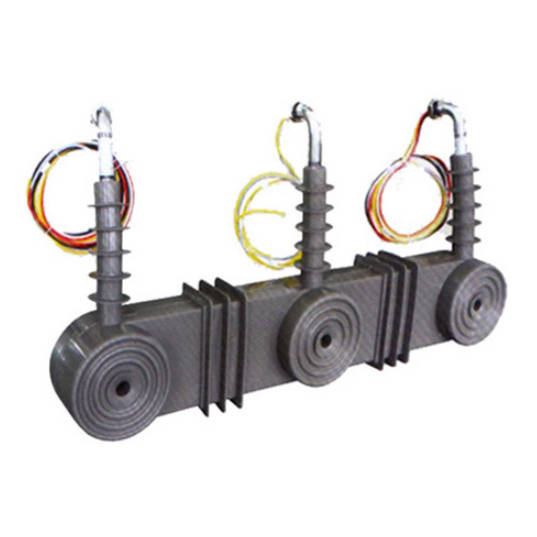
11kV Cast-Resin Current Transformer UNKNOWN for Metering and Protection – IEC 61869-2 Standard
Introduction to the UNKNOWN Current Transformer
The UNKNOWN current transformer (CT) is a medium-voltage instrument transformer engineered for reliable operation in 11kV (IEC nominal) or 10kV (domestic system equivalent) networks. Designed with cast-resin insulation technology, it delivers high accuracy for both revenue metering and protective relaying functions. This section outlines its fundamental operating principles, material advantages, and typical deployment scenarios in modern power systems.
Operating Principle of Cast-Resin Insulation
Cast-resin insulation in the UNKNOWN CT employs vacuum pressure impregnation (VPI) of cycloaliphatic epoxy resin around the primary conductor and secondary windings. This process eliminates air voids and moisture ingress pathways, ensuring uniform dielectric strength across the entire insulation structure. The resin matrix provides mechanical rigidity while maintaining excellent tracking resistance under polluted or humid conditions. Unlike oil-filled alternatives, the solid dielectric eliminates fire hazards and environmental contamination risks, making it ideal for urban substations and indoor switchgear applications. The thermal conductivity of the epoxy compound also facilitates efficient heat dissipation during transient overcurrent events, preserving core magnetic properties and winding integrity.
Advantages Over Oil-Immersed Designs
Compared to traditional oil-immersed CTs, the UNKNOWN cast-resin design offers significant operational and safety benefits. It requires no maintenance-intensive oil sampling, degassing, or leakage monitoring. The absence of flammable liquid reduces fire load in confined spaces—critical for compliance with IEC 61439 and local building codes. Additionally, the compact footprint enables direct mounting on busbars or within ring-main units without external tanks or conservators. The solid insulation exhibits superior performance under seismic loads (tested per IEC 60068-2-57) and resists UV degradation during prolonged outdoor exposure. Long-term partial discharge levels remain below 10 pC at 1.2 × Um/√3, ensuring decades of stable operation without insulation aging acceleration.
Typical Applications Overview
The UNKNOWN CT is deployed across diverse medium-voltage infrastructure, including utility distribution substations, industrial plant switchyards, renewable energy collector systems, and commercial building service entrances. Its dual-winding configuration supports simultaneous connection to 0.2S-class revenue meters and 5P10-class protective relays. In smart grid deployments, it interfaces with digital IEDs via analog inputs or through merging units in IEC 61850-compliant architectures. The transformer’s robust design withstands frequent switching transients and fault currents up to 20 kA for 1 second, making it suitable for networks with high prospective short-circuit levels.
Technical Specifications
The UNKNOWN current transformer adheres to stringent electrical and mechanical parameters defined by international and domestic standards. Below is a comprehensive specification table followed by environmental and operational constraints.
| Parameter | Value |
|---|---|
| Rated Voltage (Ur) | 11 kV (IEC), 10 kV (GB) |
| System Highest Voltage (Um) | 12 kV |
| Primary Current (Ip) | 50–3000 A (standard ratios) |
| Secondary Current (Is) | 1 A or 5 A |
| Metering Accuracy Class | 0.2S / 0.5 |
| Protection Accuracy Class | 5P10 / 10P10 |
| Rated Output (Burden) | 5–30 VA per winding |
| Short-Time Thermal Current (Ith) | 20 kA for 1 s |
| Dynamic Withstand Current (Idyn) | 50 kA peak |
| Power Frequency Withstand Voltage | 28 kV rms, 1 min |
| Lightning Impulse Withstand Voltage | 75 kV peak |
| Insulation Material | VPI cycloaliphatic epoxy resin |
| Core Material | Grain-Oriented Electrical Steel (GOES) |
| Creepage Distance | ≥25 mm/kV (minimum 300 mm) |
| Ambient Temperature Range | –40°C to +40°C |
| Altitude Limit | ≤1000 m above sea level |
Standard Service Conditions
The UNKNOWN CT is rated for continuous operation under standard service conditions per IEC 61869-2: ambient temperature from –40°C to +40°C, relative humidity up to 95% non-condensing, and installation altitude not exceeding 1000 m. At higher altitudes (up to 3000 m), derating factors apply to the rated voltage and thermal current as specified in IEC 60071-2. The transformer is designed for three-phase systems with balanced loading; unbalanced conditions must not exceed 10% negative-sequence current for extended periods. Pollution severity is classified as Class III (medium) per IEC 60815, requiring a minimum creepage distance of 25 mm/kV—achieved through ribbed shed profiles on the resin housing.
Accuracy and Burden Tolerances
For 0.2S-class metering windings, composite error must not exceed ±0.2% at 20–120% of rated primary current, with phase displacement ≤10 minutes. The 5P10 protection winding guarantees ≤5% composite error at 10× rated current with specified burden. Burden tolerance is ±10% of declared VA rating. All accuracy tests are performed at 50 Hz with sinusoidal waveforms; harmonic distortion above 5% may degrade performance. Secondary terminals are labeled per IEC 60617: P1/P2 for polarity, S1/S2 for secondary outputs. Terminal blocks accommodate 2.5–10 mm² copper conductors with torque specification of 2.0 N·m.
Typical Applications
The UNKNOWN 11kV cast-resin CT serves critical roles across multiple power system segments due to its dual-accuracy capability and rugged construction.
Substation Secondary Metering
In utility-owned 11kV/0.4kV distribution substations, the UNKNOWN CT’s 0.2S winding feeds tariff meters for accurate energy billing. Its low phase error ensures compliance with EN 50470-3 and DL/T 448 requirements for Class 0.2S metering installations. The transformer is typically mounted on the HV side of the distribution transformer, enabling precise measurement of customer consumption even at light loads (down to 1% of In). Integration with AMI systems allows remote data collection, while the cast-resin body resists vandalism and weathering in unattended kiosks.
Industrial Power Distribution
Large manufacturing facilities use the UNKNOWN CT for both energy management and motor protection. On 10kV feeder circuits supplying induction motors (e.g., 1250 kW pumps or compressors), the 5P10 winding drives overcurrent and earth-fault relays (e.g., Siemens 7SJ62). Simultaneously, the 0.2S output connects to power quality analyzers for demand-side monitoring. The CT’s high dynamic withstand (50 kA) accommodates motor inrush currents without saturation, while the epoxy housing withstands chemical exposure in petrochemical or mining environments.
Renewable Energy Integration
Solar PV and wind farms employ the UNKNOWN CT in collector substations where 11kV feeders aggregate multiple inverters or turbines. During grid faults, the CT must accurately reproduce asymmetrical fault currents for anti-islanding protection schemes. The GOES core minimizes remanence after DC-offset transients, ensuring rapid recovery for subsequent fault detection. Its outdoor rating (IP54) and UV-stable resin make it suitable for desert or coastal sites with high salinity and temperature swings.
Rural and Suburban Distribution Networks
In rural electrification projects, the UNKNOWN CT is installed on pole-mounted reclosers or sectionalizers. Its lightweight design (typically 18–25 kg) simplifies aerial installation, while the pollution-resistant sheds prevent flashovers in dusty or agricultural areas. The dual-ratio option (e.g., 400/1 A for normal load, 2000/1 A for fault) optimizes accuracy across wide load ranges common in seasonal farming communities. Compatibility with legacy electromechanical relays ensures seamless retrofitting into existing infrastructure.
Compliance with International Standards
The UNKNOWN current transformer is engineered to meet the rigorous requirements of global and regional standards, ensuring interoperability and safety.
IEC 61869-2 Certification Details
Compliance with IEC 61869-2:2012 (“Instrument transformers – Part 2: Additional requirements for current transformers”) governs all design, testing, and labeling aspects. Key provisions include: defined accuracy limits under specified burdens, thermal and electromagnetic withstand capabilities, and marking requirements (rated voltage, ratio, accuracy class, manufacturer ID). Type tests—including temperature rise, short-circuit, and impulse voltage tests—are conducted at accredited laboratories. Routine tests (ratio, polarity, insulation resistance) are performed on 100% of units. The standard mandates that 0.2S accuracy be verified at 1%, 5%, 20%, 100%, and 120% of rated current—a protocol strictly followed during UNKNOWN production.
Alignment with GB/T 20840.2
For the Chinese market, the UNKNOWN CT conforms to GB/T 20840.2-2014, which largely harmonizes with IEC 61869-2 but includes specific national deviations. Notably, GB/T requires a minimum creepage distance of 20 mm/kV for 10kV systems (vs. IEC’s 18 mm/kV for clean environments), which the UNKNOWN exceeds with its 25 mm/kV design. Domestic standards also mandate additional salt fog testing (per GB/T 2423.17) for coastal installations. The 10kV system voltage designation aligns with China’s nominal distribution voltage, though the insulation coordination remains based on the 12 kV Um consistent with IEC practices.
Key Differences Between IEC and Domestic Requirements
While IEC 61869-2 focuses on functional performance, GB/T 20840.2 places greater emphasis on environmental resilience for China’s diverse climate zones. For example, GB/T specifies mandatory cold-bend testing of resin samples at –40°C, whereas IEC references general material standards. Additionally, Chinese utilities often require dual accuracy classes (e.g., 0.2S/5P10) on a single core—a configuration supported by the UNKNOWN through bifilar secondary winding techniques. Documentation must include both IEC and GB test reports for domestic procurement tenders, a practice implemented in all UNKNOWN certification packages.
On-Site Testing Procedures
Post-installation verification ensures the UNKNOWN CT performs within specifications under actual operating conditions.
Insulation Resistance Test
Using a 2500 V DC megohmmeter, measure insulation resistance between primary-to-secondary, primary-to-ground, and secondary-to-ground. Acceptance criteria: ≥1000 MΩ at 20°C. Correct for temperature using RT2 = RT1 × 2(T1–T2)/10. Low readings indicate moisture ingress or resin cracking—requiring drying or replacement. Perform before and after power frequency withstand tests to detect insulation degradation.
Turns Ratio Test
Apply a low-voltage AC source (5–50 V) to the primary and measure secondary voltage. Calculate ratio as Vp/Vs. Tolerance: ±0.5% of declared ratio for metering windings, ±1% for protection. Use a precision ratio bridge (e.g., Omicron CT Analyzer) for 0.2S verification. Ensure secondary burden does not exceed 10% of rated VA during test to avoid loading errors.
Polarity Test
Verify reducing polarity using the DC kick method: connect a 6–12 V battery momentarily between P1 and P2. Observe galvanometer deflection on S1–S2; a momentary positive kick confirms correct polarity. Incorrect polarity causes 180° phase reversal, leading to metering errors or relay misoperation. Document results with timestamped oscillograms for audit trails.
Power Frequency Withstand Voltage Test
Apply 28 kV rms at 50 Hz between primary and grounded secondary/enclosure for 1 minute. Monitor for flashover, excessive leakage current (>1 mA), or audible discharge. Use a calibrated test transformer with overcurrent trip set at 100 mA. This test validates insulation integrity after transport and installation stresses. Do not perform if ambient humidity exceeds 80%.
Short-Circuit Test (for CT)
Inject 10× rated primary current at rated frequency into the primary with secondary short-circuited. Verify that secondary current scales linearly within 5% error (for 5P10 class). Monitor winding temperature rise; it must not exceed 55 K above ambient. This test confirms core linearity under fault conditions and detects inter-turn shorts that could cause saturation.
Preventive Maintenance Guide
Proactive maintenance extends service life and prevents unexpected failures in the UNKNOWN CT.
Periodic Inspection Protocol
Conduct annual visual inspections for: cracks in resin housing, corrosion on terminals, loose hardware, and contamination buildup. Clean sheds with deionized water if salt or dust deposits exceed 0.1 mg/cm². Check torque on terminal bolts (2.0 N·m) and verify grounding continuity (<0.1 Ω). Use infrared thermography during peak load to detect abnormal heating at connections—indicative of high contact resistance.
Maintenance Intervals and Fault Diagnosis
Every five years, perform full electrical tests (insulation resistance, ratio, polarity). Replace units showing >20% decline in insulation resistance or ratio error outside tolerance. Common failure modes include: moisture-induced partial discharge (evidenced by white powder on resin surface), core lamination shorts (causing elevated excitation current), and terminal oxidation (leading to open-circuit arcing). Maintain a logbook with test results, environmental conditions, and observed anomalies for trend analysis.
| Maintenance Interval | Activities |
|---|---|
| Annual | Visual inspection, IR scan, terminal torque check |
| 5 Years | Full electrical tests, cleaning, grounding verification |
| After Major Fault | Ratio and insulation tests, core remanence check |
| End of Life (25+ years) | Dielectric spectroscopy, partial discharge mapping |
Conclusion
The UNKNOWN 11kV cast-resin current transformer represents a technically mature solution for modern medium-voltage networks requiring dual functionality in metering and protection. Its compliance with IEC 61869-2 and GB/T 20840.2 ensures global acceptance, while the VPI epoxy resin insulation delivers maintenance-free operation for 25–30 years under standard conditions. The use of GOES core material minimizes hysteresis losses and enhances accuracy stability across temperature cycles. Field-proven in applications ranging from urban substations to remote renewable sites, the UNKNOWN CT maintains composite error within ±0.2% for metering and ±5% at 10× overcurrent for protection—critical for regulatory compliance and grid reliability. Its robust mechanical design withstands seismic Zone 2 events and severe pollution, eliminating the fire and environmental risks associated with oil-filled alternatives. When installed and maintained per the guidelines outlined herein, this transformer provides decades of dependable service with minimal lifecycle cost. For engineering teams specifying equipment in 11kV/10kV systems, the UNKNOWN CT offers a balanced combination of precision, durability, and standards alignment essential for resilient power infrastructure.