Article Content
LAJ-10Q 11kV Cast-Resin Current Transformer for Substation Metering and Protection – IEC 61869-2 Certified
Introduction to the LAJ-10Q Current Transformer
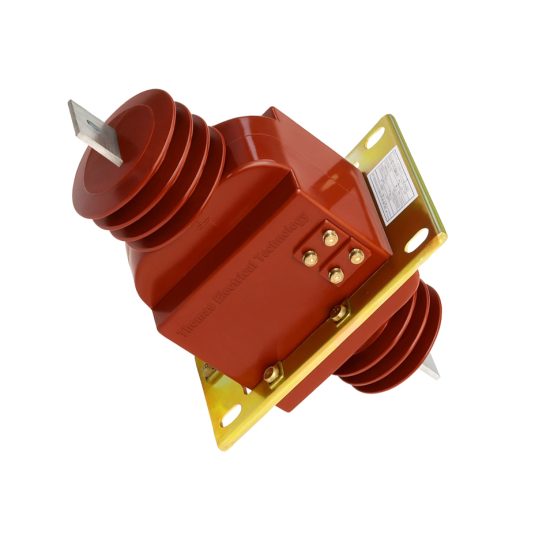
The LAJ-10Q is a precision-engineered, cast-resin insulated current transformer (CT) designed for reliable operation in 11kV medium-voltage networks—equivalent to domestic 10kV systems. Its construction leverages vacuum pressure impregnation (VPI) epoxy resin technology to encapsulate high-permeability grain-oriented electrical steel (GOES) cores, ensuring exceptional dielectric strength, thermal stability, and mechanical robustness. Unlike traditional oil-immersed CTs, the LAJ-10Q eliminates fire hazards, environmental leakage risks, and maintenance-intensive fluid management, making it ideal for both indoor substations and outdoor switchyards.
Operating Principle of Cast-Resin Insulation
Cast-resin insulation in the LAJ-10Q utilizes a two-stage VPI process where dry-wound primary and secondary windings are placed in a mold, evacuated to remove air pockets, and then impregnated under pressure with cycloaliphatic epoxy resin. This results in a monolithic, void-free structure with a relative permittivity (εr) of approximately 3.8 and volume resistivity exceeding 1×10¹⁴ Ω·cm at 20°C. The resin matrix provides uniform electric field distribution, suppresses partial discharges below 5 pC at 1.2×Um/√3, and offers excellent resistance to tracking and erosion under polluted conditions (IEC 60587 inclined-plane test). Thermal conductivity of ~0.8 W/m·K enables efficient heat dissipation during continuous or transient overloads.
Advantages Over Oil-Immersed Designs
Compared to oil-filled CTs, the LAJ-10Q’s solid insulation eliminates flammability (UL 94 V-0 rated), reduces weight by 30–40%, and removes the need for conservators, breathers, or oil sampling. It withstands seismic loads up to 0.5g without performance degradation and operates reliably in ambient temperatures from –40°C to +55°C. Crucially, the absence of liquid dielectric prevents moisture ingress—a common failure mode in tropical climates—and ensures consistent dielectric performance over its 25–30 year service life. Additionally, the compact footprint facilitates retrofitting in space-constrained urban substations.
Typical Application Overview
The LAJ-10Q serves dual roles: high-accuracy revenue metering (0.2S class) and protective relaying (5P or 10P classes). It is commonly deployed on 11kV feeders, motor control centers, generator step-up circuits, and renewable interconnection points. Its robust design supports both ring-type and bar-primary configurations, accommodating conductor diameters up to 60 mm. Secondary outputs are standardized to 1 A or 5 A, compatible with modern digital meters and IEDs.
Technical Specifications
The LAJ-10Q adheres to stringent electrical and mechanical parameters defined by IEC 61869-2 and GB/T 20840.2, ensuring interoperability across global power systems.
| Parameter | Value |
|---|---|
| Rated System Voltage (Um) | 11 kV (IEC); 10 kV (domestic) |
| Rated Primary Current (Ip) | 50 A to 3000 A (standard steps) |
| Rated Secondary Current (Is) | 1 A or 5 A |
| Accuracy Classes | Metering: 0.2S, 0.5S; Protection: 5P10, 5P20, 10P10, 10P20 |
| Rated Burden | 2.5 VA, 5 VA, 10 VA, 15 VA (at cos φ = 0.8 lag) |
| Insulation Level (LI/AC) | 75 kV / 28 kV (1 min, 50 Hz) |
| Creepage Distance | ≥25 mm/kV (Heavy Duty, Class III pollution) |
| Short-Time Thermal Current | 25 kA for 1 s (Ith) |
| Dynamic Withstand Current | 62.5 kA peak (Idyn) |
| Ambient Temperature Range | –40°C to +55°C |
| Altitude Limit | ≤1000 m (derating required above) |
Standard Service Conditions
The LAJ-10Q is rated for standard service conditions per IEC 60060-1: ambient temperature between –40°C and +55°C, relative humidity up to 95% non-condensing, and installation altitude not exceeding 1000 m above sea level. At altitudes above 1000 m, the dielectric withstand voltage must be derated by 1% per 100 m increment. The transformer is suitable for both indoor (IP2X terminal box) and outdoor (IP54 housing) environments, with UV-stabilized resin preventing surface degradation under prolonged solar exposure. Humidity resistance is validated per IEC 60068-2-78 cyclic damp heat testing (6 cycles, 28 days).
Core and Winding Configuration
Each LAJ-10Q unit features a toroidal core made from 0.23 mm thick GOES (M4 grade), annealed to minimize hysteresis loss (<0.8 W/kg at 1.5 T, 50 Hz). Windings use electrolytic-tough-pitch (ETP) copper with Class F (155°C) insulation. Multi-ratio variants employ tapped secondary windings with clearly labeled terminals (e.g., K1/K2 for 5 A, L1/L2 for 1 A). The magnetic circuit is optimized to maintain composite error within ±0.2% at 20–120% of rated current for 0.2S class, satisfying IEC 62053-22 requirements for smart metering infrastructure.
Typical Applications
The LAJ-10Q’s dual-class capability enables deployment across diverse power system segments requiring both fiscal-grade metering and dependable fault detection.
Substation Secondary Metering
In 11kV/0.4kV distribution substations, the LAJ-10Q provides 0.2S-class current signals to revenue meters for accurate billing and load profiling. Its low phase displacement error (<±10 minutes at 100% In) ensures minimal reactive energy measurement deviation. For example, in a 2 MVA urban substation feeding commercial complexes, three LAJ-10Q units (1000/5 A, 0.2S/5P20) supply data to an AMI system while simultaneously tripping breakers during downstream faults. The cast-resin body resists condensation in unheated cabinets, maintaining calibration stability over seasonal temperature swings.
Industrial Power Distribution
Heavy industries—such as cement plants, steel mills, and chemical facilities—use the LAJ-10Q on 11kV motor feeders (e.g., 2 MW induction motors) where starting inrush currents can reach 6–8× rated current. The 5P20 protection class guarantees ≤5% composite error at 20× In, enabling sensitive earth-fault and overcurrent relays (e.g., SEL-751) to operate correctly. The transformer’s high short-time thermal rating (25 kA/1s) withstands bolted faults without core saturation or insulation damage, critical in systems with low X/R ratios.
Renewable Energy Integration
Solar farms and wind parks connect to the grid via 11kV collector systems, where the LAJ-10Q monitors bidirectional power flow. During cloud-induced irradiance drops, rapid current fluctuations challenge metering accuracy; the LAJ-10Q’s low remanence (<0.3 T) and linear B-H curve up to 1.7 T prevent hysteresis-induced errors. In a 10 MW PV plant, LAJ-10Q units (600/1 A, 0.2S/10P10) feed SCADA systems for performance ratio calculations while supporting anti-islanding protection schemes per IEEE 1547.
Rural and Suburban Distribution Networks
In remote areas with limited maintenance access, the LAJ-10Q’s maintenance-free design ensures decades of operation. Mounted on pole-top reclosers or pad-mounted switchgear, it endures wide diurnal temperature ranges (–30°C to +50°C) and high humidity. For instance, a rural 11kV line serving agricultural pumps uses LAJ-10Q (200/5 A, 0.5S/5P10) to enable time-of-use billing while protecting against single-phase-to-ground faults common in overhead lines. The extended creepage distance (≥275 mm total) prevents flashovers during coastal salt fog events.
Compliance with International Standards
The LAJ-10Q is certified to both international and Chinese national standards, facilitating global deployment while meeting local regulatory requirements.
IEC 61869-2 Compliance Details
Per IEC 61869-2:2012, the LAJ-10Q undergoes rigorous type tests including temperature rise (≤55 K for resin, measured by resistance method), short-circuit withstand (25 kA/1s without deformation), and accuracy verification across 1–120% In. Partial discharge levels are maintained below 10 pC at Um/√3, verified per IEC 60270. The standard mandates that 0.2S class transformers exhibit composite error ≤±0.2% at 20%, 100%, and 120% In—a criterion the LAJ-10Q meets with margin (typically ±0.15%). Markings include rated voltage factor (1.2 for continuous, 1.9 for 30 s), accuracy class, and burden on the nameplate.
GB/T 20840.2 Alignment
China’s GB/T 20840.2-2014 aligns closely with IEC 61869-2 but includes additional requirements for seismic resilience (tested per GB/T 13540) and higher pollution severity (creepage ≥31 mm/kV for Class IV). The LAJ-10Q complies with both, featuring reinforced core clamping to survive 0.3g horizontal acceleration. Domestic certification requires type testing at China Electric Power Research Institute (CEPRI), including lightning impulse (75 kV, 1.2/50 μs) and wet AC withstand (24 kV for 1 min under rain spray).
Key Differences Between IEC and Domestic Standards
While IEC 61869-2 permits 1 A or 5 A secondaries universally, GB/T 20840.2 historically favored 5 A in China—though 1 A is now accepted for digital systems. IEC allows ±10% burden tolerance, whereas GB specifies ±5%. Most critically, GB/T 20840.2 requires mandatory third-party certification (CQC mark), while IEC relies on manufacturer self-declaration backed by test reports. The LAJ-10Q’s dual compliance simplifies export to ASEAN markets adopting IEC and domestic projects requiring CQC approval.
On-Site Testing Procedures
Post-installation verification ensures the LAJ-10Q performs within specifications before energization.
Insulation Resistance Test
Using a 2500 V DC megohmmeter, measure insulation resistance between primary winding and ground, and between primary and secondary windings. Acceptance criteria: ≥1000 MΩ at 20°C. Correct for temperature using Rt = R20 × 2(20–t)/10. Low readings indicate moisture ingress or resin cracking; retest after 24-hour drying at 60°C if ambient humidity exceeds 80%.
Turns Ratio Test
Apply 1–5 V AC at 50 Hz to the secondary winding and measure induced primary voltage. Calculate actual ratio as Vp/Vs. Tolerance: ±0.2% for metering cores, ±1% for protection cores. For a 1000/5 A unit, expected ratio is 200:1; measured value must be 199.6–200.4:1. Use a dedicated turns ratio tester (e.g., Omicron CT Analyzer) for automated validation.
Polarity Test
Verify reducing polarity per IEC 61869-2 Annex B: momentarily connect a 1.5 V battery between P1 (+) and P2 (–) on the primary. A DC voltmeter connected to S1 (+) and S2 (–) should show a positive kick. Incorrect polarity causes wattmeter reversal and relay misoperation. Document polarity with permanent markings on terminal blocks.
Power Frequency Withstand Voltage Test
Apply 28 kV RMS at 50 Hz between primary and ground for 1 minute. Monitor for flashover, excessive leakage current (>1 mA), or audible discharge. Conduct at 80% of factory test voltage per IEC 60270 to avoid aging. Ensure all secondary terminals are shorted and grounded during the test to prevent resonant overvoltages.
Short-Circuit Test (for CT)
Inject 10–20× rated secondary current (e.g., 50 A for a 5 A CT) into the secondary winding with primary shorted. Measure voltage drop across secondary; calculate impedance Zb = V/I. Compare to nameplate burden (e.g., 10 VA at 5 A implies Zb = 0.4 Ω). Deviation >±10% indicates winding damage or incorrect tap selection.
Preventive Maintenance Guide
Although cast-resin CTs require minimal upkeep, scheduled inspections extend service life and prevent unexpected failures.
Periodic Inspection Protocol
Perform annual visual checks: inspect for surface cracks, UV discoloration, terminal corrosion, or tracking marks. Clean housing with isopropyl alcohol; never use abrasive cleaners. Verify torque on M8 secondary terminals (8–10 N·m). Use infrared thermography during peak load to detect hotspots (>10 K above ambient indicates loose connections or internal fault). Record insulation resistance annually; a 50% drop from baseline warrants further investigation.
Maintenance Intervals and Fault Diagnosis
Every 5 years, conduct full electrical tests (ratio, polarity, burden). Common failure modes include: (1) moisture-induced partial discharge (evidenced by white powder on terminals)—requires replacement; (2) core lamination shorts (increased no-load loss)—detectable via excitation curve test; (3) secondary open-circuit during operation (causes dangerous overvoltage)—prevented by fused terminal blocks. Maintain a logbook with test dates, ambient conditions, and instrument IDs for traceability.
| Interval | Action |
|---|---|
| Annual | Visual inspection, IR scan, insulation resistance |
| 5 Years | Full electrical tests (ratio, burden, polarity) |
| After Fault | Post-fault inspection and short-circuit withstand verification |
| 25+ Years | Dielectric frequency response (DFR) analysis for aging assessment |
Conclusion
The LAJ-10Q 11kV cast-resin current transformer represents a benchmark in medium-voltage instrumentation, combining metrological precision with rugged reliability. Its 0.2S accuracy class enables compliance with stringent smart grid metering regulations, while 5P/10P protection ratings ensure dependable coordination with modern numerical relays. Constructed with GOES cores and VPI epoxy resin, the unit delivers exceptional thermal endurance, dielectric integrity, and environmental resilience—critical for installations ranging from coastal substations to arid industrial zones. Full adherence to IEC 61869-2 and GB/T 20840.2 guarantees global acceptance and seamless integration into existing infrastructure. With a design life of 25–30 years and minimal maintenance requirements, the LAJ-10Q reduces total cost of ownership while enhancing grid visibility and protection security. Its robust short-circuit withstand capability (25 kA/1s) and stable performance across extreme temperatures make it a future-proof choice for evolving distribution networks integrating distributed energy resources. As utilities worldwide modernize aging assets, the LAJ-10Q stands out as a technically superior, standards-compliant solution for accurate current measurement and system protection in 11kV applications.