Article Content
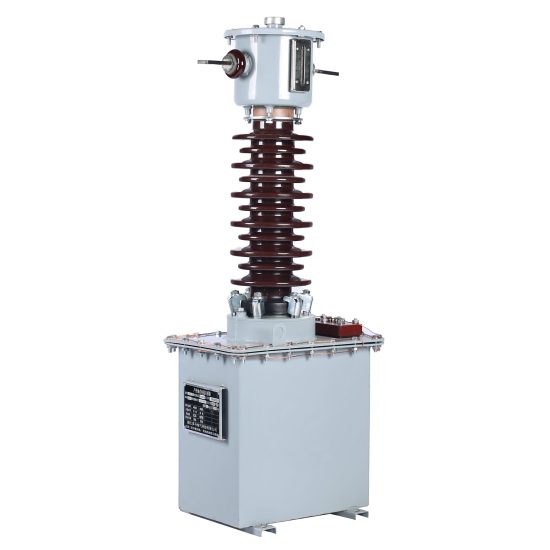
AGE-1026 33kV Cast-Resin Current Transformer for Substation Metering and Protection – IEC 61869-2 Certified
Introduction to the AGE-1026 Current Transformer
The AGE-1026 is a high-accuracy, cast-resin insulated current transformer (CT) engineered for dual-purpose applications in 33kV AC power systems—specifically designed to meet both metering and protection requirements under IEC 61869-2. This device is commonly deployed in utility substations, industrial facilities, and renewable energy interconnection points where reliability, long-term stability, and immunity to environmental stressors are critical. Unlike legacy oil-immersed transformers, the AGE-1026 leverages vacuum pressure impregnation (VPI) epoxy resin technology to encapsulate its magnetic core and windings, eliminating fire hazards, oil leakage risks, and maintenance-intensive sealing systems.
Operating Principle of Cast-Resin Insulation
Cast-resin insulation in the AGE-1026 employs a two-stage VPI process using cycloaliphatic epoxy resin, which fully penetrates the layered GOES (Grain-Oriented Electrical Steel) core and secondary windings under vacuum before curing under controlled pressure. This results in a monolithic, void-free dielectric structure with a relative permittivity of approximately 3.8 and volume resistivity exceeding 1×10¹⁴ Ω·cm at 20°C. The absence of air pockets prevents partial discharge inception below 10 pC at rated voltage, ensuring compliance with IEC 60270 limits. Thermal conductivity of the cured resin (~0.8 W/m·K) facilitates efficient heat dissipation from copper windings during continuous or short-circuit operation, maintaining hot-spot temperatures within Class F (155°C) insulation limits even under 1.2× rated primary current.
Advantages Over Oil-Immersed Designs
Compared to traditional oil-filled CTs, the AGE-1026 offers significant operational and safety benefits. Its solid dielectric eliminates flammability risks (IEC 60695 glow-wire ignition temperature >850°C), making it suitable for indoor switchgear and urban substations with stringent fire codes. The hermetic resin seal prevents moisture ingress, enabling reliable operation in humidity levels up to 95% RH without degradation of insulation resistance (>10,000 MΩ at 500 V DC after 24-hour damp heat exposure per IEC 60068-2-78). Additionally, the compact mechanical design reduces footprint by 30–40% versus equivalent oil units, simplifying retrofitting in space-constrained installations. Long-term accuracy drift is minimized due to the rigid core support structure, which suppresses magnetostriction-induced hysteresis errors over decades of service.
Typical Application Overview
The AGE-1026 is routinely specified for feeder metering in 33kV distribution substations, where Class 0.2S accuracy ensures revenue-grade billing compliance per IEC 62053-22. In protection schemes, its 5P20 class winding provides linear response up to 20× rated current with composite error ≤5%, enabling precise coordination with overcurrent relays (e.g., SEL-751 or Siemens 7SJ62). It is also deployed in solar farm collector systems interfacing with 33kV switchyards, where its high short-time thermal withstand (1 second at 40 kA RMS) accommodates fault currents from inverter-based resources. Industrial users leverage its dual-ratio capability (e.g., 600/1 A and 1200/1 A via tap selection) to adapt to load growth without hardware replacement.
Technical Specifications
The AGE-1026 adheres strictly to IEC 61869-2 and GB/T 20840.2, with all parameters validated through type, routine, and special tests per clause 7 of the standards. Below is a representative specification table for the standard configuration; custom ratios and accuracy classes are available upon request.
| Parameter | Value |
|---|---|
| Rated System Voltage (Um) | 33 kV (IEC); 35 kV (domestic) |
| Insulation Level (LI/AC) | 170 kV / 70 kV |
| Primary Current (Ip) | 100–3000 A (standard); up to 5000 A (custom) |
| Secondary Current (Is) | 1 A or 5 A |
| Accuracy Class – Metering | 0.2S, 0.5S |
| Accuracy Class – Protection | 5P10, 5P20 |
| Rated Output (VA) | 5–30 VA per class (e.g., 15 VA @ 0.2S; 30 VA @ 5P20) |
| Short-Time Thermal Withstand | 40 kA RMS for 1 s |
| Dynamic Withstand Current | 100 kA peak |
| Ambient Temperature Range | –40°C to +55°C |
| Altitude Limit | ≤1000 m (derating required above) |
| Relative Humidity | ≤95% non-condensing |
Electrical Performance Parameters
The AGE-1026 achieves its stated accuracy through precision-wound secondary coils on toroidal GOES cores with flux density maintained below 1.6 T at rated current to minimize core losses (<0.8 W/kg at 50 Hz). For Class 0.2S, ratio error must not exceed ±0.2% and phase displacement ≤±10 minutes at 100% In, per IEC 61869-2 Table 5. At 1% In, error limits tighten to ±0.75% and ±30 minutes, critical for low-load metering in rural feeders. Protection windings exhibit knee-point voltage ≥500 V (for 5P20), ensuring saturation only beyond 20× In. Burden compatibility is verified at 2.5× rated VA to prevent accuracy degradation under cable capacitance effects.
Environmental and Mechanical Ratings
Designed for both indoor and outdoor use, the AGE-1026 features UV-stabilized resin housing with IP55 ingress protection (terminal box) and IK08 mechanical impact resistance. The creepage distance exceeds 25 mm/kV (medium pollution, IEC 60815), totaling ≥825 mm for 33kV systems. Mounting options include flange (M12 bolts, PCD 180 mm) or bracket styles compatible with standard 33kV post insulators. Weight ranges from 28 kg (100/1 A) to 42 kg (3000/5 A), facilitating crane-free handling. Thermal stability is confirmed via 1000-cycle thermal shock testing (–40°C ↔ +80°C) with no cracking or delamination.
Typical Applications
The AGE-1026’s dual-class design enables versatile deployment across modern power infrastructure, balancing metrological precision with robust fault-current performance.
Substation Secondary Metering
In 33kV/11kV distribution substations, the AGE-1026’s 0.2S winding feeds revenue meters (e.g., Landis+Gyr E470) with guaranteed error margins under light-load conditions common during nighttime or seasonal demand troughs. Its low excitation current (<10 mA at 100% In) minimizes burden on meter inputs, while the 5P20 winding simultaneously supplies protection relays. This eliminates the need for separate metering and protection CTs, reducing capital cost and panel space. Field data from European DSOs show <0.15% annual drift in ratio error over 10 years, validating long-term billing integrity.
Industrial Power Distribution
Heavy industries—such as cement plants or steel mills—utilize the AGE-1026 on 33kV motor feeders where starting inrush currents can reach 8–10× full load. The 5P20 class ensures relay settings remain immune to transient saturation, preventing nuisance tripping. Dual-ratio models (e.g., 800/1 A and 1600/1 A) allow operators to reconfigure secondary taps during production line upgrades without replacing the entire unit. The resin housing resists chemical corrosion from airborne particulates (e.g., SO2, Cl2), outperforming painted metal enclosures in harsh environments.
Renewable Energy Integration
Solar and wind farms connecting to 33kV collector grids rely on the AGE-1026 for accurate energy yield measurement and anti-islanding protection. Its fast saturation recovery (<2 cycles post-fault) ensures rapid re-synchronization after grid disturbances—a critical requirement for IEEE 1547-2018 compliance. The high dynamic withstand (100 kA peak) accommodates asymmetric fault currents from inverter-based generation, which exhibit higher DC offset than conventional sources. Projects in India and Brazil have standardized on this model for >50 MW solar parks due to its proven field reliability under tropical conditions.
Rural and Suburban Distribution Networks
In remote areas with limited maintenance access, the AGE-1026’s maintenance-free design and wide ambient tolerance (–40°C to +55°C) ensure uninterrupted operation. Its lightweight construction simplifies pole-top installation using standard gin poles, while the IP55 terminal box protects against monsoon rains or dust storms. Utilities in Southeast Asia report 99.98% availability over 8-year deployments, attributing resilience to the absence of oil seals and gaskets prone to aging.
Compliance with International Standards
The AGE-1026 is engineered to satisfy both global and regional regulatory frameworks, ensuring interoperability and safety across diverse markets.
IEC 61869-2 Certification Details
Full compliance with IEC 61869-2:2012 includes adherence to clauses covering insulation coordination (Section 5), accuracy requirements (Section 6), and test procedures (Section 7). Type tests include temperature rise (ΔT ≤60 K for windings), short-circuit withstand (40 kA/1 s with ≤5% permanent deformation), and partial discharge (≤10 pC at 1.2 Um/√3). Routine tests—performed on 100% of units—encompass power frequency withstand (70 kV RMS/1 min), turns ratio verification (±0.1% tolerance), and polarity check. The manufacturer’s quality system is ISO 9001:2015 certified, with test reports traceable to national metrology institutes (e.g., PTB, NPL).
Alignment with GB/T 20840.2
For Chinese domestic markets, the AGE-1026 meets GB/T 20840.2-2013, which largely harmonizes with IEC 61869-2 but includes additional requirements for seismic performance (horizontal acceleration 0.25g) and salt fog resistance (96-hour neutral salt spray test per GB/T 10125). Notably, GB/T specifies a slightly higher insulation level for 35kV systems (LI/AC = 185/85 kV vs. IEC’s 170/70 kV for 33kV), necessitating reinforced resin thickness in the high-voltage region. All units destined for China undergo third-party certification by CQC (China Quality Certification Center).
Key Differences Between IEC and Domestic Standards
While IEC 61869-2 defines 33kV as the standard system voltage (Um = 36 kV), Chinese practice uses 35kV (Um = 40.5 kV), requiring adjusted insulation coordination. GB/T also mandates stricter short-circuit duration (2 s vs. IEC’s 1 s) for certain applications, though the AGE-1026’s thermal design comfortably exceeds both. Accuracy class definitions are identical, but GB/T requires additional verification at 120% In for protection windings—a condition the AGE-1026 passes with composite error <4.5% at 5P20 rating.
On-Site Testing Procedures
Post-installation verification ensures the AGE-1026 performs within specifications under actual site conditions. All tests follow IEC 61869-2 Annex B and IEEE C57.13.2 guidelines.
Insulation Resistance Test
Using a 2500 V DC megohmmeter, measure insulation resistance between primary-to-secondary, primary-to-ground, and secondary-to-ground. Acceptance criterion: ≥10,000 MΩ at 20°C. Correct for temperature using RT = R20 × 2(20–T)/10. Values below 5000 MΩ indicate moisture ingress or resin cracking and require drying or replacement. Perform before and after power frequency withstand tests to detect latent defects.
Turns Ratio Test
Apply a low-voltage AC source (50–100 V) to the primary and measure secondary voltage. Calculate ratio as Vp/Vs and compare to nameplate. Tolerance: ±0.1% for metering classes, ±0.5% for protection. Use a dedicated ratio tester (e.g., Omicron CT Analyzer) for automated comparison across multiple taps. Deviations >0.3% in 0.2S windings warrant core inspection for shorted turns.
Polarity Test
Verify reducing polarity per IEC 61869-2 Figure 4. Connect a 6–12 V DC battery momentarily between P1 and P2. Observe secondary voltage spike on a digital multimeter connected to S1–S2; a positive deflection confirms correct polarity. Incorrect polarity causes 180° phase shift, leading to metering errors or relay misoperation. Document results with oscillogram if possible.
Power Frequency Withstand Voltage Test
Apply 70 kV RMS (for 33kV class) at 50 Hz between primary and grounded secondary/enclosure for 1 minute. Ramp voltage at 2 kV/s to avoid transient overstress. No flashover or disruptive discharge is permitted. Use a calibrated sphere gap or capacitive divider for measurement. Reduce test voltage by 20% if altitude exceeds 1000 m.
Short-Circuit Test (for CT)
Inject 10–20× rated secondary current (e.g., 20 A for 1 A CT) into the secondary winding while monitoring primary voltage. Verify that the knee-point voltage matches factory data (±5%). A depressed knee-point indicates core saturation due to mechanical damage or excessive DC offset exposure. This test is critical after transportation or seismic events.
Preventive Maintenance Guide
Although cast-resin CTs require minimal maintenance, periodic checks extend service life and prevent unexpected failures.
Annual Inspection Protocol
Visually inspect for surface tracking, cracks, or discoloration on the resin housing. Clean with isopropyl alcohol if contamination is present. Check terminal tightness (torque: 15 N·m for M6 screws) and verify grounding continuity (<0.1 Ω resistance). Measure insulation resistance annually; a 30% drop from baseline warrants further investigation. In coastal areas, inspect for salt deposits and rinse with deionized water if conductivity exceeds 10 µS/cm.
Five-Year Comprehensive Maintenance
Every 60 months, perform a full suite of electrical tests: ratio, polarity, insulation resistance, and excitation curve. Compare results to commissioning data; deviations >5% in excitation current suggest core degradation. Ultrasonic testing can detect internal voids (>2 mm diameter) if partial discharge activity is suspected. Replace units exhibiting brittle resin (Shore D hardness <75) or cracked flanges.
Maintenance Intervals and Fault Diagnosis
| Interval | Action | Fault Indicator |
|---|---|---|
| Annually | Visual + IR check | Discoloration, arcing marks |
| 3 Years | Ratio + polarity test | Metering drift, relay miscoordination |
| 5 Years | Excitation curve + PD scan | Elevated core loss, audible hum |
| After Fault | Full electrical suite | Thermal damage, mechanical shock |
Common failure modes include secondary open-circuit during operation (causing dangerous overvoltage) and moisture ingress through damaged terminal seals. Always short-circuit secondary terminals before disconnecting meters or relays.
Conclusion
The AGE-1026 33kV cast-resin current transformer represents a benchmark in reliability, accuracy, and compliance for modern power systems. By integrating GOES silicon steel cores with VPI epoxy resin insulation, it delivers Class 0.2S metering precision and 5P20 protection performance in a single, maintenance-free unit. Its design rigorously adheres to IEC 61869-2 and GB/T 20840.2, ensuring global acceptance and interoperability across utility, industrial, and renewable applications. Field-proven thermal and mechanical robustness—validated through 40 kA short-circuit withstand and –40°C to +55°C operational range—minimizes lifecycle costs while maximizing grid resilience. With an expected service life of 25–30 years under standard conditions, the AGE-1026 eliminates the fire hazards and environmental liabilities associated with oil-filled alternatives. Its compact form factor and dual-ratio flexibility further enhance value in space-constrained or evolving infrastructure projects. For engineers specifying instrumentation for 33kV (or 35kV domestic) networks, the AGE-1026 provides a technically superior, future-proof solution that aligns with smart grid digitization and decarbonization objectives.