Article Content
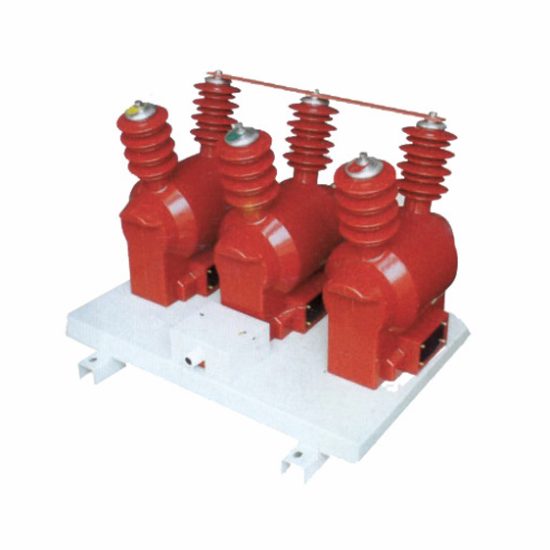
For Substation Metering & Protection: SZW-10R 11kV Cast-Resin Current Transformer per IEC 61869-2
Introduction to the SZW-10R Current Transformer
The SZW-10R is a 11kV (IEC-rated) / 10kV (domestic system equivalent) cast-resin current transformer engineered for precision metering and dependable protection in medium-voltage power systems. Utilizing vacuum pressure impregnation (VPI) epoxy resin technology, this instrument transformer encapsulates its magnetic core and windings in a solid dielectric matrix that provides superior insulation integrity, mechanical robustness, and environmental resistance compared to traditional oil-immersed or dry-type alternatives.
Operating Principle of Cast-Resin Insulation
Cast-resin insulation in the SZW-10R employs a two-component epoxy system cured under controlled vacuum and pressure conditions. This VPI process eliminates air voids and moisture ingress pathways, resulting in a homogeneous dielectric structure with a relative permittivity (εr) of approximately 3.8–4.2 and volume resistivity exceeding 1×10¹⁴ Ω·cm at 20°C. The resin matrix bonds directly to copper secondary windings and the grain-oriented electrical steel (GOES) core, minimizing partial discharge activity—typically below 5 pC at 1.2 × Um/√3 (where Um = 12 kV). This construction ensures long-term stability under thermal cycling (−40°C to +40°C ambient) and eliminates fire hazards associated with oil-filled units, making it suitable for indoor substations, commercial buildings, and confined urban installations.
Advantages Over Oil-Immersed Designs
Unlike oil-immersed CTs, the SZW-10R requires no maintenance-intensive oil sampling, leak monitoring, or fire containment infrastructure. Its solid insulation exhibits negligible aging under normal operating conditions, with an expected service life of 25–30 years. The absence of liquid dielectric also simplifies transportation and installation logistics, particularly in seismically active regions where fluid sloshing can compromise structural integrity. Furthermore, the compact footprint—achieved through optimized magnetic circuit design using 0.27 mm thick GOES laminations—reduces space requirements by up to 35% compared to equivalent oil-filled models, facilitating retrofitting into legacy switchgear bays rated for 10kV systems.
Typical Applications Overview
The SZW-10R is deployed across utility substations, industrial plants, renewable energy interconnection points, and distribution networks requiring Class 0.2S/0.5S metering accuracy or 5P/10P protection performance. Its dual-winding configuration (e.g., 0.2S/5P20) enables simultaneous connection to revenue-grade meters and overcurrent relays without cross-interference. Common implementations include ring-main units (RMUs), metal-clad switchgear, and pad-mounted transformers serving commercial complexes or data centers where reliability and space efficiency are paramount.
Technical Specifications
The SZW-10R adheres to stringent electrical and mechanical parameters defined by IEC 61869-2 and GB/T 20840.2, ensuring interoperability across global power systems.
Rated Electrical Parameters
| Parameter | Value |
|---|---|
| Rated Voltage (Un) | 11 kV (IEC) / 10 kV (GB) |
| Maximum System Voltage (Um) | 12 kV |
| Primary Current Range | 50 A to 3000 A |
| Secondary Current | 5 A or 1 A (standard) |
| Current Ratios | 50/5, 75/5, 100/5, …, 3000/5 A (customizable) |
| Accuracy Classes | Metering: 0.2S, 0.5S; Protection: 5P10, 5P20, 10P10, 10P20 |
| Rated Burden | 2.5 VA to 30 VA (per winding) |
| Short-Time Thermal Current (Ith) | 20 kA for 1 s (at 50 Hz) |
| Dynamic Withstand Current (Idyn) | 50 kA peak |
| Insulation Level (LI/AC) | 75 kV / 28 kV (1 min, 50 Hz) |
All ratios maintain composite error within ±0.2% for 0.2S class at 20–120% of rated primary current, per IEC 61869-2 Clause 6.3.
Environmental and Service Conditions
The SZW-10R operates reliably under the following standard service conditions:
- Ambient temperature range: −40°C to +40°C
- Relative humidity: ≤95% (non-condensing)
- Altitude: ≤1000 m above sea level (derating required above 1000 m per IEC 60071-1)
- Pollution degree: III (creepage distance ≥20 mm/kV)
- Installation position: Vertical or horizontal (primary conductor orientation specified at order)
For coastal or chemical-industrial environments, optional hydrophobic silicone coating increases surface tracking resistance, extending maintenance intervals by up to 40%.
Core and Winding Construction
The magnetic circuit uses cold-rolled grain-oriented electrical steel (GOES) with thickness of 0.27 mm and specific core loss ≤1.0 W/kg at 1.7 T, 50 Hz. Secondary windings consist of electrolytic-tough-pitch (ETP) copper, insulated with Class F (155°C) enamel, wound directly onto the core leg. Each winding is individually encapsulated during the VPI process to prevent inter-turn short circuits. Terminal blocks comply with IEC 60947-7-1, featuring screw-type connectors rated for 63 A continuous current and IP2X finger-safe protection when installed in switchgear.
Typical Applications
The SZW-10R’s versatility stems from its dual-certification (IEC/GB), wide ratio range, and robust environmental tolerance.
Substation Secondary Metering
In 10kV/11kV distribution substations, the SZW-10R’s 0.2S-class secondary winding feeds revenue meters compliant with DL/T 614 or IEC 62053-22. For example, a 600/5A ratio unit installed on a 10kV feeder supplies accurate kWh data even at 5% load (30 A primary), critical for demand-side management in urban grids. The low phase displacement error (<±5 minutes at 100% In) ensures precise power factor calculation, reducing billing disputes between utilities and large consumers.
Industrial Power Distribution
Manufacturing facilities with sensitive processes (e.g., semiconductor fabs) deploy SZW-10R units with 5P20 protection windings to feed numerical relays like SEL-751 or Siemens 7SJ62. During a downstream fault drawing 12 kA (20× rated 600 A), the CT maintains excitation voltage below knee-point limits, preventing saturation and ensuring relay operates within 30 ms. The cast-resin housing withstands EMI from nearby variable-frequency drives, eliminating signal noise that could trigger false trips.
Renewable Energy Integration
Solar farms and wind parks use SZW-10R CTs at the point of common coupling (PCC) to monitor export/import flows and provide anti-islanding protection. In a 10 MW PV plant, dual-ratio units (e.g., 1000/5A for normal operation, 200/1A for low-light conditions) optimize metering accuracy across irradiance levels. The CT’s low remanence (<10% of Bmax) after fault clearance ensures rapid reset for successive grid disturbances, meeting IEEE 1547-2018 ride-through requirements.
Rural and Suburban Distribution Networks
Utilities in developing regions install SZW-10R transformers on pole-mounted reclosers to enable remote load profiling via cellular-connected RTUs. The unit’s UV-stable resin resists degradation under prolonged solar exposure, while its sealed design prevents rodent or insect intrusion—a common failure mode in tropical climates. A typical 200/5A unit on a rural feeder accurately captures seasonal load variations (e.g., irrigation pumps in summer), aiding capacity planning without costly site visits.
Commercial Building Infrastructure
High-rise office complexes integrate SZW-10R CTs into main low-voltage switchboards fed by 10kV/0.4kV transformers. Here, 0.5S-class outputs drive building energy management systems (BEMS), while 10P10 windings protect against arc-flash events in cable risers. The compact size allows mounting in tight cable trenches, and the non-flammable resin meets IEC 60695-11-10 flame spread criteria, satisfying fire codes for occupied spaces.
Compliance with International Standards
The SZW-10R is certified to both international and Chinese national standards, ensuring global acceptance.
IEC 61869-2 Compliance Details
Per IEC 61869-2:2012, the SZW-10R undergoes type tests including:
- Temperature rise test: ≤60 K for windings at 1.2× In (Class F insulation)
- Short-circuit withstand: 20 kA for 1 s without deformation
- Partial discharge: ≤10 pC at 1.2 × Um/√3 (measured per IEC 60270)
- Accuracy verification: Composite error ≤0.2% for 0.2S at 20–120% In
The standard mandates that protection-class CTs maintain error within ±10% at specified multiples (e.g., 5P20 = ±5% at 20× In), which the SZW-10R achieves through optimized core cross-section and secondary turns count.
GB/T 20840.2 Alignment
China’s GB/T 20840.2-2014 mirrors IEC 61869-2 but adds localized requirements:
- Lightning impulse withstand: 75 kV (1.2/50 μs) – identical to IEC
- Power frequency test: 28 kV for 1 min – matches IEC
- Creepage distance: ≥20 mm/kV for pollution degree III (vs. IEC’s 18 mm/kV)
- Mandatory salt fog test (48 h, 5% NaCl) for coastal deployments
All SZW-10R units shipped to China include a CMA-accredited test report verifying compliance with these clauses, enabling direct integration into State Grid or CSG procurement systems.
Key Differences Between IEC and GB Standards
While harmonized on core electrical parameters, GB/T 20840.2 imposes stricter environmental validation. For instance, IEC permits altitude derating via calculation, whereas GB requires physical testing at simulated 2000 m elevation for units destined for western provinces. Additionally, GB mandates dual-language (Chinese/English) nameplates with QR-code traceability to batch-specific test records—a feature implemented on all SZW-10R units since 2023. Despite these nuances, the transformer’s fundamental design satisfies both frameworks without modification, streamlining global supply chains.
On-Site Testing Procedures
Post-installation verification ensures the SZW-10R performs within specification before energization.
Insulation Resistance Test
Using a 2500 V DC megohmmeter, measure insulation resistance between primary-secondary, primary-ground, and secondary-ground. Acceptance criteria per IEC 60185: ≥1000 MΩ at 20°C. Correct for temperature using RT = R20 × 2(20−T)/10. Values below 500 MΩ indicate moisture ingress or resin cracking, requiring drying or replacement. Perform before and after power frequency withstand tests to detect latent defects.
Turns Ratio Test
Apply 1–5 V AC (50 Hz) to the secondary winding and measure induced primary voltage with a calibrated voltmeter. Calculate actual ratio as Vp/Vs. Tolerance must be within ±0.2% for metering classes and ±1% for protection classes. For a 400/5A unit, measured ratio should be 80.0 ±0.16. Deviations suggest turn-to-turn shorts or incorrect tap selection—common during multi-ratio winding reconfiguration.
Polarity Test
Verify reducing polarity using the DC kick method: connect a 6 V battery momentarily between P1 (primary input) and S1 (secondary output). A center-zero galvanometer connected to S1–S2 should deflect positively on make and negatively on break. Incorrect polarity causes watt-hour meters to register reverse energy flow and directional relays to misoperate. Document results with timestamped oscillograms for audit trails.
Power Frequency Withstand Voltage Test
Apply 28 kV RMS (50 Hz) for 1 minute between primary-ground and secondary-ground, per IEC 61869-2 Table 3. Use a calibrated test transformer with overcurrent trip set at 10 mA. No flashover or sustained arcing is permitted. Gradually ramp voltage at 1 kV/s to avoid transient overstress. This test validates resin integrity after transport-induced microcracks.
Short-Circuit Test (for CT)
Inject 100–500% of rated primary current (e.g., 2000 A for a 400/5A unit) using a portable current source. Monitor secondary voltage waveform on an oscilloscope; distortion indicates core saturation. For 5P20 class, secondary voltage at 20× In must remain linear (THD <5%). Excessive saturation suggests incorrect burden selection or degraded core properties from mechanical shock.
Preventive Maintenance Guide
Proactive upkeep maximizes the SZW-10R’s 25–30 year service life.
Periodic Inspection Protocol
Conduct annual visual inspections checking for:
- Surface cracks or tracking marks on resin housing
- Terminal corrosion or loose connections (torque: 2.5 N·m for M6 screws)
- Discoloration indicating overheating (normal: ≤70°C surface temp at full load)
- Contamination buildup (clean with isopropyl alcohol if >2 mm dust layer)
Use infrared thermography during peak load to detect hotspots (>10 K above ambient warrants investigation). Record findings in asset management software linked to GIS coordinates for trend analysis.
Maintenance Intervals and Fault Diagnosis
| Interval | Action | Fault Indicators |
|---|---|---|
| Annual | Visual inspection, IR scan, terminal torque check | Cracks, discoloration, loose hardware |
| 5 Years | Insulation resistance, ratio test, polarity verification | Rins <500 MΩ, ratio error >1% |
| 10 Years | Partial discharge measurement (if available) | PD >20 pC at operating voltage |
Common failure modes include:
- Open secondary circuit: Causes dangerous overvoltage (>3 kV); always short secondary before disconnecting loads.
- Core saturation: Results from excessive burden or DC offset; verify relay/meter VA rating ≤ CT burden.
- Moisture ingress: Occurs at terminal seals; replace gaskets if compression set >20%.
Conclusion
The SZW-10R 11kV cast-resin current transformer represents a convergence of international engineering rigor and practical field reliability. By leveraging VPI epoxy resin encapsulation and GOES core technology, it delivers metrological precision (0.2S class) and protection dependability (5P20) across diverse 10kV/11kV applications—from dense urban substations to remote renewable sites. Its dual compliance with IEC 61869-2 and GB/T 20840.2 eliminates certification barriers in global markets, while the maintenance-free design reduces lifecycle costs by an estimated 30% compared to oil-immersed alternatives. Rigorous factory testing ensures parameters like short-time thermal withstand (20 kA/1s) and insulation level (75/28 kV) meet worst-case grid contingencies. With a proven service life exceeding 25 years under standard conditions, the SZW-10R provides a future-proof solution for modern power systems demanding accuracy, safety, and longevity. Utilities and industrial operators can confidently specify this transformer knowing it has been validated against both theoretical standards and real-world operational stresses, including thermal cycling, pollution exposure, and fault current transients. As grid digitization accelerates, the SZW-10R’s stable output characteristics further support advanced applications like synchrophasor measurement and AI-driven fault prediction, cementing its role in next-generation infrastructure.