Article Content
For Substation Metering & Protection: ZWJ-12 11kV Cast-Resin Voltage Transformer per IEC 61869-3
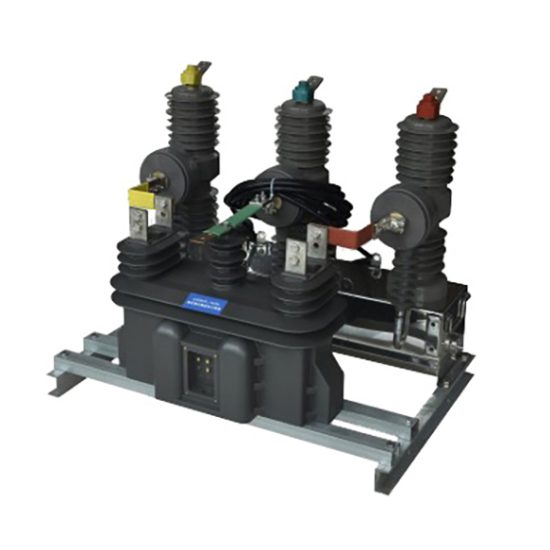
Introduction to the ZWJ-12 Voltage Transformer
The ZWJ-12 is a precision-engineered, cast-resin insulated voltage transformer (VT) designed for reliable operation in 11kV (IEC standard) or 10kV (domestic system equivalent) medium-voltage networks. As a critical interface between high-voltage primary circuits and low-voltage secondary instrumentation, it provides galvanically isolated, scaled-down voltage signals for metering, protective relaying, and control functions. Its design adheres strictly to IEC 61869-3 and GB/T 20840.3, ensuring global interoperability and performance consistency.
Operating Principle of Cast-Resin Insulation
Cast-resin insulation in the ZWJ-12 employs vacuum pressure impregnation (VPI) technology using cycloaliphatic epoxy resin. This process eliminates air voids and moisture ingress by fully encapsulating the primary and secondary windings along with the GOES (grain-oriented electrical steel) magnetic core. The resulting monolithic structure exhibits superior dielectric strength (≥30 kV/mm), excellent tracking resistance (CTI ≥600 V), and minimal partial discharge (<5 pC at 1.2 × Um/√3). Unlike oil-filled alternatives, the solid insulation eliminates fire hazards, environmental contamination risks, and maintenance-intensive oil sampling. Thermal stability is maintained up to 130°C (Class B insulation), with a thermal time constant optimized for continuous duty under rated load conditions.
Advantages Over Oil-Immersed Designs
Compared to traditional oil-immersed VTs, the ZWJ-12 offers significant operational and safety benefits. Its dry-type construction eliminates flammability concerns, making it suitable for indoor substations, urban switchgear rooms, and confined industrial environments where fire codes restrict oil-filled equipment. The absence of oil also removes the need for conservator tanks, breather systems, and periodic dielectric testing of insulating fluid. Mechanically, the rigid epoxy housing provides superior resistance to vibration and seismic loads (tested per IEC 60068-2-6), while its compact footprint reduces spatial requirements by up to 30%. Furthermore, the ZWJ-12 achieves faster commissioning—no oil filling, degassing, or settling periods are required—and demonstrates lower lifecycle costs due to minimal preventive maintenance.
Typical Applications Overview
The ZWJ-12 is deployed across diverse medium-voltage infrastructure where accuracy, reliability, and safety are paramount. Primary use cases include utility-owned 10/11kV distribution substations for revenue metering (accuracy class 0.2 or 0.5), industrial plant switchyards for motor protection schemes, and renewable energy interconnection points (e.g., solar farms) requiring synchronized voltage monitoring. Its robust design supports both indoor and outdoor installations (IP54 rating with optional IP55 terminal box), operating reliably in ambient temperatures from –25°C to +40°C and altitudes up to 1,000 m above sea level. The transformer’s standardized secondary output (100 V or 110 V) ensures compatibility with legacy and modern digital relays, SCADA RTUs, and smart meters.
Technical Specifications
The ZWJ-12 is engineered to deliver precise voltage transformation under defined electrical and environmental parameters. All specifications comply with IEC 61869-3:2011 and GB/T 20840.3-2013, with verified test reports available upon request.
Rated Electrical Parameters
The primary rated voltage is 11 kV (Um = 12 kV), corresponding to domestic 10 kV systems. Standard voltage ratios include 11,000/√3 : 100/√3 V and 11,000/√3 : 110/√3 V for three-phase grounded systems. Accuracy classes are available in 0.2, 0.5 (for metering), and 3P, 6P (for protection), with burden ratings ranging from 10 VA to 100 VA per phase. The rated frequency is 50 Hz (±0.5 Hz). Insulation levels meet IEC 60071-1: short-duration power frequency withstand voltage of 28 kV rms (1 min), and lightning impulse withstand voltage of 75 kV peak (1.2/50 μs waveform). The maximum system voltage (Um) is 12 kV, and the highest voltage for equipment is consistent with IEC 60038 standard voltages.
Thermal and Mechanical Ratings
The ZWJ-12 utilizes Class B (130°C) insulation system with a temperature rise limit of 60 K above ambient for windings under rated load. Continuous thermal current capability is 100% of rated primary voltage indefinitely. Short-time thermal withstand is 10 seconds at 2× rated voltage without degradation. The core is constructed from 0.27 mm thick GOES laminations with a magnetic flux density of 1.6 T at rated voltage, minimizing no-load losses (<15 W) and ensuring low harmonic distortion (<3% THD at 1.5× rated voltage). Terminal studs are M10 stainless steel with torque specification of 25 N·m, rated for 630 A short-circuit current (1 s).
Standard Service Conditions
Designed for operation under normal service conditions per IEC 61869-1: ambient temperature range –25°C to +40°C (24-hour average ≤35°C), relative humidity ≤95% (non-condensing), and installation altitude ≤1,000 m. For altitudes exceeding 1,000 m, derating factors apply: 1% reduction in rated voltage per 100 m above 1,000 m. The unit is suitable for both indoor (pollution degree 2) and outdoor (pollution degree 3) environments when mounted vertically with terminals facing downward. Seismic withstand capability is 0.3g horizontal acceleration (IEC 60068-2-57), validated through shake-table testing.
Typical Applications
The ZWJ-12 voltage transformer serves as a foundational component in modern medium-voltage power systems, enabling accurate measurement and dependable protection across multiple sectors.
Substation Secondary Metering
In utility distribution substations, the ZWJ-12 provides the voltage input for revenue-grade kWh meters and power quality analyzers. Configured in wye-wye with open delta tertiary (optional), it delivers phase-to-ground voltages (100/√3 V or 110/√3 V) to Class 0.2 or 0.5 metering circuits. The low phase displacement error (<10 minutes at 0.2 class) ensures compliance with billing accuracy regulations. For example, in a 10 kV ring-main unit feeding a commercial district, three ZWJ-12 units supply voltage signals to a multi-tariff meter, enabling time-of-use billing with <0.5% measurement uncertainty over a 20%–120% load range.
Industrial Power Distribution
Within heavy industrial facilities—such as steel mills, chemical plants, and data centers—the ZWJ-12 interfaces with numerical relays for overvoltage, undervoltage, and loss-of-potential protection. Its 3P or 6P accuracy class guarantees correct relay operation during fault transients. In a typical motor control center (MCC) fed from an 11 kV bus, ZWJ-12 VTs feed voltage inputs to 59 (overvoltage) and 27 (undervoltage) elements in a multifunction relay, tripping within 20 ms of a sustained 120% overvoltage condition. The cast-resin design resists chemical fumes and dust prevalent in such environments, eliminating insulation degradation seen in oil-filled units.
Renewable Energy Integration
Solar photovoltaic (PV) and wind farms require precise grid-synchronization and anti-islanding protection, both dependent on accurate voltage sensing. The ZWJ-12 is installed at the point of common coupling (PCC) to provide voltage signals to inverters and protection relays. Its fast response time (<20 ms to 90% of final value during step changes) ensures rapid detection of islanding events per IEEE 1547. In a 10 MW solar farm connected to a 10 kV rural feeder, ZWJ-12 VTs enable vector shift and rate-of-change-of-frequency (ROCOF) protection schemes, disconnecting generation within 2 cycles of grid separation.
Rural and Suburban Distribution Networks
In remote or space-constrained locations, the ZWJ-12’s compact size and maintenance-free operation make it ideal for pole-mounted or pad-mounted switchgear. It supports single-phase or three-phase configurations for overhead line monitoring. For instance, in a suburban 10 kV radial feeder, a single ZWJ-12 (line-to-ground) feeds a voltage-operated recloser, enabling automatic sectionalizing during permanent faults. The unit’s UV-stabilized epoxy housing withstands prolonged sun exposure without cracking, and its hydrophobic surface sheds rainwater to prevent flashovers during wet pollution events.
Compliance with International Standards
The ZWJ-12 is rigorously tested and certified to meet both international and Chinese national standards, ensuring global acceptance and interoperability.
IEC 61869-3 Certification Details
Compliance with IEC 61869-3:2011 (“Instrument transformers – Part 3: Additional requirements for inductive voltage transformers”) mandates verification of accuracy under defined burdens, temperature rise limits, and transient performance. The ZWJ-12 undergoes type tests including temperature rise (Clause 6.3), short-circuit withstand (Clause 6.4), and accuracy verification at 25%, 50%, 100%, and 120% of rated voltage across specified burdens. Partial discharge measurements confirm levels below 10 pC at 1.2 × Um/√3. Routine tests per Clause 7 include power frequency withstand, winding resistance, and ratio/polarity checks. Certification is issued by accredited third-party laboratories (e.g., KEMA, CESI) with traceable calibration chains.
Alignment with GB/T 20840.3
GB/T 20840.3-2013 (“Instrument transformers – Part 3: Additional requirements for inductive voltage transformers”) aligns closely with IEC 61869-3 but includes China-specific provisions. Key differences include mandatory seismic testing for regions prone to earthquakes (Zone II per GB 50260) and stricter requirements for pollution performance in coastal areas (salt fog resistance per GB/T 4797.6). The ZWJ-12 meets all GB/T 20840.3 clauses, including enhanced creepage distance (≥25 mm/kV for outdoor use) and mandatory factory acceptance tests witnessed by State Grid or CSG inspectors. Domestic certification is issued by China National Accreditation Service (CNAS)-accredited labs.
Testing and Certification Requirements
Full compliance requires both type tests (performed once per design) and routine tests (performed on every unit). Type tests include: temperature rise (verified via resistance method, Δθ ≤60 K), short-circuit current withstand (10 s at 2× rated voltage), and impulse voltage (75 kV peak, 15 shots positive/negative). Routine tests encompass: power frequency withstand (28 kV rms, 1 min), insulation resistance (>1,000 MΩ at 2,500 V DC), turns ratio error (within ±0.2% for 0.2 class), and polarity (reducing polarity confirmed via DC kick test). Certificates include test data sheets, material declarations (RoHS, REACH), and conformity declarations per ISO/IEC 17065.
On-Site Testing Procedures
Post-installation verification ensures the ZWJ-12 performs within specifications before energization. All tests follow IEC 61869-10 guidelines.
Insulation Resistance Test
Using a 2,500 V DC megohmmeter, measure insulation resistance between primary winding and ground, secondary winding and ground, and primary-to-secondary. Acceptance criterion: ≥1,000 MΩ at 20°C. Correct for temperature using RT2 = RT1 × 2(T1–T2)/10. Low readings indicate moisture ingress or resin cracking; retest after 24-hour drying if humidity >80%.
Turns Ratio Test
Apply 100–200 V AC to the primary and measure secondary voltage. Calculate ratio error: [(Vp/Vs)measured – (Vp/Vs)nominal] / (Vp/Vs)nominal × 100%. Tolerance: ±0.2% for 0.2 class, ±0.5% for 0.5 class, ±3% for 3P. Use calibrated voltmeters (accuracy class 0.1) and ensure burden is disconnected.
Polarity Test
Perform a DC kick test: connect a 6–12 V battery to primary (H1+, H2–) and a center-zero galvanometer to secondary (X1, X2). Momentary closure should produce a positive deflection. Confirms reducing polarity (ANSI/IEEE C57.13), essential for correct phasor alignment in differential and directional protection schemes.
Power Frequency Withstand Voltage Test
Apply 28 kV rms (50 Hz) between primary and ground for 1 minute. Secondary windings are short-circuited and grounded. Monitor for flashover, excessive leakage current (>1 mA), or audible discharge. Test voltage derived from IEC 60071-1 for Um = 12 kV. Use a calibrated HV test set with overcurrent trip (≤50 mA).
Open-Circuit Characteristic Test
With secondary open, gradually increase primary voltage from 0 to 190 V (phase-to-phase equivalent of 1.9 × rated). Record excitation current. Knee-point voltage must exceed 150 V (for 100 V secondary), indicating sufficient saturation margin for protection applications. Excessive magnetizing current (>5% of rated) suggests core defects or shorted turns.
Preventive Maintenance Guide
Although cast-resin VTs require minimal maintenance, periodic inspection ensures long-term reliability.
Annual Visual and Electrical Inspection
Inspect for surface tracking, cracks, or discoloration on the epoxy housing. Clean with non-abrasive cloth and isopropyl alcohol if contaminated. Verify terminal tightness (25 N·m torque) and check for corrosion. Perform insulation resistance and ratio tests annually. Replace if insulation resistance drops below 500 MΩ or ratio error exceeds twice the tolerance limit.
Five-Year Comprehensive Assessment
Every 60 months, conduct partial discharge measurement (using IEC 60270 method) at 1.2 × Um/√3. Acceptable level: <10 pC. Also perform dielectric frequency response (DFR) analysis to detect moisture ingress in resin. If tan δ increases by >0.5% from baseline, investigate further. Review historical test data trends to predict end-of-life.
Maintenance Intervals and Fault Diagnosis
| Interval | Task | Acceptance Criteria |
|---|---|---|
| Annually | Visual inspection, IR test, ratio test | IR ≥1,000 MΩ; ratio error within spec |
| 5 Years | Partial discharge, DFR, torque check | PD <10 pC; tan δ stable |
| After Fault | Full suite + open-circuit test | No change in excitation curve |
Common faults include cracked resin (from impact or thermal cycling), loose terminals (causing arcing), and core lamination shorts (evidenced by elevated no-load losses). Immediate replacement is recommended for any mechanical damage.
Conclusion
The ZWJ-12 11kV cast-resin voltage transformer represents a benchmark in medium-voltage instrumentation, combining IEC 61869-3-certified accuracy with the inherent safety and reliability of dry-type construction. Its GOES silicon steel core ensures low losses and high linearity, while the VPI epoxy resin system provides exceptional dielectric integrity and environmental resilience. Designed for both metering (0.2/0.5 class) and protection (3P/6P) duties, it delivers consistent performance across utility, industrial, and renewable applications—from urban substations to remote solar farms. Compliance with both IEC and GB standards guarantees global acceptance, and the absence of flammable materials simplifies permitting and reduces insurance costs. With a design life of 25–30 years under normal service conditions, the ZWJ-12 minimizes total cost of ownership through zero routine maintenance and high immunity to pollution, humidity, and vibration. When integrated into modern digital substations, it forms a dependable foundation for accurate energy accounting, rapid fault clearance, and grid stability—proving indispensable in today’s evolving power infrastructure.