Article Content
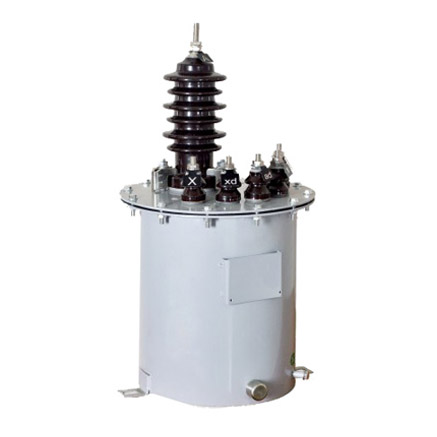
LB-10W 11kV Cast-Resin Current Transformer for Substation Metering and Protection – IEC 61869-2 Certified
Introduction to the LB-10W Current Transformer
The LB-10W is a high-accuracy, outdoor-rated cast-resin current transformer (CT) engineered for reliable operation in 11kV (IEC standard) or 10kV (domestic system equivalent) medium-voltage power networks. Designed per IEC 61869-2 and GB/T 20840.2, it transforms primary currents—ranging from hundreds to thousands of amperes—into standardized secondary outputs of 1A or 5A for interfacing with protective relays, revenue-grade meters, SCADA systems, and monitoring instrumentation. Unlike legacy oil-immersed CTs, the LB-10W employs vacuum pressure impregnated (VPI) epoxy resin insulation, eliminating fire hazards, oil leakage risks, and maintenance-intensive sealing systems.
Operating Principle of Cast-Resin Insulation
Cast-resin insulation in the LB-10W utilizes a thermosetting epoxy matrix that fully encapsulates the primary conductor, secondary windings, and magnetic core under vacuum conditions. This process removes entrapped air and moisture, ensuring homogeneous dielectric integrity and preventing partial discharge inception even under transient overvoltages. The VPI technique enhances mechanical rigidity, thermal conductivity, and resistance to tracking and erosion in polluted environments. The resin’s coefficient of thermal expansion closely matches that of copper and silicon steel, minimizing stress-induced microcracks during thermal cycling between –40°C and +40°C ambient extremes. This monolithic structure provides a Basic Insulation Level (BIL) of 75 kV peak and withstands 28 kV rms for 1 minute at power frequency, satisfying IEC 61869-2 insulation coordination requirements for 11kV systems.
Advantages Over Oil-Immersed Designs
The LB-10W eliminates critical failure modes inherent to oil-filled CTs. There is no risk of flammable oil ignition during internal faults, making it suitable for urban substations and indoor switchgear where fire codes prohibit combustible fluids. The solid resin housing is hermetically sealed without gaskets or breathers, rendering it immune to moisture ingress—a leading cause of dielectric degradation in oil units. Maintenance is reduced to visual inspections only; no oil sampling, degassing, or level checks are required. Additionally, the compact footprint and lighter weight (typically 25–30 kg) simplify handling and reduce structural support requirements on busbars or support insulators. Environmental compliance is enhanced as the unit contains no PCBs or hydrocarbons, aligning with RoHS and WEEE directives.
Typical Application Overview
The LB-10W serves dual roles in electrical infrastructure: precision metering (Class 0.2S or 0.5S) and high-speed protection (Class 5P10 or 5P20). In utility substations, it feeds data to AMI systems and revenue meters while simultaneously triggering overcurrent relays during fault conditions. Industrial facilities deploy it on main incomers and motor feeders to enable selective coordination and energy auditing. Its robust outdoor rating (IP54 minimum) allows direct exposure to rain, dust, and UV radiation without performance loss. With a service life exceeding 25 years under normal operating conditions, the LB-10W offers lifecycle cost advantages through zero consumables and minimal downtime.
Technical Specifications
The LB-10W is engineered to stringent electrical and environmental parameters aligned with international standards. Key specifications include:
| Parameter | Value |
|---|---|
| Rated System Voltage (IEC) | 11 kV |
| Domestic System Voltage | 10 kV |
| Primary Current Range | 50 A to 3000 A (standard); up to 6000 A optional |
| Secondary Current | 1 A or 5 A (user-selectable at ordering) |
| Accuracy Classes | Metering: 0.2S, 0.5S; Protection: 5P10, 5P20 |
| Rated Burden | 2.5 VA to 30 VA (per class and ratio) |
| Insulation Level | Power Frequency Withstand: 28 kV rms / 1 min Lightning Impulse Withstand (BIL): 75 kV peak |
| Short-Time Thermal Current | 25 kA for 1 s (at rated primary current) |
| Dynamic Withstand Current | 62.5 kA peak (2.5 × thermal current) |
| Ambient Temperature Range | –40°C to +40°C |
| Altitude Limit | ≤ 1000 m above sea level (derating required above) |
| Humidity | Up to 95% RH non-condensing |
| Core Material | Grain-Oriented Electrical Steel (GOES), low-loss grade |
| Insulation System | Vacuum Pressure Impregnated (VPI) epoxy resin |
| Enclosure Rating | IP54 (outdoor use) |
Electrical Performance Parameters
The LB-10W achieves its accuracy classes through precise core design using high-permeability GOES laminations with interlaminar insulation. For Class 0.2S metering, composite error must not exceed ±0.2% at 20% to 120% of rated primary current, with phase displacement ≤ ±10 minutes. Protection class 5P20 ensures ≤5% ratio error at 20 times rated current, enabling reliable relay operation during high-magnitude faults. The secondary winding is designed with low leakage reactance to maintain burden compatibility across cable lengths up to 100 m (for 5A systems). Saturation voltage (Vk) exceeds 200 V for 5P20 cores, verified via excitation curve testing per IEC 61869-2 Annex C.
Environmental and Mechanical Ratings
Designed for outdoor deployment, the LB-10W withstands severe climatic conditions without derating. The UV-stabilized resin housing resists chalking and embrittlement after 10,000 hours of accelerated weathering (per IEC 60529). Creepage distance exceeds 240 mm for 11kV systems in pollution degree IV environments (IEC 60815), preventing flashovers in coastal or industrial zones. Mounting is via two M12 threaded inserts spaced 150 mm apart, compatible with standard busbar clamps. Terminal blocks accept 2.5–10 mm² stranded copper conductors with screw-type connectors rated for 600 V. Weight varies by ratio: 26 kg (50/5A) to 32 kg (3000/5A).
Typical Applications
The LB-10W’s dual-certification for metering and protection enables versatile deployment across modern power systems.
Substation Secondary Metering
In 11kV distribution substations, the LB-10W provides Class 0.2S accuracy for revenue metering at the point of common coupling (PCC). Paired with an IEC 61869-3 compliant voltage transformer, it forms a complete metering set feeding digital kWh meters compliant with MID or ANSI C12.20. The low phase displacement ensures accurate reactive energy measurement, critical for power factor billing. Its compact size allows retrofit into existing ring-main units (RMUs) without busbar reconfiguration. Utilities leverage its long-term stability (<0.1% annual drift) to extend calibration intervals to 5 years, reducing operational costs.
Industrial Power Distribution
Manufacturing plants use the LB-10W on 10kV motor control centers (MCCs) and transformer secondaries to enable selective coordination between upstream breakers and downstream fuses. The 5P20 protection class ensures relays operate within 30 ms during bolted three-phase faults, minimizing equipment damage. Simultaneously, the 0.5S metering winding supplies data to energy management systems (EMS) for load profiling and demand-side optimization. In arc furnace or welding applications with high harmonic content, the GOES core maintains linearity up to the 13th harmonic, avoiding saturation-induced measurement errors.
Renewable Energy Integration
Solar PV and wind farms integrate the LB-10W at the 11kV collector substation output to monitor export/import power and trigger anti-islanding protection. During grid faults, the CT must accurately reproduce decaying DC offset currents—a requirement met by its low remanence core design. The outdoor rating eliminates the need for climate-controlled enclosures, reducing balance-of-system costs. For battery energy storage systems (BESS), it supports bidirectional current measurement with symmetrical accuracy in both directions, essential for state-of-charge algorithms.
Rural and Suburban Distribution Networks
Utilities deploy the LB-10W on pole-mounted transformers and sectionalizing switches in rural grids where maintenance access is limited. Its maintenance-free design ensures reliability over decades despite wide temperature swings and dust accumulation. In smart grid rollouts, it interfaces with FTUs (Feeder Terminal Units) for automated fault location, isolation, and restoration (FLISR). The IP54 rating prevents insect or rodent intrusion, a common cause of failures in older open-core designs.
Compliance with International Standards
The LB-10W is certified to IEC 61869-2:2012 (Instrument transformers – Part 2: Additional requirements for current transformers) and harmonized with China’s GB/T 20840.2-2014 standard.
IEC 61869-2 Certification Details
Compliance encompasses type tests, routine tests, and special tests defined in Clause 7 of IEC 61869-2. Type tests include temperature rise (≤60 K for windings), short-circuit withstand (25 kA/1s), and impulse voltage (75 kV peak). Routine tests performed on every unit include power frequency withstand (28 kV/1 min), turns ratio verification (±0.25% tolerance), and polarity check. Special tests—conducted on sample batches—include partial discharge measurement (<10 pC at 1.2 × Um/√3) and capacitance/tan δ assessment. The manufacturer’s test reports are traceable to national metrology institutes (e.g., PTB, NIM).
Alignment with GB/T 20840.2
GB/T 20840.2 adopts IEC 61869-2 with minor national deviations. Key differences include: (1) GB requires a 1-minute power frequency test at 30 kV rms instead of 28 kV for 10kV-class equipment; (2) short-time current rating must be verified at 28 kA/1s for domestic projects; (3) creepage distance minimum is 220 mm vs. IEC’s 240 mm for light-pollution areas. The LB-10W exceeds both standards, carrying dual certification marks (CE and CQC). Documentation includes Chinese-language test certificates for local grid acceptance.
Testing and Certification Requirements
Certification requires third-party witness testing at accredited labs (e.g., KEMA, CESI, or China Electric Power Research Institute). Each production batch undergoes statistical quality control per ISO 9001, with sample sizes determined by AQL 1.0. Certificates list exact test voltages, burden values, and accuracy results. For export projects, additional certifications (e.g., SASO, SONCAP) may apply, but the core design remains unchanged due to IEC harmonization.
On-Site Testing Procedures
Post-installation verification ensures the LB-10W performs within specification before energization.
Insulation Resistance Test
Measure insulation resistance between primary-to-secondary, primary-to-ground, and secondary-to-ground using a 2500 V DC megohmmeter. Acceptance criterion: ≥1000 MΩ at 20°C. Correct for temperature using RT2 = RT1 × 2(T1–T2)/10. Low readings indicate moisture ingress or resin cracking—requiring drying or replacement. Perform before and after power frequency tests to detect insulation degradation.
Turns Ratio Test
Apply a low-voltage AC current (1–5 A) to the primary and measure secondary current with calibrated ammeters. Calculate ratio error: [(Ip/Is) – N] / N × 100%, where N is nominal ratio. Tolerance: ±0.25% for metering classes, ±1% for protection. Use a dedicated CT analyzer (e.g., Omicron CT Analyzer) for automated testing across multiple taps. Verify all ratio taps if multi-ratio unit.
Polarity Test
Confirm reducing polarity per IEC 61869-2 Figure 3. Connect a 1.5 V DC battery momentarily across primary terminals (P1 to P2). Observe secondary voltage polarity with a DC voltmeter: positive deflection at S1 indicates correct polarity. Incorrect polarity causes 180° phase shift, leading to relay misoperation or negative meter readings. Document results in commissioning report.
Power Frequency Withstand Voltage Test
Apply 28 kV rms (IEC) or 30 kV rms (GB) at 50 Hz between primary and grounded secondary/enclosure for 1 minute. Use a calibrated HV test set with overcurrent trip (≤100 mA). No flashover or disruptive discharge is permitted. Ramp voltage at 2 kV/s to avoid transient overstress. Discharge primary through grounding stick post-test.
Short-Circuit Test (for CT)
Verify thermal withstand capability by injecting 25 kA for 1 second through primary (using portable short-circuit generator). Monitor secondary current waveform for distortion indicating core saturation. Post-test, repeat insulation resistance and ratio tests to confirm no damage. Typically performed only during type testing or after severe fault exposure.
Preventive Maintenance Guide
The LB-10W requires minimal maintenance but benefits from periodic inspection to ensure longevity.
Annual Visual and Functional Inspection
Inspect for surface cracks, tracking marks, or discoloration on resin housing. Clean with mild detergent if salt or dust deposits accumulate. Check terminal tightness (torque: 2.5 N·m for M4 screws). Verify secondary circuit continuity and grounding integrity (resistance <0.1 Ω). Review connected meter/relay logs for abnormal current imbalances suggesting CT saturation or wiring faults.
Five-Year Comprehensive Maintenance
Perform insulation resistance, ratio, and polarity tests as per commissioning procedures. Measure excitation curve to detect core degradation—compare Vk to baseline; >10% drop indicates aging. Inspect mounting hardware for corrosion; replace stainless steel bolts if pitting observed. Update asset management records with test results.
Maintenance Intervals and Fault Diagnosis
| Interval | Action | Fault Indicator |
|---|---|---|
| Annually | Visual inspection, terminal check | Cracks, overheating marks |
| Every 5 Years | Full electrical tests | Ratio error >1%, IR <500 MΩ |
| After Fault | Post-fault diagnostics | Relay misoperation, blown fuses |
| End of Life (25+ yrs) | Replacement recommended | Brittle resin, persistent errors |
Common faults include open-circuited secondaries (causing dangerous overvoltages) and incorrect burden connection. Always short secondary terminals before disconnecting loads.
Conclusion
The LB-10W 11kV cast-resin current transformer represents a benchmark in reliability, accuracy, and safety for modern medium-voltage networks. By leveraging VPI epoxy resin technology and GOES magnetic cores, it delivers IEC 61869-2 and GB/T 20840.2 certified performance across metering (0.2S/0.5S) and protection (5P10/5P20) applications without the operational liabilities of oil-filled alternatives. Its robust outdoor construction withstands extreme temperatures, humidity, and pollution, ensuring stable operation in diverse environments—from urban substations to remote renewable sites. With a design life of 25–30 years and minimal maintenance requirements, the LB-10W reduces total cost of ownership while enhancing grid resilience. Field-proven in thousands of installations globally, it remains the preferred choice for engineers prioritizing long-term accuracy, fire safety, and compliance with evolving international standards. As power systems integrate more distributed generation and digital monitoring, the LB-10W’s dual-function capability and solid-state reliability position it as a cornerstone of next-generation distribution infrastructure.
Frequently Asked Questions (FAQ)
Q1: Can the LB-10W be used indoors?
Yes. While rated for outdoor use (IP54), it is equally suitable for indoor switchgear. Indoor environments may extend service life due to reduced UV exposure.
Q2: What is the maximum cable length for the secondary circuit?
For 5A systems, ≤100 m with 4 mm² copper cable (burden ≤1.5 Ω). For 1A systems, ≤300 m (burden ≤5 Ω). Always verify total burden ≤ rated VA.
Q3: Is the LB-10W suitable for harmonic-rich environments?
Yes. The GOES core maintains linearity up to the 13th harmonic. For higher harmonics (>1 kHz), consult factory for specialized core grading.
Q4: How do I select between 1A and 5A secondary current?
Choose 1A for long cable runs (>50 m) to reduce burden; 5A for shorter distances and compatibility with legacy relays. Both meet same accuracy classes.
Q5: What happens if the secondary is left open-circuited?
Dangerous overvoltages (>1 kV) can develop, risking insulation failure and personnel hazard. Always short terminals before disconnecting loads.
Q6: Does the LB-10W require periodic recalibration?
Not typically. Accuracy drift is <0.1%/year. Recalibrate only if ratio tests exceed tolerance or after severe fault exposure.
Q7: Can I install the LB-10W vertically or horizontally?
Yes. Orientation does not affect performance. Ensure adequate clearance (≥150 mm) from grounded parts per IEC 61936.
Q8: What documentation is provided with each unit?
Each unit ships with test certificate (ratio, polarity, insulation), IEC 61869-2 compliance statement, and installation manual in English/Chinese.