Article Content
For Substation Metering & Protection: DZC-3 11kV Cast-Resin Voltage Transformer per IEC 61869-3
Introduction to the DZC-3 Voltage Transformer
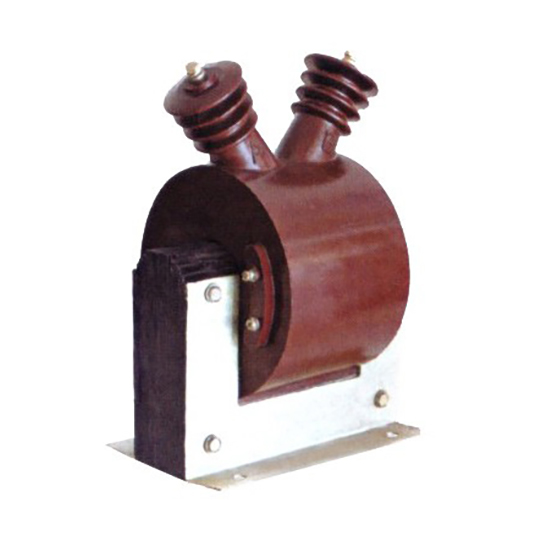
The DZC-3 is a precision-engineered, indoor-type electromagnetic voltage transformer (VT) designed for reliable operation in 11kV medium-voltage systems—corresponding to the domestic 10kV nominal system voltage used across many regional power grids. Constructed using advanced vacuum pressure impregnation (VPI) epoxy resin casting technology, the DZC-3 provides superior dielectric strength, mechanical robustness, and environmental resistance compared to traditional oil-immersed or dry-wound alternatives. Its primary role is to accurately step down high system voltages to standardized secondary levels (typically 100 V or 100/√3 V) for use in metering, protection relaying, and monitoring circuits.
Operating Principle of Cast-Resin Insulation
Cast-resin insulation in the DZC-3 employs a thermosetting epoxy resin system that fully encapsulates the magnetic core and windings under vacuum and pressure. This process eliminates air voids and moisture ingress pathways, ensuring uniform electric field distribution and preventing partial discharge inception even under transient overvoltages. The resin matrix exhibits excellent tracking resistance (CTI > 600 V), high thermal conductivity (~0.8 W/m·K), and a glass transition temperature exceeding 120°C. Unlike oil-filled units, the solid dielectric requires no maintenance, poses no fire hazard, and is immune to leakage or degradation from oxidation. The encapsulated design also provides mechanical support that dampens vibration-induced winding fatigue—a critical factor in long-term reliability for VTs subjected to continuous excitation.
Advantages Over Oil-Immersed Designs
Compared to oil-immersed voltage transformers, the DZC-3’s cast-resin construction offers significant operational and safety benefits. It eliminates flammability risks, making it suitable for indoor substations, commercial buildings, and confined spaces where fire codes restrict combustible materials. The absence of oil also removes the need for conservator tanks, breather systems, or periodic oil testing, reducing lifecycle costs. Additionally, the compact footprint—enabled by higher dielectric strength of epoxy resin versus mineral oil—allows integration into space-constrained switchgear panels. Environmental resilience is enhanced: the unit operates reliably at relative humidity up to 95% without condensation-related failures, and its sealed structure prevents contamination from dust, salt, or chemical vapors common in industrial settings.
Typical Applications Overview
The DZC-3 is engineered for deployment in utility substations, industrial power distribution networks, renewable energy interconnection points, and urban/rural distribution feeders operating at 10kV (IEC 11kV). It supports both single-phase and three-phase configurations, commonly installed on busbars or cable terminations within metal-enclosed switchgear. Key application contexts include revenue metering (Class 0.2 or 0.5 accuracy), overvoltage/undervoltage protection (Class 3P or 6P), and synchro-check functions requiring precise phase-angle fidelity. Its robust design ensures stable performance under unbalanced loading and harmonic distortion conditions typical in modern grids with nonlinear loads.
Technical Specifications
The DZC-3 adheres to stringent electrical and mechanical parameters defined by IEC 61869-3 and GB/T 20840.3, ensuring interoperability and performance consistency across global installations.
| Parameter | Value |
|---|---|
| System Voltage (IEC) | 11 kV |
| Nominal System Voltage (Domestic) | 10 kV |
| Primary Voltage | 11/√3 kV (phase-to-ground) |
| Secondary Voltage | 100/√3 V or 100 V (configurable) |
| Voltage Ratio | 11000/√3 : 100/√3 V (standard) |
| Accuracy Class | Metering: 0.2, 0.5; Protection: 3P, 6P |
| Rated Output (per burden class) | 10–100 VA (e.g., 30 VA @ 0.5 class) |
| Insulation Level (LI/AC) | 75 kV / 28 kV (1.2/50 μs lightning impulse & 1-min power frequency) |
| Short-Circuit Withstand | Not applicable (VT open-circuit protected) |
| Core Material | Grain-oriented (GOES) silicon steel, 0.23 mm thickness |
| Insulation System | VPI epoxy resin, UL 94 V-0 flame rating |
| Ambient Temperature Range | –25°C to +40°C (storage: –40°C to +70°C) |
| Relative Humidity | ≤95% non-condensing |
| Maximum Altitude | 1000 m above sea level (derating required >1000 m) |
Standard Service Conditions
The DZC-3 is rated for continuous operation under standard service conditions per IEC 61869-3: ambient temperature not exceeding +40°C (with 24-hour average ≤35°C), relative humidity up to 95%, and installation altitude ≤1000 m. At altitudes above 1000 m, the external insulation withstand voltage must be corrected by a factor of 1.1 for every additional 1000 m. The transformer is designed for indoor use only—exposure to direct sunlight, rain, or corrosive atmospheres voids warranty and compromises insulation integrity. Mechanical vibration limits are specified as ≤0.5 g RMS in the 10–150 Hz range, typical of switchgear environments.
Electrical Performance Tolerances
Voltage error and phase displacement are tightly controlled per accuracy class. For Class 0.2 metering, voltage error must remain within ±0.2% and phase error ≤±10 minutes at 25–100% of rated voltage and 25–100% of rated burden. Protection classes (3P/6P) permit wider tolerances: ±3% or ±6% voltage error with phase errors up to ±120 or ±240 minutes, respectively, but maintain linearity under fault-induced voltage transients. Burden compatibility is critical—exceeding rated VA causes saturation, distorting waveform fidelity. Secondary terminals are labeled “a” (polarity) and “n” (neutral), with standard terminal blocks rated for 600 V and 20 A continuous current.
Typical Applications
The DZC-3 serves diverse roles across power infrastructure, leveraging its accuracy, compactness, and maintenance-free operation.
Substation Secondary Metering
In 110/10kV or 35/10kV utility substations, the DZC-3 provides the voltage reference for revenue-grade energy meters. Installed on the 10kV busbar section, it feeds Class 0.2 or 0.5 VT secondaries to multi-tariff meters compliant with IEC 62053-22. Its low phase-angle error (<5 minutes at 0.2 class) ensures accurate reactive energy measurement, critical for power factor billing. The cast-resin design eliminates oil leaks that could contaminate adjacent CTs or control wiring, enhancing substation housekeeping and safety.
Industrial Power Distribution
Within manufacturing plants or data centers, the DZC-3 monitors 10kV feeders supplying large motors or rectifier loads. Here, it interfaces with digital protective relays (e.g., over/under-voltage, loss-of-potential) requiring Class 3P accuracy. The transformer’s immunity to harmonic distortion—tested up to 15th order per IEC 61869-3 Annex C—ensures relay stability despite THD levels exceeding 8%. Its compact size allows retrofit into legacy switchgear without panel modifications.
Renewable Energy Integration
At solar PV or wind farm collection substations, the DZC-3 enables grid-synchronization and anti-islanding protection. During cloud-induced irradiance swings or wind gusts, rapid voltage fluctuations demand fast-response VTs with minimal hysteresis. The GOES core and low-loss resin minimize remanence, ensuring accurate voltage reconstruction during ramp events. Secondary outputs feed synchro-check relays that verify phase alignment before closing grid-tie breakers.
Rural and Suburban Distribution Networks
In pole-mounted or pad-mounted RMUs serving residential areas, the DZC-3 supports voltage regulation and outage detection. Its extended temperature tolerance (–25°C) ensures startup reliability in cold climates, while hydrophobic resin surfaces resist pollution flashover in coastal or agricultural zones. Utilities deploy it for automated feeder reconfiguration schemes where precise voltage magnitude data informs sectionalizer logic.
Compliance with International Standards
The DZC-3 is engineered to meet both international and Chinese national standards, facilitating global deployment while satisfying local regulatory requirements.
IEC 61869-3 Certification
IEC 61869-3 specifies performance, testing, and marking requirements for inductive voltage transformers. The DZC-3 complies with all mandatory clauses, including insulation coordination (Clause 5), accuracy verification (Clause 6), and temperature rise limits (≤55 K for resin at 1.2x rated voltage). Type tests include lightning impulse (75 kV peak), power frequency withstand (28 kV RMS for 1 min), and partial discharge measurement (<10 pC at 1.2x Um/√3). Routine tests—conducted on every unit—cover ratio error, polarity, and insulation resistance (>1000 MΩ at 2500 V DC).
Alignment with GB/T 20840.3
GB/T 20840.3 mirrors IEC 61869-3 but includes China-specific provisions, such as mandatory seismic qualification (0.3g horizontal acceleration) and stricter pollution degree ratings (III for coastal regions). The DZC-3 meets these via reinforced core clamping and creepage distance ≥240 mm/kV. Notably, GB/T permits 10kV as the nominal system voltage (vs. IEC’s 11kV), but insulation levels remain identical—ensuring interchangeability. Chinese utilities require CCC certification, which the DZC-3 holds through accredited third-party labs.
Key Differences Between IEC and Domestic Standards
While technical performance is harmonized, documentation and labeling differ. IEC mandates dual voltage labeling (11/√3 kV primary), whereas GB/T emphasizes 10kV system context. Accuracy class notation is identical, but GB/T adds supplementary tests for DC bias immunity—relevant for HVDC back-to-back stations. Installation manuals must reference both standards: IEC for export projects, GB/T for domestic tenders. Crucially, both prohibit open-circuit operation during maintenance—a shared safety imperative.
On-Site Testing Procedures
Post-installation verification ensures the DZC-3 performs within specification and integrates safely with secondary systems.
Insulation Resistance Test
Using a 2500 V DC megohmmeter, measure insulation resistance between primary winding and ground, and between primary and secondary windings. Acceptance criterion: ≥1000 MΩ at 20°C. Correct for temperature using RT = R20 × 1.5(20–T)/10. Low readings indicate moisture ingress or resin cracking—requiring drying or replacement. Perform before and after power frequency withstand tests to detect insulation degradation.
Turns Ratio Test
Apply a low-voltage AC source (50–100 V) to the primary and measure secondary voltage with a calibrated voltmeter. Calculate ratio as Vpri/Vsec. Tolerance: ±0.2% for metering classes, ±3% for protection. Deviations suggest winding shorts or incorrect tap selection. Use a dedicated ratio tester (e.g., Omicron CT Analyzer) for automated comparison against nameplate values.
Polarity Test
Verify reducing polarity using the DC kick method: briefly apply 6–12 V DC to primary terminals (H1+, H2–). Observe momentary deflection on a center-zero galvanometer connected to secondary (X1+, X2–). Positive kick confirms correct polarity. Incorrect polarity causes 180° phase reversal—disrupting wattmeter and relay operation. Document results for commissioning records.
Power Frequency Withstand Voltage Test
Apply 28 kV RMS at 50 Hz between primary and grounded tank/secondary for 1 minute. Monitor for flashover, excessive leakage current (>1 mA), or audible discharge. Test equipment must deliver ≥500 mA short-circuit current to sustain voltage during minor discharges. Conduct only after insulation resistance validation. Never perform on energized systems—requires isolation and grounding per IEEE 510.
Open-Circuit Characteristic Test
Gradually increase primary voltage from 0 to 190% of rated (20.9 kV) while measuring secondary voltage and excitation current. Plot Vsec vs. Iexc. Knee point should exceed 150% rated voltage. Excessive current at <120% indicates core saturation—often due to remanence or manufacturing defect. This test validates performance under ferroresonance conditions.
Preventive Maintenance Guide
Though cast-resin VTs require minimal upkeep, scheduled inspections extend service life and prevent unexpected failures.
Periodic Inspection Protocol
Conduct annual visual and electrical checks: inspect for surface tracking, cracks, or discoloration on the resin housing; verify terminal tightness (torque: 2.5 N·m for M6 studs); clean dust with dry, oil-free air (<30 psi). Measure insulation resistance annually—trending below 500 MΩ warrants investigation. In high-humidity environments, use infrared thermography to detect localized heating at connections (>10 K above ambient).
Maintenance Intervals and Fault Diagnosis
Replace the DZC-3 if: (1) insulation resistance drops below 200 MΩ persistently, (2) ratio error exceeds twice the accuracy class limit, or (3) physical damage compromises creepage distance. Common faults include secondary winding opens (causing infinite burden) or core laminations delamination (increasing no-load losses). A 5-year schedule includes retesting ratio, polarity, and open-circuit characteristics to baseline values. Never attempt internal repairs—resin encapsulation is non-serviceable.
| Interval | Action |
|---|---|
| Annually | Visual inspection, IR scan, insulation resistance |
| Every 5 Years | Full electrical tests (ratio, polarity, open-circuit) |
| After Fault Events | Withstand voltage test if system experienced >2x overvoltage |
Conclusion
The DZC-3 11kV cast-resin voltage transformer represents a benchmark in reliability, accuracy, and compliance for medium-voltage applications. By leveraging VPI epoxy resin technology and GOES silicon steel cores, it delivers exceptional dielectric performance and thermal stability without the hazards or maintenance demands of oil-filled alternatives. Certified to IEC 61869-3 and GB/T 20840.3, it seamlessly integrates into global substation architectures—from urban distribution networks to renewable energy hubs—while meeting stringent metering and protection requirements. Its robust design ensures consistent operation across extreme environmental conditions, with a projected service life of 25–30 years when installed and maintained per manufacturer guidelines. Engineers can confidently specify the DZC-3 for critical infrastructure where long-term accuracy, fire safety, and minimal lifecycle costs are paramount.
Frequently Asked Questions (FAQ)
Q1: Can the DZC-3 be used in outdoor switchgear?
No. The DZC-3 is rated for indoor use only. Outdoor exposure to UV radiation, rain, and temperature cycling degrades epoxy resin over time, compromising insulation integrity.
Q2: What is the maximum allowable secondary burden?
The burden must not exceed the rated VA for the selected accuracy class (e.g., 30 VA for Class 0.5). Exceeding this causes saturation, increasing ratio and phase errors beyond tolerance.
Q3: Is the DZC-3 compatible with 50 Hz and 60 Hz systems?
Yes. The core is designed for 50/60 Hz operation. However, nameplate ratings (e.g., thermal limits) are validated at the specified frequency—verify system frequency matches ordering code.
Q4: How do I handle the VT during transportation?
Always transport upright using original packaging. Avoid impacts exceeding 3 g. Store horizontally only if supported along the entire base—never suspend by lifting lugs.
Q5: Can multiple DZC-3 units share a common neutral?
Yes, but ensure the neutral conductor is sized for maximum fault current (per IEC 60364-4-43) and grounded at one point only to prevent circulating currents.
Q6: What causes ferroresonance in DZC-3 installations?
Ferroresonance occurs when the VT’s magnetizing reactance resonates with system capacitance during single-pole switching. Mitigate by using damping resistors or 3-phase simultaneous switching.
Q7: Are spare parts available for the DZC-3?
No. As a fully encapsulated unit, the DZC-3 has no user-serviceable components. Failed units must be replaced entirely.
Q8: Does the DZC-3 require grounding of the primary neutral?
In effectively grounded systems (10kV with neutral reactor), the primary neutral must be grounded per IEC 61936-1. In unearthed systems, leave floating—but consult local grid codes.