Article Content
For Substation Metering & Protection: UNKNOWN 11kV Cast-Resin Voltage Transformer per IEC 61869-3
Introduction to the UNKNOWN Voltage Transformer
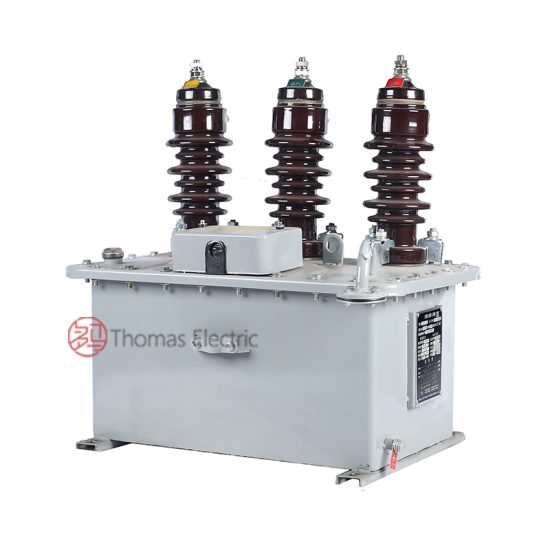
The UNKNOWN voltage transformer (VT) is a medium-voltage instrument transformer engineered for precise voltage transformation in 11kV (IEC nominal) or 10kV (domestic system) networks. Designed as a cast-resin, outdoor-type unit, it leverages vacuum pressure impregnation (VPI) epoxy resin technology to encapsulate its magnetic core and windings, delivering superior dielectric strength, mechanical robustness, and environmental resilience. Unlike traditional oil-immersed VTs, the UNKNOWN model eliminates fire hazards, reduces maintenance demands, and offers long-term stability under thermal cycling and pollution exposure.
Operating Principle of Cast-Resin Insulation
Cast-resin insulation in the UNKNOWN VT employs a two-component cycloaliphatic epoxy resin system cured under vacuum and pressure. This process fully impregnates the GOES (grain-oriented electrical steel) core laminations and copper windings, eliminating air voids that could lead to partial discharges. The resulting monolithic structure provides a dielectric strength exceeding 20 kV/mm, with a typical partial discharge level below 10 pC at 1.2 × Um/√3 (where Um = 12 kV). The resin’s coefficient of thermal expansion closely matches that of copper and steel, minimizing mechanical stress during load cycles from -40°C to +40°C ambient temperatures. This design ensures stable performance over decades without degradation of insulation integrity, even in coastal or industrial atmospheres with high salinity or chemical contaminants.
Advantages Over Oil-Immersed Designs
Compared to oil-filled VTs, the UNKNOWN cast-resin VT offers significant operational and safety benefits. It is inherently non-flammable, complying with IEC 61869-3 fire safety requirements without requiring containment basins or fire suppression systems. Its sealed construction prevents moisture ingress, eliminating the need for periodic oil sampling, drying, or topping-up. The absence of liquid also simplifies transportation and installation—no tilt restrictions or leak checks are necessary. Furthermore, the compact footprint (typically 30–40% smaller than equivalent oil units) enables deployment in space-constrained switchgear or pole-mounted configurations. Environmental compliance is enhanced, as there is zero risk of hydrocarbon leakage into soil or groundwater, aligning with ISO 14001 sustainability protocols.
Typical Applications Overview
The UNKNOWN VT serves dual roles in power systems: accurate voltage measurement for revenue metering and reliable signal provision for protective relaying. In utility substations, it feeds secondary voltages (e.g., 100/√3 V or 110/√3 V) to kWh meters, SCADA RTUs, and distance relays. In industrial facilities, it supports motor protection schemes and power quality monitoring. Renewable integration points—such as solar farms or wind turbine step-up transformers—use it for grid synchronization and anti-islanding detection. Its robustness makes it ideal for rural overhead distribution networks where exposure to dust, humidity, and temperature extremes demands maintenance-free operation. With an expected service life of 25–30 years, the UNKNOWN VT delivers lifecycle cost advantages despite a modest initial premium over oil alternatives.
Technical Specifications
The UNKNOWN 11kV cast-resin voltage transformer is engineered to meet stringent electrical and environmental performance criteria. Below is a detailed specification table followed by service condition parameters.
| Parameter | Value |
|---|---|
| Primary Voltage (Up) | 11 kV (IEC), 10 kV (domestic) |
| Secondary Voltage(s) | 100/√3 V, 110/√3 V (standard); optional 100 V, 110 V |
| Voltage Ratio | 11000/√3 : 100/√3 V (or 10000/√3 : 100/√3 V) |
| Accuracy Class (Metering) | 0.2, 0.5 (per IEC 61869-3) |
| Accuracy Class (Protection) | 3P, 6P |
| Rated Output (VA) | 10, 15, 30, 50, 100 VA per burden class |
| Insulation Level (LI/AC) | 75 kV / 28 kV (1 min power frequency) |
| Short-Time Thermal Current | 100 A for 1 s (at rated frequency) |
| Core Material | GOES M4, 0.3 mm lamination thickness |
| Insulation System | VPI cycloaliphatic epoxy resin, UL 94 V-0 rated |
| Ambient Temperature Range | -40°C to +40°C |
| Altitude Limit | ≤ 1000 m (derating required above) |
| Pollution Degree | III (IEC 60664-1) |
Standard Service Conditions
The UNKNOWN VT is rated for continuous operation under standard service conditions defined in IEC 61869-3: ambient temperature between -40°C and +40°C, relative humidity up to 95% (non-condensing), and installation altitude not exceeding 1000 meters above sea level. At altitudes above 1000 m, the dielectric withstand voltage must be derated by 1% per 100 m increment due to reduced air density. The transformer is designed for outdoor mounting but may also be used indoors in ventilated enclosures. It withstands solar radiation (UV index ≥ 11) without surface cracking, thanks to UV-stabilized resin additives. The maximum short-circuit current it can endure is 100 A for 1 second at 50 Hz, after which thermal recovery occurs without permanent damage to windings or insulation.
Electrical Performance Tolerances
Voltage ratio error for metering accuracy class 0.2 must remain within ±0.2% at 20–100% of rated burden and ±0.3% at 5–20%. Phase displacement is limited to ±10 minutes of arc under the same conditions. For protection class 3P, ratio error tolerance is ±3% across 2–100% of rated voltage, with phase error ≤ ±120 minutes. These tolerances are verified during factory testing at 23°C ±5°C. The transformer exhibits low remanence (<5% of saturation flux density) due to the high permeability of GOES cores, ensuring fast reset after fault clearance—critical for directional overcurrent and distance protection schemes.
Typical Applications
The UNKNOWN 11kV cast-resin VT is deployed across diverse power infrastructure segments where reliability, accuracy, and environmental resilience are paramount.
Substation Secondary Metering
In 10/0.4 kV or 11/0.4 kV distribution substations, the UNKNOWN VT provides secondary voltage signals to revenue-class kWh meters compliant with MID or ANSI C12.20 standards. Installed on the 11kV busbar or feeder, it typically operates at 0.2 accuracy class with a 15–30 VA burden. Its low phase error ensures correct power factor calculation, minimizing billing discrepancies. In smart substations, it interfaces with digital IEDs via analog inputs or through merging units in IEC 61850-compliant architectures. The cast-resin housing resists tracking from salt fog in coastal zones, maintaining insulation integrity where porcelain-insulated VTs might fail prematurely.
Industrial Power Distribution
Large manufacturing plants use the UNKNOWN VT for motor protection, capacitor bank control, and harmonic monitoring. For example, in a steel mill with 11kV induction motors, the VT supplies voltage to differential and undervoltage relays (e.g., SEL-351). Its 6P protection class ensures reliable operation during voltage sags down to 5% of nominal, critical for process continuity. The compact size allows integration into metal-enclosed switchgear without compromising arc flash boundaries. Additionally, its immunity to vibration (tested per IEC 60068-2-6) makes it suitable for environments near heavy machinery.
Renewable Energy Integration
Solar photovoltaic (PV) farms connect to 11kV grids via step-up transformers, where the UNKNOWN VT enables grid code compliance. It provides voltage feedback for reactive power control (Q(V) droop) and islanding detection algorithms in inverters. During low-voltage ride-through (LVRT) events, the VT must maintain accuracy down to 15% of nominal voltage—a requirement met by its extended linear range. Wind turbine substations similarly rely on it for synchronization checks before grid reconnection. The absence of oil eliminates fire risks in confined nacelle or pad-mounted transformer enclosures.
Rural and Suburban Distribution Networks
Pole-mounted UNKNOWN VTs are common in rural electrification projects across Asia and Africa. Mounted alongside reclosers or sectionalizers, they feed single-phase VTs for local metering or three-phase units for feeder automation. Their maintenance-free design is crucial in remote areas with limited technician access. Tested to IP54 ingress protection, they resist dust and rain ingress even when mounted horizontally. In suburban ring-main units (RMUs), they support automated fault location by providing synchronized voltage phasors to distribution management systems (DMS).
Compliance with International Standards
The UNKNOWN VT is certified to IEC 61869-3:2011 (Instrument transformers – Part 3: Additional requirements for inductive voltage transformers) and aligned with China’s GB/T 20840.3-2013 standard.
IEC 61869-3 Compliance Details
IEC 61869-3 defines performance, testing, and marking requirements for inductive VTs rated above 1 kV. The UNKNOWN VT complies with all mandatory clauses, including: rated insulation levels (LI/AC = 75/28 kV), temperature rise limits (≤ 55 K for resin, measured by resistance method), and short-circuit withstand capability. Accuracy classes 0.2, 0.5, 3P, and 6P are validated per Annex B test procedures. The standard mandates that ratio and phase errors be measured at 80%, 100%, and 120% of rated primary voltage across specified burdens. Partial discharge tests are conducted at 1.2 × Um/√3 with acceptance criterion ≤ 10 pC. All nameplate data—including vector group (typically Yn/yn), rated frequency (50/60 Hz), and serial number—conforms to IEC labeling rules.
GB/T 20840.3 Alignment and Differences
GB/T 20840.3 mirrors IEC 61869-3 but includes localized requirements for Chinese utilities. Key differences include: domestic voltage rating of 10 kV (vs. IEC 11 kV), slightly higher permissible ratio error for class 0.5 (+0.55% vs. +0.5%), and mandatory seismic testing for regions with intensity ≥ VII on the China Seismic Intensity Scale. However, the UNKNOWN VT is dual-rated, supporting both 10 kV and 11 kV primary voltages via tap adjustments or separate windings. GB/T also specifies stricter pollution performance for class III environments, requiring successful 1000-hour salt fog testing per IEC 60507. Despite these nuances, the transformer’s core design satisfies both standards simultaneously, enabling global deployment.
Testing and Certification Requirements
Certification involves type tests, routine tests, and special tests. Type tests (performed once per design) include temperature rise, short-circuit withstand, and impulse voltage tests. Routine tests (100% production) cover turns ratio, polarity, insulation resistance (>1000 MΩ at 2500 V DC), and power frequency withstand (28 kV for 1 min). Special tests—such as partial discharge mapping or seismic simulation—are conducted upon customer request. Third-party certification by bodies like KEMA, CESI, or CEPREI validates compliance. Each unit ships with a test report traceable to national metrology institutes, ensuring audit readiness for utility procurement.
On-Site Testing Procedures
Post-installation verification ensures the UNKNOWN VT performs within specifications before energization.
Insulation Resistance Test
Using a 2500 V DC megohmmeter, measure insulation resistance between primary winding and ground, secondary winding and ground, and inter-winding. Acceptance criterion: ≥1000 MΩ at 20°C. Correct for temperature using RT2 = RT1 × 2(T1-T2)/10. Low values indicate moisture ingress or resin cracking—requiring drying or replacement. Perform before and after power frequency tests to detect insulation degradation.
Turns Ratio Test
Apply 100–200 V AC to the primary and measure secondary voltage with a calibrated voltmeter (accuracy class 0.1). Calculate actual ratio and compare to nameplate. Tolerance: ±0.2% for 0.2 class, ±0.5% for 0.5 class. Use a dedicated ratio tester (e.g., Omicron CT Analyzer) for automated comparison across all taps. Deviations beyond tolerance suggest winding faults or incorrect tap selection.
Polarity Test
Verify reducing polarity per IEC 61869-3 Figure 5. Connect a 6–12 V battery across primary terminals (H1+, H2–). Momentarily close the circuit while monitoring secondary with a DC voltmeter (X1+, X2–). A positive kick confirms correct polarity. Incorrect polarity causes metering errors and relay misoperation—especially in differential schemes.
Power Frequency Withstand Voltage Test
Apply 28 kV RMS at 50 Hz between primary and ground (secondary shorted and grounded) for 1 minute. Use a calibrated test transformer with overcurrent protection set to 1.5× expected capacitive current (~5 mA). No flashover or disruptive discharge is permitted. This validates insulation integrity after transport-induced microcracks.
Open-Circuit Characteristic Test
Gradually increase primary voltage from 0 to 190% of rated (20.9 kV) while measuring secondary voltage and excitation current. Plot Vs vs. Iexc. Knee point should exceed 150% of rated voltage. Excessive excitation current (>5% of rated secondary current at 120% Vp) indicates core saturation or turn-to-turn shorts.
Preventive Maintenance Guide
Although cast-resin VTs require minimal maintenance, scheduled inspections extend service life and prevent unexpected failures.
Periodic Inspection Protocol
Conduct visual and thermographic inspections annually. Check for: surface cracks, tracking marks, terminal corrosion, or loose hardware. Use infrared imaging to detect hot spots (>10 K above ambient) at connections—indicative of high contact resistance. Clean housing with non-abrasive detergent if contaminated with salt or conductive dust. Verify grounding continuity (<0.1 Ω resistance). Record findings in asset management systems for trend analysis.
Maintenance Intervals and Fault Diagnosis
Replace surge arresters connected to the VT every 5 years, as degraded arresters can cause overvoltage stress. Every 10 years, repeat insulation resistance and ratio tests to establish baseline degradation. Common faults include: (1) secondary open-circuit during operation—causing core saturation and overheating; (2) moisture ingress at terminal seals—detected by rising tan δ; (3) external flashover due to pollution—mitigated by silicone grease application. If partial discharge exceeds 20 pC during on-site testing, plan for replacement within 12 months.
| Interval | Action |
|---|---|
| Annually | Visual inspection, IR scan, terminal torque check |
| Every 5 Years | Insulation resistance test, arrester replacement |
| Every 10 Years | Full electrical test suite (ratio, PD, withstand) |
| After Fault | Immediate ratio and insulation test before reuse |
Conclusion
The UNKNOWN 11kV cast-resin voltage transformer represents a mature, field-proven solution for medium-voltage metering and protection applications. Its VPI epoxy resin encapsulation delivers exceptional dielectric performance, environmental resilience, and fire safety—addressing key limitations of oil-immersed alternatives. Engineered to IEC 61869-3 and GB/T 20840.3, it ensures global interoperability with accuracy classes spanning 0.2 for revenue metering to 6P for demanding protection schemes. The use of GOES core material minimizes losses and remanence, supporting fast-reset relaying in modern grids. With a design life of 25–30 years and minimal maintenance requirements, the UNKNOWN VT offers compelling total cost of ownership, particularly in remote, polluted, or space-constrained installations. Its robustness under thermal cycling, UV exposure, and short-circuit stresses makes it a cornerstone component in reliable power delivery infrastructure worldwide. As distribution networks evolve toward smarter, more resilient architectures, the UNKNOWN VT’s precision and durability will continue to underpin accurate measurement and dependable protection.
Frequently Asked Questions (FAQ)
Q1: Can the UNKNOWN VT be used on a 10kV system even though it’s rated 11kV?
A: Yes. The 11kV rating aligns with IEC system voltage (Um = 12 kV), while 10kV is the nominal domestic system voltage. The UNKNOWN VT is designed to operate continuously at 10kV with full accuracy and insulation margin.
Q2: Is the UNKNOWN VT suitable for indoor GIS switchgear?
A: While primarily designed for outdoor use, it can be installed indoors in ventilated compartments. However, for gas-insulated switchgear (GIS), specialized SF6-compatible VTs are recommended due to different insulation coordination requirements.
Q3: What happens if the secondary winding is left open during operation?
A: An open secondary causes excessive magnetizing current, leading to core saturation, overheating, and potential insulation failure. Always ensure secondary circuits are closed through a burden or shorting link during primary energization.
Q4: How does altitude affect performance?
A: Above 1000 m, the power frequency withstand voltage must be reduced by 1% per 100 m. For example, at 2000 m, test voltage = 28 kV × 0.9 = 25.2 kV. Ratio accuracy remains unaffected.
Q5: Can multiple burdens (metering + protection) be connected simultaneously?
A: Yes, provided the total VA load does not exceed the rated output for the lowest accuracy class required. For instance, a 50 VA, 0.5/3P VT can supply 30 VA to a meter (0.5 class) and 15 VA to a relay (3P class).