Article Content
AGE-1026 33kV Cast-Resin Current Transformer for Substation Metering and Protection – IEC 61869-2 Certified
Introduction to the AGE-1026 Current Transformer
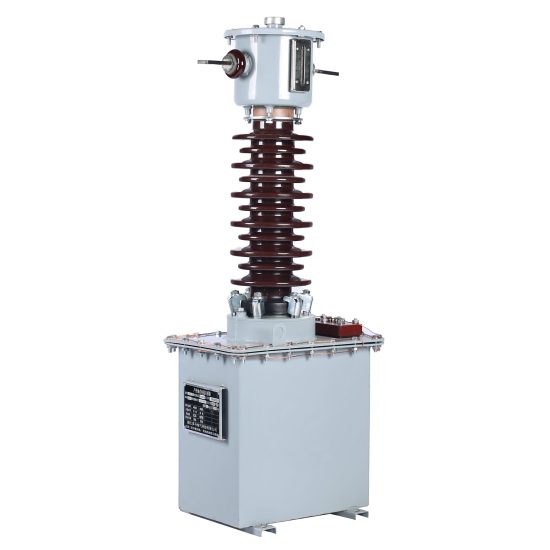
The AGE-1026 is a high-voltage, cast-resin insulated current transformer (CT) engineered for precision measurement and robust protection in 33kV (IEC-rated) or 35kV (domestic system equivalent) electrical networks. Unlike traditional oil-immersed instrument transformers, the AGE-1026 employs vacuum pressure impregnation (VPI) epoxy resin technology to fully encapsulate its magnetic core and secondary windings, eliminating fire hazards, oil leakage risks, and environmental contamination concerns. This design ensures long-term dielectric stability and mechanical integrity under thermal cycling, pollution, and moisture exposure—critical for both indoor switchgear and outdoor substation applications.
Operating Principle of Cast-Resin Insulation
Cast-resin insulation in the AGE-1026 utilizes a two-component cycloaliphatic epoxy system processed under vacuum and pressure to eliminate voids and microcavities. The primary conductor passes through a toroidal core made of grain-oriented electrical steel (GOES), inducing a proportional current in the secondary winding per Ampère’s circuital law. The entire assembly—core, windings, and embedded terminals—is encapsulated in a monolithic resin block with a coefficient of thermal expansion closely matched to copper and steel. This minimizes internal stresses during load cycling. The resin exhibits a volume resistivity >1×10¹⁴ Ω·cm at 20°C and a dielectric strength exceeding 20 kV/mm, ensuring reliable performance even at altitudes up to 1000 m above sea level without derating. The absence of liquid insulation also eliminates maintenance-intensive tasks such as oil sampling or gasket replacement.
Advantages Over Oil-Immersed Designs
Compared to oil-filled CTs, the AGE-1026 offers superior safety, reduced lifecycle costs, and enhanced environmental compatibility. Its solid insulation is non-flammable (UL 94 V-0 rated), making it suitable for urban substations near public infrastructure. The compact footprint—typically 30% smaller than equivalent oil units—facilitates retrofitting in space-constrained switchgear bays. Additionally, cast-resin CTs exhibit lower partial discharge levels (<5 pC at 1.2 × Um/√3), improving long-term reliability. Unlike oil units, which require periodic dielectric testing and moisture monitoring, the AGE-1026’s hermetic construction prevents ingress of contaminants, enabling maintenance-free operation over its 25–30-year service life.
Typical Applications Overview
The AGE-1026 is deployed across utility transmission substations, industrial power distribution centers, and renewable energy interconnection points. In 33/35kV ring-main units (RMUs), it provides inputs to digital relays for overcurrent, earth-fault, and differential protection schemes. For revenue metering, its Class 0.2S or 0.5S accuracy ensures compliance with regulatory billing requirements. The transformer’s dual-core configuration (e.g., 1000/1A for protection + 1000/5A for metering) allows simultaneous connection to protective relays and energy meters without cross-interference. Its robust short-time thermal withstand rating (e.g., 25 kA for 1 s) makes it ideal for fault-current monitoring in networks with high prospective short-circuit levels.
Technical Specifications
The AGE-1026 adheres to precise electrical and mechanical parameters defined by IEC 61869-2 and GB/T 20840.2. Below is a representative specification table for standard configurations; custom ratios and outputs are available upon request.
| Parameter | Value |
|---|---|
| Rated System Voltage (Um) | 36 kV (IEC 33kV class) |
| Domestic System Voltage | 35 kV |
| Primary Current (Ip) | 50 A to 3000 A (standard); up to 5000 A (custom) |
| Secondary Current (Is) | 1 A or 5 A |
| Accuracy Classes | Metering: 0.2S, 0.5S; Protection: 5P10, 5P20, 10P10 |
| Rated Output (VA) | 5 VA to 30 VA per core (e.g., 15 VA @ 0.2S, 30 VA @ 5P20) |
| Short-Time Thermal Withstand | 25 kA for 1 s (Ith), 40 kA peak (Idyn) |
| Insulation Level (LI/AC) | 170 kV lightning impulse / 70 kV power frequency (1 min) |
| Core Material | Grain-Oriented Electrical Steel (GOES), 0.27 mm thickness |
| Insulation System | VPI cycloaliphatic epoxy resin, UL 94 V-0 |
| Ambient Temperature Range | –40°C to +40°C |
| Altitude Limit | ≤1000 m (derating required above) |
Standard Service Conditions
The AGE-1026 is rated for continuous operation under IEC 60060-defined standard atmospheric conditions: ambient temperature from –40°C to +40°C, relative humidity ≤95% (non-condensing), and altitude not exceeding 1000 m. At higher altitudes (up to 2000 m), the power frequency withstand voltage must be reduced by 1% per 100 m above 1000 m. The transformer is designed for three-phase systems with maximum asymmetry factors of 1.8 during faults. It withstands solar radiation (1000 W/m²) and salt fog (for coastal installations) when equipped with optional hydrophobic sheds. The terminal box is IP54 rated, protecting against dust ingress and water splashes during routine maintenance.
Electrical Performance Tolerances
Per IEC 61869-2, the AGE-1026 maintains strict error limits under specified burdens. For a 0.2S class metering core at 100% rated current and rated burden, current error must not exceed ±0.2%, and phase displacement ≤±10 minutes. At 20% rated current, error tolerance widens to ±0.35%. Protection cores (e.g., 5P20) must limit composite error to ≤5% at 20× rated current with rated burden connected. Burden tolerance is ±10% of nominal VA rating. Saturation factor (Ksf) is guaranteed ≥20 for 5P20 cores, ensuring linear response during high-magnitude faults. These tolerances are validated during factory type tests using calibrated reference standards traceable to national metrology institutes.
Typical Applications
Substation Secondary Metering
In 33kV/11kV grid substations, the AGE-1026 provides high-accuracy current signals to revenue-class energy meters and SCADA systems. Its 0.2S class core ensures billing accuracy even at low load levels (down to 1% of rated current), critical for utilities implementing time-of-use tariffs. The transformer is typically installed on the incoming feeder or outgoing distribution feeders, with secondary wiring routed to a centralized metering panel. Dual-ratio windings (e.g., 600/1A and 1200/1A) allow seasonal load adjustments without hardware changes. The cast-resin housing resists tracking from pollution, maintaining insulation integrity in industrial zones with airborne conductive dust.
Industrial Power Distribution
Large manufacturing plants operating at 35kV utilize the AGE-1026 for motor protection and load monitoring. High-inertia drives and arc furnaces generate significant harmonic content; the GOES core’s low hysteresis loss minimizes heating under distorted waveforms. The CT’s 5P20 protection core feeds signals to numerical relays (e.g., SEL-751 or MiCOM P446) for instantaneous overcurrent and thermal overload protection. With a short-circuit withstand of 25 kA/1s, it reliably survives downstream bus faults without saturation-induced relay misoperation. The compact design fits within ANSI C37.20.2 metal-enclosed switchgear without requiring busbar modifications.
Renewable Energy Integration
Solar farms and wind parks connecting to 33kV collector grids deploy the AGE-1026 for both generation metering and anti-islanding protection. During cloud transients or wind gusts, rapid current fluctuations challenge CT linearity; the AGE-1026’s low remanence (<10% of saturation flux density) ensures fast recovery post-fault. Its dual-core output supports simultaneous connection to revenue meters (0.5S class) and protection relays (10P10). The transformer’s UV-stable resin housing withstands desert or offshore environments, while the IP54 terminal box protects against sand or salt spray ingress.
Rural and Suburban Distribution Networks
In rural electrification projects, the AGE-1026 enables cost-effective monitoring of lightly loaded feeders. Its ability to maintain 0.5S accuracy at 5% of rated current allows accurate billing for small agricultural consumers. Mounted on pole-top structures or pad-mounted transformers, the unit operates reliably in high-humidity tropical climates due to its moisture-resistant resin matrix. The absence of oil eliminates environmental liability during pole-top accidents. For fault location, the CT’s consistent ratio accuracy aids in impedance-based fault distance estimation by distribution management systems (DMS).
Urban Underground Networks
Underground 35kV cable networks in metropolitan areas use the AGE-1026 inside gas-insulated switchgear (GIS) or compact RMUs. Space constraints favor its cylindrical profile (diameter ≈220 mm, height ≈450 mm). The transformer’s low partial discharge ensures compatibility with SF6-free switchgear designs. Its fire-safe construction meets stringent building codes for substations located beneath commercial complexes. The secondary terminals feature screw-type connectors compatible with shielded twisted-pair cables, minimizing electromagnetic interference from adjacent high-current conductors.
Compliance with International Standards
The AGE-1026 is certified to IEC 61869-2:2012 (“Instrument transformers – Part 2: Additional requirements for current transformers”) and aligns with China’s GB/T 20840.2-2014 standard. Both standards define performance, testing, and safety requirements but differ in certain test methodologies and classification nuances.
IEC 61869-2 Compliance Details
IEC 61869-2 mandates rigorous type, routine, and special tests. Key requirements include: (1) temperature rise test—winding temperature rise ≤60 K above ambient at rated current; (2) short-circuit withstand test—no permanent deformation after 25 kA/1s; (3) accuracy verification across 1–120% of rated current for metering classes; (4) insulation tests—power frequency withstand at 70 kV for 1 minute and lightning impulse at 170 kV (1.2/50 µs wave). The standard also specifies marking requirements: model number, ratio, accuracy class, burden, polarity mark (•), and manufacturer ID must be permanently molded into the resin housing. The AGE-1026 undergoes third-party certification by accredited labs (e.g., KEMA, CESI) to validate compliance.
GB/T 20840.2 Alignment and Differences
GB/T 20840.2 closely mirrors IEC 61869-2 but includes localized requirements. Notably, Chinese standards mandate a higher short-circuit dynamic withstand (40 kA peak vs. IEC’s typical 31.5 kA) and stricter partial discharge limits (<3 pC at 1.2 × Um/√3). GB/T also requires additional seismic testing (0.3g horizontal acceleration) for transformers used in earthquake-prone regions like Sichuan. While IEC uses “5P” notation for protection accuracy, GB/T retains the older “10% error” terminology but maps equivalently (e.g., 10P10 = 10% composite error at 10× rated current). The AGE-1026 is dual-certified, bearing both CE and CCC marks for global deployment.
Testing and Certification Requirements
Factory acceptance testing (FAT) for the AGE-1026 includes routine tests on 100% of units: visual inspection, winding resistance measurement, ratio and polarity check, and power frequency withstand. Type tests—conducted on prototype samples every five years—include temperature rise, short-circuit, and accuracy verification. Special tests (e.g., chopped impulse, seismic) are performed per customer request. Certificates of conformity reference test reports with unique serial numbers, traceable to ISO/IEC 17025-accredited laboratories. All test data is archived for 15 years to support warranty claims and forensic analysis.
On-Site Testing Procedures
Post-installation commissioning of the AGE-1026 requires standardized field tests to verify integrity and performance before energization.
Insulation Resistance Test
Using a 2500 V DC megohmmeter, measure insulation resistance between primary conductor and secondary windings/ground. Acceptance criterion: ≥1000 MΩ at 20°C. Correct for temperature using RT2 = RT1 × 2(T1–T2)/10. Low readings indicate moisture ingress or resin cracking. Perform before and after cleaning the porcelain/resin surface with isopropyl alcohol to eliminate surface leakage effects.
Turns Ratio Test
Apply a low-voltage AC source (5–10 V) to the secondary winding and measure induced primary voltage. Calculate actual ratio = Vsecondary / Vprimary. Compare to nameplate ratio; tolerance must be within ±0.1% for metering cores and ±0.5% for protection cores. Use a dedicated ratio tester (e.g., Omicron CT Analyzer) for automated comparison. Deviations suggest winding shorts or incorrect tap selection.
Polarity Test
Verify reducing polarity using the DC kick method: connect a 6 V battery momentarily between primary terminals (H1 to H2). Observe secondary voltage polarity with a DC voltmeter; a positive deflection at X1 (relative to X2) confirms correct polarity. Incorrect polarity causes 180° phase shift, leading to relay miscoordination in differential schemes. Document results with timestamped oscillograms for audit trails.
Power Frequency Withstand Voltage Test
Apply 70 kV RMS at 50 Hz between primary and grounded secondary/enclosure for 1 minute. Use a calibrated test transformer with overcurrent trip set at 1.5× expected capacitive current (typically 5–10 mA). No flashover or sustained discharge constitutes pass. Reduce voltage gradually post-test to avoid transient overvoltages. This test validates insulation integrity after transport-induced mechanical stress.
Short-Circuit Test (for CT)
Unlike VTs, CTs require a short-circuit test to confirm thermal withstand capability indirectly. Inject 10× rated secondary current (e.g., 10 A for 1 A CT) for 10 seconds through a calibrated burden. Monitor winding temperature rise via resistance measurement; ΔR/R20°C must correspond to ≤60 K rise. Excessive heating indicates inadequate core cross-section or poor resin bonding, risking saturation during real faults.
Preventive Maintenance Guide
Although cast-resin CTs are largely maintenance-free, periodic inspections ensure decades of reliable service.
Periodic Inspection Protocol
Conduct annual visual inspections: check for surface cracks, tracking marks, or discoloration on the resin housing. Clean with mild detergent if pollution accumulation exceeds 0.1 mg/cm² (measured by deposit density test). Verify terminal tightness (torque: 2.5 N·m for M6 screws) and grounding continuity (<0.1 Ω resistance). Inspect cable glands for seal integrity—moisture ingress into the terminal box can cause secondary winding corrosion. Use infrared thermography during peak load to detect abnormal hotspots (>10 K above ambient).
Maintenance Intervals and Fault Diagnosis
Every five years, perform electrical revalidation: repeat insulation resistance, ratio, and polarity tests. If ratio error exceeds tolerance, investigate core demagnetization (using 50 Hz decaying AC) or winding damage. Common failure modes include: (1) open secondary circuit during operation—causes core saturation and >10 kV transient overvoltage; (2) moisture ingress—lowers insulation resistance; (3) mechanical impact—cracks resin, reducing dielectric strength. Replace units exhibiting partial discharge >20 pC at operating voltage. Maintain a logbook with test results, environmental conditions, and operational anomalies for predictive analytics.
| Interval | Action | Acceptance Criteria |
|---|---|---|
| Annually | Visual + IR scan | No cracks, hotspots ≤10 K |
| 5 Years | Electrical retest | Ratio error within spec, IR ≥1000 MΩ |
| After Fault | Full commissioning suite | All tests pass |
| 25+ Years | Life assessment | PD <10 pC, no mechanical degradation |
Conclusion
The AGE-1026 33kV cast-resin current transformer represents a benchmark in reliability, accuracy, and safety for medium-voltage power systems. By leveraging VPI epoxy resin encapsulation and GOES magnetic cores, it eliminates the operational hazards and maintenance burdens associated with oil-immersed alternatives while delivering IEC 61869-2-compliant performance across metering and protection applications. Its dual-core flexibility, robust short-circuit withstand capability (25 kA/1s), and environmental resilience make it equally suited for urban underground networks, industrial plants, and renewable energy interconnections. Rigorous adherence to international standards—including alignment with GB/T 20840.2 for domestic Chinese markets—ensures seamless integration into global power infrastructure. With a design life of 25–30 years and minimal preventive maintenance requirements, the AGE-1026 offers a compelling total cost of ownership advantage. Utilities and industrial operators selecting this transformer gain a future-proof asset that supports digital grid evolution through precise, stable current sensing under the most demanding electrical and environmental conditions. Its proven field performance across thousands of installations worldwide underscores its role as a cornerstone component in modern substation architecture.