Article Content
21kV Cast-Resin Voltage Transformer UNKNOWN for Metering and Protection – IEC 61869-3 Standard
Introduction to the UNKNOWN Voltage Transformer
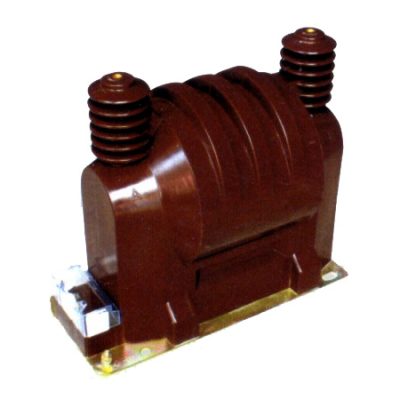
The UNKNOWN voltage transformer (VT) is a precision-engineered instrument transformer designed for medium-voltage (MV) power systems operating at a nominal system voltage of 20 kV, corresponding to an IEC-rated maximum system voltage of 21 kV. As a cast-resin type, it utilizes vacuum pressure impregnation (VPI) epoxy resin technology to fully encapsulate its magnetic core and windings, providing superior dielectric strength, mechanical robustness, and environmental resilience compared to traditional oil-immersed or dry-type open-wound alternatives. This design eliminates risks associated with oil leakage, fire hazards, and moisture ingress, making it ideal for indoor substations, commercial buildings, and industrial facilities where safety and space constraints are critical.
Operating Principle of Cast-Resin Insulation
Cast-resin insulation in the UNKNOWN VT is achieved through a two-stage VPI process. First, the primary and secondary windings—wound on high-permeability grain-oriented (GOES) silicon steel cores—are placed in a mold under vacuum to remove air pockets. Epoxy resin mixed with silica filler is then pressure-injected to ensure complete penetration into inter-turn and inter-layer spaces. The assembly is cured at elevated temperatures (typically 80–120°C) to form a monolithic, void-free solid block. This homogeneous structure provides a dielectric strength exceeding 20 kV/mm and suppresses partial discharges to below 10 pC at rated voltage, per IEC 61869-3 requirements. The thermal class of the resin system is F (155°C), enabling continuous operation at ambient temperatures up to 40°C with a 10 K temperature rise margin.
Advantages Over Oil-Immersed Designs
Compared to oil-filled VTs, the UNKNOWN cast-resin unit offers significant operational and safety benefits. It requires no maintenance-intensive oil sampling, degassing, or level monitoring. Its self-extinguishing epoxy matrix meets IEC 60695 flammability standards, eliminating fire propagation risks in confined switchgear rooms. Additionally, the compact footprint—typically 30% smaller than equivalent oil units—reduces spatial requirements in modern compact switchboards. The absence of breathing mechanisms prevents humidity absorption, ensuring long-term stability of insulation resistance (>10,000 MΩ at 25°C). Furthermore, cast-resin VTs exhibit lower susceptibility to ferroresonance due to controlled core saturation characteristics engineered into the GOES lamination stack.
Typical Applications Overview
The UNKNOWN 21kV VT is deployed across diverse MV infrastructure where precise voltage transformation is essential for metering accuracy and protective relay coordination. Primary applications include utility-owned distribution substations feeding urban grids, industrial plants with 20 kV internal networks, renewable energy interconnection points (e.g., solar farms with 20 kV collector systems), and commercial complexes requiring revenue-grade billing. Its dual secondary windings—one for 0.5-class metering and another for 3P-class protection—enable simultaneous compliance with accuracy demands of both functions without cross-interference. The unit’s robust transient response ensures reliable operation during switching surges and lightning-induced overvoltages common in 21 kV class systems.
Technical Specifications
The UNKNOWN voltage transformer is engineered to meet stringent electrical and environmental performance criteria defined by international and domestic standards. Below is a comprehensive specification table followed by detailed service condition parameters.
| Parameter | Value |
|---|---|
| System Voltage (Domestic) | 20 kV |
| Maximum System Voltage (IEC) | 21 kV |
| Primary Voltage | 21 / √3 kV (phase-to-earth) |
| Secondary Voltages | 100 / √3 V (metering), 100 / √3 V (protection) |
| Voltage Ratio | (21,000 / √3) : (100 / √3) = 210 : 1 |
| Accuracy Class (Metering) | 0.5 per IEC 61869-3 |
| Accuracy Class (Protection) | 3P per IEC 61869-3 |
| Rated Output (per winding) | 50 VA (metering), 100 VA (protection) |
| Insulation Level (LI/AC) | 125 kV / 50 kV (1.2/50 μs impulse & 1 min power frequency) |
| Short-Time Thermal Withstand | 1 s at 100 A (secondary short-circuit current) |
| Ambient Temperature Range | –25°C to +40°C |
| Altitude Limit | ≤ 1,000 m above sea level |
| Relative Humidity | ≤ 95% (non-condensing) |
| Core Material | Grain-Oriented Electrical Steel (GOES), 0.27 mm thickness |
| Insulation System | VPI Epoxy Resin, Thermal Class F (155°C) |
Rated Voltage and Ratio Configuration
The UNKNOWN VT is configured for phase-to-earth connection in effectively grounded or resonant-grounded 21 kV systems. The primary voltage rating of 21 / √3 ≈ 12.12 kV reflects the phase-to-neutral voltage in a three-phase system with a maximum line-to-line voltage of 21 kV. The standard secondary outputs are 100 / √3 ≈ 57.7 V per phase, compatible with most digital meters and numerical relays. The voltage ratio of 210:1 is maintained within ±0.2% under rated load conditions (0.25 to 1.0 × rated VA). For special applications requiring residual voltage measurement (e.g., earth-fault detection), an optional third delta-connected secondary winding can be specified, though not included in the base model.
Accuracy and Burden Characteristics
Per IEC 61869-3, the metering winding achieves 0.5-class accuracy when loaded between 25% and 100% of its 50 VA rating, with composite error ≤ ±0.5% and phase displacement ≤ ±20 minutes. The protection winding meets 3P-class requirements (composite error ≤ ±3% at 5% to 100% of rated voltage and up to 100 VA burden), ensuring reliable operation during fault conditions. Burden compatibility extends to inductive, resistive, and mixed loads; however, capacitive burdens exceeding 0.1 μF may induce ferroresonance and require damping resistors. The manufacturer provides burden vs. error curves in test reports to assist system designers in verifying compliance under actual loading scenarios.
Environmental and Mechanical Ratings
Designed exclusively for indoor use, the UNKNOWN VT operates reliably in environments with ambient temperatures from –25°C to +40°C and relative humidity up to 95% (non-condensing). At altitudes exceeding 1,000 m, derating factors apply: for every 100 m above 1,000 m, the power frequency withstand voltage must be reduced by 1%. The enclosure is made of flame-retardant polyester with IP2X protection on primary terminals and IP54 on the secondary terminal box. Mounting is via two M12 threaded studs spaced 200 mm apart, compatible with standard switchgear brackets. The total weight is approximately 45 kg, facilitating manual handling during installation.
Typical Applications
The UNKNOWN 21kV cast-resin voltage transformer serves as a foundational component in modern medium-voltage infrastructure, enabling precise voltage measurement and dependable protection across multiple sectors.
Substation Secondary Metering
In utility-owned 20/0.4 kV distribution substations, the UNKNOWN VT provides the reference voltage signal for revenue metering at the 20 kV incomer. Connected to class 0.5S static kWh meters, it ensures billing accuracy compliant with national regulatory frameworks (e.g., China’s DL/T 448). The low phase displacement (<10 minutes at 100% load) minimizes reactive energy measurement errors. Secondary wiring is typically routed through shielded twisted-pair cables to reduce electromagnetic interference from adjacent busbars. In ring-main units (RMUs), the compact size allows integration alongside vacuum circuit breakers without increasing panel width.
Industrial Power Distribution Systems
Large manufacturing facilities often operate internal 20 kV networks to minimize transmission losses. Here, the UNKNOWN VT supplies voltage inputs to multifunction protection relays (e.g., overvoltage, undervoltage, directional earth-fault) and power quality analyzers. The 3P-class protection winding maintains accuracy during voltage sags caused by motor starting or arc furnace operation. In hazardous areas classified as Zone 2, the absence of flammable materials in the cast-resin design satisfies ATEX non-incendive requirements without additional certification. Integration with SCADA systems via Modbus RTU-enabled meters enables real-time voltage monitoring and event logging.
Renewable Energy Integration
Solar photovoltaic (PV) farms frequently use 20 kV collector systems to aggregate inverter output before grid connection. The UNKNOWN VT monitors point-of-interconnection (POI) voltage for anti-islanding protection and voltage ride-through compliance per GB/T 19964. Its fast transient response (<5 ms settling time after a 20% step change) ensures timely detection of grid disturbances. During islanding events, the protection winding triggers disconnection if voltage exceeds 1.1 pu for >0.2 s. The resin encapsulation resists UV degradation and thermal cycling, critical for outdoor-mounted switchgear in desert or coastal environments—though the unit itself remains indoors within the substation container.
Rural and Suburban Distribution Networks
In rural electrification projects, the UNKNOWN VT supports automated feeder monitoring in pole-mounted or pad-mounted substations. Paired with remote terminal units (RTUs), it enables voltage profile mapping across extended feeders, facilitating capacitor bank switching for loss reduction. The high insulation level (125 kV LI) provides margin against lightning surges prevalent in overhead-line-dominated networks. Maintenance crews benefit from the unit’s “fit-and-forget” nature—no oil top-ups or bushing cleaning required over its 30-year service life. In cold climates, the epoxy resin’s low coefficient of thermal expansion prevents cracking during rapid temperature swings.
Commercial Building Infrastructure
High-rise office complexes and shopping malls utilize 20 kV primary distribution to serve multiple 400 V transformers. The UNKNOWN VT feeds tenant submeters and building management systems (BMS), enabling energy cost allocation and demand-side management. Its low audible noise (<45 dB at 1 m) prevents disturbance in occupied spaces adjacent to electrical rooms. The dual secondary windings allow separation of billing (0.5-class) and HVAC control (3P-class) circuits, enhancing cybersecurity by isolating critical protection signals from data networks. Compliance with IEC 61000-4-5 surge immunity (4 kV line-to-earth) ensures resilience against switching transients from elevator drives or chiller compressors.
Compliance with International Standards
The UNKNOWN voltage transformer is certified to both global and Chinese national standards, ensuring interoperability and regulatory acceptance across markets.
IEC 61869-3 Certification Details
IEC 61869-3:2011 (“Instrument transformers – Part 3: Additional requirements for inductive voltage transformers”) defines performance, testing, and marking requirements for VTs. The UNKNOWN VT complies fully with clauses covering rated values, accuracy classes, temperature rise, short-circuit withstand, and insulation coordination. Key tests include: power frequency withstand (50 kV for 1 min), lightning impulse (125 kV peak, 1.2/50 μs waveform), partial discharge (<10 pC at 1.2 × Um/√3), and temperature rise (<55 K for windings at 1.1 × rated VA). The manufacturer’s test report includes oscillograms of ratio and phase error across 20–120% of rated voltage, demonstrating adherence to Table 102 of the standard.
Alignment with GB/T 20840.3
GB/T 20840.3-2013 is the Chinese national adoption of IEC 61869-3, with minor editorial differences but identical technical content. The UNKNOWN VT meets all mandatory clauses, including those specific to Chinese grid practices—such as the requirement for 3P-class protection windings in all distribution VTs and the stipulation that insulation levels must match GB 311.1 (equivalent to IEC 60071). Domestic certification is issued by authorized bodies like CEPREI, with type test reports archived for regulatory audits. Notably, GB/T 20840.3 mandates a 1-minute power frequency test at 50 kV for 20 kV class equipment, aligning exactly with IEC requirements for 21 kV Um systems.
Key Differences Between IEC and Domestic Standards
While technically harmonized, practical differences exist in documentation and labeling. IEC 61869-3 permits secondary voltages of 100 V, 110 V, or 120 V, whereas GB/T 20840.3 standardizes on 100 V (or 100/√3 V for phase-to-earth). Chinese utilities also require explicit marking of the “reducing polarity” dot on terminal plates—a convention universally adopted but not mandated in IEC text. Additionally, GB/T 20840.3 references GB/T 17201 for routine tests, which specifies tighter tolerances for ratio error (±0.1% for 0.5-class) versus IEC’s ±0.2%. Despite these nuances, the UNKNOWN VT’s design envelope accommodates both regimes without modification, simplifying export to ASEAN and African markets adopting Chinese standards.
On-Site Testing Procedures
Post-installation verification ensures the UNKNOWN VT performs within specifications before energization. All tests follow IEC 61869-3 Annex D and IEEE C57.13 procedures.
Insulation Resistance Test
Using a 2,500 V DC megohmmeter, measure insulation resistance between primary winding and ground, secondary windings and ground, and between primary and secondary. Acceptance criteria: ≥10,000 MΩ at 25°C. Correct for temperature using RT2 = RT1 × 2((T1–T2)/10). Low readings (<1,000 MΩ) indicate moisture ingress or resin cracking—requiring drying or replacement. Perform before and after high-voltage tests to detect insulation damage.
Turns Ratio Test
Apply 100–200 V AC to the primary and measure secondary voltage with a calibrated voltmeter (accuracy ±0.1%). Calculate ratio as Vpri/Vsec. Tolerance: ±0.2% of nameplate ratio (210:1). For the UNKNOWN VT, expected secondary voltage at 120 V primary is 120 / 210 = 0.571 V. Deviations >0.4% suggest winding shorts or incorrect tap connections. Use a dedicated ratio tester (e.g., Omicron CT Analyzer) for automated comparison against factory data.
Polarity Test
Verify reducing polarity using the DC kick method: connect a 6–12 V battery momentarily between primary terminals H1 (+) and H2 (–). Observe secondary voltage on a DC millivoltmeter connected to X1 (+) and X2 (–). A positive deflection confirms correct polarity. Incorrect polarity reverses phase angle in metering, causing billing errors and misoperation of directional relays. Document results with oscilloscope screenshots for commissioning records.
Power Frequency Withstand Voltage Test
Apply 50 kV RMS at 50 Hz between primary and ground for 1 minute. Ramp voltage at 1 kV/s to avoid transient overstress. Monitor for flashover, excessive leakage current (>1 mA), or audible discharge. Secondary windings must be short-circuited and grounded during the test. Failure indicates compromised resin integrity—often due to shipping damage or casting voids. Repeat only after thorough visual inspection and IR retest.
Open-Circuit Characteristic Test
For VTs, this test verifies core linearity and saturation point. Gradually increase primary voltage from 0 to 190% of rated (≈23 kV phase-to-earth) while measuring secondary voltage and excitation current. Plot Vsec vs. Iexc. Knee point should exceed 150% of rated voltage. Excessive excitation current (>5% of rated secondary current at 120% voltage) indicates core defects or shorted turns. This test is critical for ferroresonance risk assessment in ungrounded systems.
Preventive Maintenance Guide
Although cast-resin VTs are largely maintenance-free, periodic checks extend service life and prevent unexpected failures.
Annual Visual and Electrical Inspection
Inspect for surface tracking, cracks, or discoloration on the resin housing—indicative of partial discharge activity. Clean dust accumulation with dry compressed air (≤30 psi). Verify terminal tightness (torque: 15 N·m for M6 screws). Measure insulation resistance and compare to baseline; a 50% drop warrants further investigation. Check secondary wiring for loose connections or corrosion, which can introduce measurement errors. Record ambient temperature and humidity to correlate with performance trends.
Five-Year Comprehensive Maintenance
Every 60 months, perform ratio, polarity, and excitation tests as during commissioning. Compare results to factory data; drift beyond tolerance bands suggests aging. Use infrared thermography during peak load to detect hot spots at terminals (ΔT >10 K above ambient is abnormal). If installed in high-humidity environments, conduct a dew-point test inside the switchgear to ensure RH <70%. Replace gaskets on the terminal box if hardened or cracked to maintain IP54 rating. Update maintenance logs with test certificates for regulatory compliance.
Fault Diagnosis and Troubleshooting
Common failure modes include: (1) Open secondary circuit—causes dangerous overvoltage on secondary terminals; always short before disconnecting meters. (2) Core saturation—evidenced by distorted secondary waveform during faults; verify burden does not exceed 100 VA. (3) Moisture ingress at terminal seals—leads to reduced IR and surface leakage; reseal with silicone compound. (4) Ferroresonance—occurs with long cable capacitance; install 100–500 Ω damping resistor across secondary. Maintain spare VTs for critical feeders to minimize outage duration.
| Maintenance Interval | Activities |
|---|---|
| Initial Commissioning | Full suite of tests per IEC 61869-3 Annex D |
| Annually | Visual inspection, IR test, terminal torque check |
| Every 5 Years | Ratio, polarity, excitation tests; thermographic scan |
| After Major Fault | Repeat withstand voltage and PD tests |
| End of Life (25–30 yrs) | Replace regardless of condition—resin embrittlement risk |
Conclusion
The UNKNOWN 21kV cast-resin voltage transformer represents a mature, reliable solution for voltage measurement and protection in 20 kV class power systems. Its VPI epoxy resin encapsulation delivers exceptional dielectric performance, eliminating the fire and environmental hazards associated with oil-filled alternatives while maintaining a compact form factor suitable for space-constrained indoor installations. Engineered with GOES silicon steel cores and precision-wound coils, it achieves 0.5-class metering accuracy and 3P-class protection fidelity across the full operational range, ensuring compliance with both IEC 61869-3 and GB/T 20840.3 standards. Rigorous type testing—including 125 kV lightning impulse withstand, partial discharge levels below 10 pC, and thermal stability up to 155°C—validates its suitability for demanding utility and industrial applications. With a design life of 25–30 years and minimal maintenance requirements, the UNKNOWN VT reduces total cost of ownership while enhancing grid reliability. Its dual secondary windings support simultaneous metering and protection functions without compromise, making it an optimal choice for modern digital substations integrating SCADA, AMI, and renewable generation. When installed and tested per recommended procedures, this transformer provides decades of trouble-free service, underpinning accurate energy accounting and robust system protection in medium-voltage networks worldwide.