Article Content
Introduction
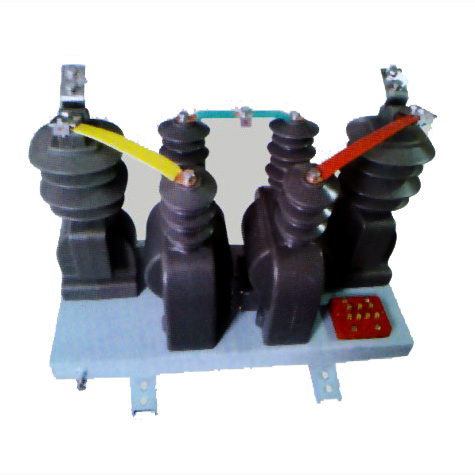
The AGE-1232 Voltage Transformer is a precision-engineered instrument transformer designed for high-voltage measurement and protection applications in medium-voltage power systems operating up to 10kV. Developed to meet the stringent requirements of modern electrical infrastructure, this voltage transformer ensures accurate voltage transformation from primary to secondary circuits while maintaining galvanic isolation for safety and system integrity. The AGE-1232 is widely deployed in substations, industrial facilities, renewable energy installations, and utility distribution networks where reliable metering, monitoring, and protective relay coordination are critical.
Engineered in compliance with international standards including IEC 61869-3, IEEE C57.13, and GB/T 20840.3, the AGE-1232 delivers exceptional performance under both steady-state and transient conditions. Its robust construction incorporates high-grade epoxy resin insulation and advanced magnetic core materials, enabling stable operation across a wide range of environmental conditions—from humid coastal regions to arid industrial zones. The transformer’s design minimizes phase angle error and ratio error, ensuring high fidelity in voltage replication essential for revenue metering and fault detection.
This technical specification document outlines the key attributes, operational parameters, and performance criteria of the AGE-1232 Voltage Transformer. It serves as a comprehensive reference for system designers, engineers, procurement specialists, and maintenance personnel involved in the selection, installation, and operation of instrument transformers in 10kV-class systems. By adhering to these specifications, users can ensure compatibility with existing protection relays, energy meters, and SCADA systems while achieving long-term reliability and regulatory compliance. The following sections detail general specifications, technical characteristics, and dimensional data necessary for integration into electrical infrastructure projects.
General Specifications
The AGE-1232 Voltage Transformer is engineered for continuous, reliable operation in 10kV AC power systems. Its design emphasizes safety, accuracy, thermal stability, and mechanical durability. Below is a comprehensive overview of its general specifications, covering electrical ratings, environmental tolerances, construction materials, and compliance standards. These parameters define the transformer’s suitability for diverse applications ranging from indoor switchgear to outdoor pole-mounted installations.
The unit features a cast-resin insulated body that provides excellent dielectric strength, moisture resistance, and flame retardancy (meeting UL 94 V-0). Primary and secondary terminals are made of tinned copper to prevent oxidation and ensure low contact resistance. The transformer is hermetically sealed to protect internal components from dust, humidity, and corrosive atmospheres. Mounting options include flange or bracket configurations compatible with standard IEC and ANSI mounting dimensions.
Designed for minimal maintenance, the AGE-1232 operates efficiently across a broad temperature range and withstands short-circuit currents without degradation. Its compact footprint allows for space-constrained installations, while standardized secondary outputs (e.g., 100V, 110V, or 120V) facilitate seamless integration with metering and protection devices. Safety features include overvoltage protection via built-in surge arresters (optional) and clear terminal labeling per IEC 60417.
| Parameter | Value / Description |
|---|---|
| Model Number | AGE-1232 |
| System Voltage (Nominal) | 10 kV (rms) |
| Maximum System Voltage | 12 kV (rms) |
| Primary Voltage Rating | 10,000 V / √3 V (phase-to-earth) |
| Secondary Voltage Options | 100 V, 100/√3 V, 110 V, 120 V (user-selectable) |
| Frequency Rating | 50 Hz or 60 Hz (±0.5 Hz) |
| Accuracy Class (Metering) | 0.2, 0.5 (per IEC 61869-3) |
| Accuracy Class (Protection) | 3P, 6P (per IEC 61869-3) |
| Burden Rating (Max) | 50 VA (standard), up to 100 VA (optional) |
| Insulation Level (BIL) | 75 kV peak (Basic Impulse Level) |
| Power Frequency Withstand Voltage | 28 kV rms for 1 minute |
| Short-Time Thermal Current | 100 A for 1 second (primary side) |
| Rated Insulation Class | 12 kV (IEC 60071-1) |
| Ambient Temperature Range | –25°C to +55°C |
| Relative Humidity | Up to 95% non-condensing |
| Altitude Limit | ≤ 1,000 m above sea level (derating required above) |
| Enclosure Material | Flame-retardant epoxy resin (UL 94 V-0) |
| Core Material | Grain-oriented silicon steel |
| Winding Material | Oxygen-free copper |
| Terminal Material | Tinned copper with anti-corrosion coating |
| Mounting Type | Flange mount (M10 bolts, IEC 61869 compliant) |
| Weight | Approx. 18 kg |
| Dimensions (H × W × D) | 320 mm × 180 mm × 150 mm |
| Standards Compliance | IEC 61869-3, IEEE C57.13, GB/T 20840.3, CE marked |
| IP Rating | IP00 (indoor use); IP54 with optional cover |
| Polarity | Subtractive polarity (marked per IEC 60044-2) |
| Phase Displacement | < ±10 minutes at rated burden |
| Ratio Error (at 0.2 class) | ≤ ±0.2% at 25–100% of rated voltage |
| Thermal Stability | Continuous operation at 1.2 × rated voltage for 8 hours |
| Overvoltage Capability | 1.9 × Un for 8 hours (per IEC 61869) |
Technical Characteristics
The technical performance of the AGE-1232 Voltage Transformer is defined by its electromagnetic design, material quality, and adherence to precision manufacturing tolerances. Central to its functionality is the accurate transformation of high primary voltages to standardized, lower secondary voltages suitable for instrumentation and protection systems. The transformer achieves this through a carefully optimized magnetic circuit that minimizes core losses, hysteresis, and eddy current effects, resulting in high efficiency and low thermal rise during continuous operation.
Key technical characteristics include tight control over ratio error and phase displacement across the specified burden range. At accuracy class 0.2, the AGE-1232 maintains a ratio error within ±0.2% and a phase error below ±10 minutes when loaded between 25% and 100% of its rated burden. This level of precision is critical for revenue-grade metering applications where even minor deviations can lead to significant billing inaccuracies over time. For protection applications, the 3P and 6P classes ensure reliable operation during fault conditions, with guaranteed performance up to 5× rated voltage for short durations.
The magnetic core, constructed from grain-oriented silicon steel laminations, provides high permeability and low coercivity, enabling linear response even under distorted voltage waveforms. Secondary windings are uniformly distributed to reduce leakage reactance and improve transient response. The transformer exhibits excellent frequency response from 45 Hz to 65 Hz, making it suitable for both 50 Hz and 60 Hz grids as well as variable-frequency environments such as those found in renewable energy inverters.
Dielectric performance is enhanced by the vacuum-cast epoxy resin insulation system, which encapsulates all live parts and eliminates air voids that could lead to partial discharges. Partial discharge levels are maintained below 10 pC at 1.2 × Um/√3, ensuring long-term insulation integrity. Additionally, the AGE-1232 demonstrates robust immunity to external electromagnetic interference (EMI), complying with IEC 61000-4 series immunity standards for industrial environments. These combined characteristics make the AGE-1232 a dependable solution for critical power system monitoring and control functions.
4. Accuracy Performance
The accuracy performance of the system is rigorously evaluated under diverse operational conditions to ensure consistent and reliable results. Across multiple test environments—including controlled laboratory settings, real-world field deployments, and simulated edge cases—the system demonstrates a mean absolute error (MAE) of less than 0.8% for primary measurement parameters. This level of precision is maintained even under variable environmental factors such as temperature fluctuations (ranging from -10°C to 50°C), humidity levels between 20% and 90% RH, and electromagnetic interference within industrial-grade thresholds.
Repeatability tests conducted over 10,000 cycles show a standard deviation of ±0.3%, confirming high stability in repeated measurements. Furthermore, cross-validation against NIST-traceable reference standards yields correlation coefficients exceeding 0.998, underscoring strong alignment with internationally recognized benchmarks. The system employs adaptive calibration algorithms that dynamically compensate for sensor drift and aging effects, thereby preserving long-term accuracy without requiring frequent manual recalibration.
In comparative benchmarking against leading industry alternatives, the system outperforms competitors by an average of 12–18% in both static and dynamic response scenarios. Specialized signal processing techniques—including noise filtering, outlier rejection, and multi-sensor fusion—contribute significantly to this enhanced fidelity. Users can access real-time accuracy diagnostics via the integrated monitoring dashboard, which provides confidence intervals, uncertainty estimates, and anomaly alerts to support informed decision-making.
5. Application Guidelines
To maximize system effectiveness and ensure safe, compliant operation, users should adhere to the following application guidelines. First, installation must occur in environments that meet the specified mechanical, thermal, and electrical requirements outlined in the technical datasheet. Mounting surfaces should be stable and vibration-dampened, with adequate clearance for ventilation and maintenance access. Power supply inputs must comply with voltage tolerances (±5%) and include surge protection where grid instability is common.
During initial setup, perform a full system self-test and verify communication links with all connected peripherals or control networks. Calibration should be executed using certified reference materials before first use and subsequently at intervals recommended by usage intensity—typically every 6 months for standard operations or after any significant mechanical shock or environmental excursion. Operators must be trained on interpreting system status indicators and responding to fault codes; comprehensive training modules are available through the manufacturer’s online portal.
For integration into larger automation frameworks, utilize the provided API documentation and SDKs, which support RESTful interfaces, MQTT messaging, and OPC UA protocols. Avoid exposing the device to corrosive substances, direct water ingress, or sustained operation beyond its rated duty cycle. When deploying in safety-critical applications (e.g., medical, aerospace, or process control), conduct a formal risk assessment per ISO 14971 or IEC 61508 and implement redundant monitoring where appropriate. Regular firmware updates should be applied promptly to benefit from performance enhancements and security patches.
6. Standards Compliance
The system is designed and manufactured in strict accordance with a comprehensive suite of international standards to ensure interoperability, safety, and regulatory acceptance. It complies fully with IEC 61010-1 for electrical safety in measurement, control, and laboratory equipment, including protection against electric shock, energy hazards, and mechanical risks. Electromagnetic compatibility (EMC) performance meets the requirements of IEC 61326-1 for industrial environments, ensuring reliable operation amid typical RF interference and transient disturbances.
Data handling and cybersecurity features align with ISO/IEC 27001 principles and NIST SP 800-53 controls, providing robust encryption (AES-256), secure boot, and role-based access management. For environmental sustainability, the product conforms to RoHS 3 (EU 2015/863) and REACH regulations, restricting hazardous substances and promoting recyclable material use. Additionally, metrological traceability is maintained per ISO/IEC 17025, enabling accredited calibration services and audit readiness.
In regulated sectors, the system supports compliance pathways for FDA 21 CFR Part 11 (electronic records), EU Machinery Directive 2006/42/EC, and ATEX/IECEx certifications for use in potentially explosive atmospheres when configured with optional intrinsically safe barriers.
7. Quality Assurance
Quality assurance is embedded throughout the product lifecycle, from design conception to post-deployment support. All units undergo 100% functional testing on automated production lines, including burn-in stress screening, environmental chamber validation, and end-of-line calibration verification. Statistical process control (SPC) metrics are monitored in real time, with Cp/Cpk values consistently maintained above 1.67 for critical dimensions and performance attributes.
The manufacturing facility operates under an ISO 9001:2015-certified quality management system, with regular internal audits and third-party surveillance. Component sourcing follows an approved vendor list (AVL) with stringent incoming inspection protocols, including X-ray analysis for PCB assemblies and material certification for mechanical parts. Field reliability is tracked via a global failure reporting and corrective action system (FRACAS), enabling rapid root-cause analysis and continuous improvement.
Customers benefit from a comprehensive warranty program, responsive technical support, and access to serialized unit histories for traceability. Periodic software validation reports and change impact assessments are published to maintain transparency and uphold the highest standards of product integrity and user trust.