Article Content
11kV Cast-Resin Voltage Transformer SZW-6 for Metering and Protection – IEC 61869-3 Standard
Introduction to the SZW-6 Voltage Transformer
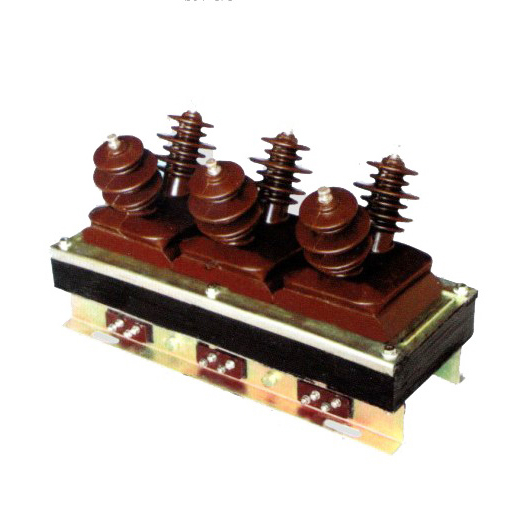
The SZW-6 is a medium-voltage, cast-resin insulated voltage transformer (VT) engineered for high-accuracy metering and reliable protection functions in 11kV (IEC) or 10kV (domestic) distribution networks. Designed in strict compliance with IEC 61869-3 and GB/T 20840.3, this instrument transformer leverages advanced vacuum pressure impregnation (VPI) epoxy resin technology to deliver superior dielectric performance, environmental resilience, and long-term stability without the fire or leakage hazards associated with oil-filled alternatives.
Operating Principle and Cast-Resin Insulation Technology
Voltage transformers like the SZW-6 operate on the principle of electromagnetic induction, stepping down the primary system voltage (11kV phase-to-phase) to a standardized secondary output—typically 100/√3 V or 110/√3 V—for use by meters, relays, and monitoring equipment. The core is constructed from grain-oriented electrical steel (GOES), which minimizes hysteresis and eddy current losses, ensuring high efficiency and low phase error across the operating range. The entire magnetic assembly—primary and secondary windings wound concentrically around the core—is fully encapsulated in a solid, void-free epoxy resin matrix via the VPI process. This technique involves evacuating air from the winding structure under vacuum, then impregnating it with thermosetting resin under pressure, followed by controlled curing. The result is a monolithic, mechanically robust unit with excellent partial discharge resistance (<5 pC at 1.2 × Ur), high thermal conductivity, and immunity to moisture ingress—even in high-humidity or coastal environments.
Advantages Over Oil-Immersed Designs
Compared to traditional oil-immersed VTs, the SZW-6’s cast-resin construction eliminates flammable insulation media, making it inherently safer for indoor installations, urban substations, and confined spaces where fire risk must be minimized. It requires no oil sampling, level checks, or breather maintenance, significantly reducing lifecycle costs. The solid insulation also provides superior mechanical strength against short-circuit electrodynamic forces and seismic loads (rated up to 0.5g). Additionally, the absence of oil prevents aging-related degradation such as sludge formation or gas evolution, contributing to a service life exceeding 25 years under normal operating conditions. The compact footprint and lighter weight further simplify transportation and mounting on ring-main units (RMUs) or switchgear panels.
Typical Deployment Scenarios
The SZW-6 is commonly deployed in utility-owned primary substations for revenue metering and feeder protection, industrial plants requiring precise power quality monitoring, and renewable energy interconnection points (e.g., solar farms feeding into 11kV grids). Its multi-ratio secondary windings support dual applications—e.g., one winding rated 0.2 class for billing-grade metering, another rated 3P or 6P for overvoltage or earth-fault protection relaying. The transformer is suitable for both indoor and outdoor installations, with UV-stable resin formulations and optional stainless-steel hardware for corrosive atmospheres.
Technical Specifications
The SZW-6 voltage transformer is engineered to meet stringent electrical and environmental performance requirements. Below is a comprehensive specification table aligned with IEC 61869-3 and GB/T 20840.3:
| Parameter | Value |
|---|---|
| Primary Voltage (Ur) | 11 kV (IEC) / 10 kV (GB domestic) |
| Secondary Voltages | 100/√3 V, 110/√3 V (standard); custom ratios available |
| Rated Frequency | 50 Hz (60 Hz optional) |
| Accuracy Classes | Metering: 0.2, 0.5; Protection: 3P, 6P |
| Rated Output (per winding) | 10–100 VA (configurable) |
| Insulation Level (Um/Ur) | 12/11 kV (IEC); LI 75 kV, AC 28 kV (1 min) |
| Partial Discharge | <5 pC at 1.2 × Ur |
| Core Material | GOES (Grain-Oriented Electrical Steel), M4 grade |
| Insulation System | VPI Epoxy Resin (Class F, 155°C) |
| Ambient Temperature Range | –25°C to +40°C (–40°C option available) |
| Relative Humidity | Up to 95% non-condensing |
| Altitude Limit | ≤1000 m (derating required above 1000 m) |
| Weight | Approx. 45 kg |
| Dimensions (H×W×D) | 680 × 280 × 220 mm |
Standard Service Conditions
The SZW-6 is rated for continuous operation under standard service conditions defined in IEC 61869-3: ambient temperature between –25°C and +40°C, daily average not exceeding +35°C; relative humidity up to 95% without condensation; and installation altitude not exceeding 1000 meters above sea level. For installations above 1000 m, the dielectric withstand voltage must be derated by 1% per 100 m increment. In regions with extreme cold (e.g., northern China or Scandinavia), a –40°C low-temperature variant uses modified resin formulations to prevent embrittlement. The transformer is designed for three-phase systems with effectively grounded or resonant-grounded neutrals, and its thermal design ensures that temperature rise does not exceed 60 K above ambient at rated load.
Multi-Ratio Configuration and Burden Matching
A key feature of the SZW-6 is its dual-secondary winding capability, allowing simultaneous connection to metering and protection circuits. For example, Winding 1 may be specified as 0.2 accuracy class with 30 VA burden for kWh metering, while Winding 2 is rated 3P with 50 VA for distance or overvoltage relays. Each winding must be loaded within its rated VA to maintain declared accuracy—exceeding burden causes increased ratio and phase errors. The manufacturer provides burden tolerance curves showing error variation versus load (e.g., at 0.2 class, ratio error ≤ ±0.2%, phase error ≤ ±10 minutes at 25–100% of rated burden). Terminal blocks are clearly labeled (a, n for metering; da, dn for protection) and housed in an IP54-rated secondary terminal box with cable gland entries.
Typical Applications
The SZW-6 voltage transformer serves critical roles across diverse power infrastructure segments due to its precision, reliability, and compliance with international standards.
Substation Secondary Metering
In utility-owned 11kV/0.4kV primary substations, the SZW-6 provides the reference voltage signal for revenue-class energy meters. Its 0.2 accuracy class ensures billing integrity over decades of operation, even under light-load conditions common during nighttime or seasonal demand dips. The low phase error (<10 arcminutes) is essential for accurate reactive energy measurement in tariff structures that penalize poor power factor. The transformer is typically mounted on the incoming feeder or busbar section, with secondary leads routed to a centralized metering cabinet. Redundancy is often implemented using two VTs per bus section to allow meter calibration without service interruption.
Industrial Power Distribution Systems
Large manufacturing facilities—such as steel mills, chemical plants, or data centers—use the SZW-6 for internal energy accounting and power quality monitoring. Here, the VT feeds signals to power analyzers that track harmonics, voltage unbalance, and flicker. The cast-resin design is preferred indoors due to zero fire risk near sensitive equipment. In motor control centers (MCCs), SZW-6 units enable undervoltage protection for critical drives, preventing damage during grid sags. The 3P-class protection winding ensures reliable tripping during single-line-to-ground faults in high-resistance grounded systems.
Renewable Energy Integration
Solar photovoltaic (PV) farms and onshore wind installations frequently connect to 11kV distribution feeders. The SZW-6 is installed at the point of common coupling (PCC) to provide voltage signals for anti-islanding protection relays, which must detect loss-of-mains within 2 seconds per IEC 61727. Its fast transient response and low remanence ensure accurate voltage reconstruction during rapid irradiance changes or cloud transients. Additionally, the VT supports SCADA telemetry for remote voltage regulation and compliance reporting under grid codes like ENTSO-E or IEEE 1547.
Rural and Suburban Distribution Networks
In rural electrification projects, the SZW-6’s maintenance-free operation reduces operational expenditure for utilities with limited field crews. Mounted on pole-top platforms or pad-mounted switchgear, it enables automated voltage monitoring across extended feeders, facilitating conservation voltage reduction (CVR) programs. The robust resin housing withstands dust, salt spray, and temperature swings typical in agricultural or coastal zones. For suburban ring-main units (RMUs), the compact size allows integration without panel redesign.
Compliance with International Standards
The SZW-6 voltage transformer is certified to both global and Chinese national standards, ensuring interoperability and regulatory acceptance worldwide.
IEC 61869-3 Certification Requirements
IEC 61869-3 specifies performance, testing, and marking requirements for inductive voltage transformers. The SZW-6 undergoes type tests including temperature rise (≤60 K at 1.2 × rated burden), short-circuit withstand (mechanical integrity under 25 × rated current for 1 s), and accuracy verification across 20–120% of rated voltage. Routine tests—performed on every unit—include power frequency withstand (28 kV rms for 1 min between HV-LV and HV-ground), partial discharge (<5 pC at 1.2 × Ur), and polarity check. The nameplate must display Ur, Us, accuracy class, burden, and standard reference (IEC 61869-3:2011).
Alignment with GB/T 20840.3
GB/T 20840.3 is the Chinese equivalent of IEC 61869-3, with minor differences in test durations and labeling. While IEC permits 11kV as the nominal system voltage, GB standards reference 10kV—though the insulation levels (Um = 12kV) are identical. The SZW-6 is dual-marked to satisfy both frameworks, enabling export to ASEAN markets and domestic deployment in China. Key GB-specific requirements include mandatory lightning impulse testing (75 kV peak) and stricter creepage distance rules (≥20 mm/kV for pollution degree 3).
Harmonization and Testing Protocols
Despite alignment, discrepancies exist: IEC emphasizes functional accuracy under harmonic distortion, while GB focuses on thermal endurance. The SZW-6 bridges both by incorporating harmonic testing per IEC 61000-4-30 during development. Certification is issued by accredited labs (e.g., KEMA, CESI, or China Electric Power Research Institute), with test reports traceable to national metrology institutes.
On-Site Testing Procedures
Post-installation verification ensures the SZW-6 performs within specifications before energization.
Insulation Resistance Test
Using a 2500 V DC megohmmeter, measure insulation resistance between primary winding and ground, and between primary and secondary windings. Acceptance criterion: ≥1000 MΩ at 20°C. Correct for temperature using RT2 = RT1 × 2(T1–T2)/10. Low readings indicate moisture ingress or resin cracking.
Turns Ratio Test
Apply 100–200 V AC to the primary and measure secondary voltage. Calculate actual ratio = Vp/Vs. Tolerance: ±0.2% for 0.2-class windings, ±1% for protection windings. Use a dedicated ratio tester (e.g., Omicron CT Analyzer) for precision.
Polarity Verification
Confirm reducing polarity: when instantaneous primary voltage is positive at terminal A, secondary voltage is positive at terminal a. Apply a 6–12 V DC pulse to primary; observe momentary deflection on a center-zero galvanometer connected to secondary. Deflection direction must match markings.
Power Frequency Withstand Test
Apply 28 kV rms (50 Hz) for 1 minute between HV terminals shorted together and all LV terminals grounded. Monitor for flashover or excessive leakage current (>1 mA). This validates dielectric integrity after transport stresses.
Open-Circuit Characteristic Test
With secondary open, gradually increase primary voltage from 0 to 1.5 × Ur while recording excitation current. The knee-point should occur beyond 1.2 × Ur. Excessive magnetizing current indicates core saturation or turn-to-turn shorts.
Preventive Maintenance Guide
Although cast-resin VTs require minimal maintenance, periodic checks extend service life and prevent unexpected failures.
Annual Visual and Functional Inspection
Inspect for surface cracks, tracking marks, or discoloration on the resin housing. Check terminal tightness (torque: 2.5 N·m for M6 screws) and corrosion on grounding lugs. Verify secondary wiring integrity and IP rating of the terminal box. Perform insulation resistance and ratio tests annually in critical applications (e.g., revenue metering).
Five-Year Comprehensive Assessment
Every five years, conduct partial discharge measurement using a portable PD detector. Values consistently >10 pC warrant investigation. Re-calibrate accuracy if used for billing—drift beyond ±0.15% for 0.2-class units requires replacement. Review historical load profiles to ensure burden has not exceeded ratings due to system upgrades.
Maintenance Intervals and Fault Diagnosis
| Interval | Action | Fault Indicator |
|---|---|---|
| Annually | Visual inspection, IR test | Cracks, low IR, overheating |
| Every 5 years | PD test, accuracy verification | High PD, ratio error drift |
| After fault event | Full suite of on-site tests | Protection relay misoperation |
Common failure modes include secondary winding open-circuit (causing dangerous overvoltage) or core saturation due to ferroresonance—mitigated by proper damping resistor installation.
Conclusion
The SZW-6 11kV cast-resin voltage transformer represents a benchmark in medium-voltage instrumentation, combining precision engineering with robust construction for demanding metering and protection duties. Its compliance with IEC 61869-3 and GB/T 20840.3 ensures global acceptance, while the VPI epoxy resin insulation delivers unmatched safety, longevity, and environmental resilience compared to legacy oil-filled designs. With accuracy classes down to 0.2 for revenue metering and 3P for dependable protection coordination, the SZW-6 supports the evolving needs of smart grids, renewable integration, and industrial automation. Rigorous factory and field testing protocols guarantee performance consistency, and a preventive maintenance regimen extends operational life to 25–30 years. For engineers designing or upgrading 11kV distribution infrastructure, the SZW-6 offers a technically sound, code-compliant solution that minimizes lifecycle costs while maximizing measurement fidelity and system reliability. Its adaptability across utility, industrial, and renewable sectors underscores its role as a foundational component in modern power systems architecture.