Article Content
11kV Cast-Resin Voltage Transformer UNKNOWN for Metering and Protection – IEC 61869-3 Standard
Introduction to the UNKNOWN Voltage Transformer
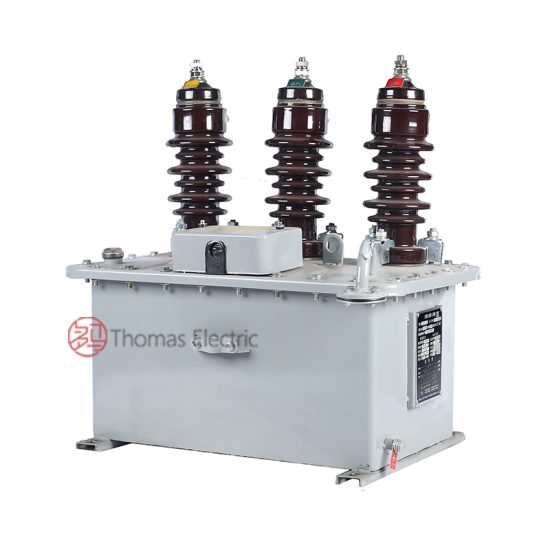
The UNKNOWN voltage transformer (VT) is a three-phase, cast-resin insulated instrument transformer engineered for high-accuracy voltage measurement and reliable protective relay coordination in 11 kV (IEC standard) or 10 kV (domestic system equivalent) medium-voltage distribution networks. Unlike legacy oil-immersed designs, the UNKNOWN VT employs vacuum pressure impregnation (VPI) epoxy resin technology to encapsulate its magnetic core and windings, delivering superior dielectric strength, environmental resilience, and long-term operational stability.
Operating Principle of Cast-Resin Insulation
Cast-resin insulation in the UNKNOWN VT is achieved through a two-stage VPI process where the primary and secondary windings—wound on grain-oriented electrical steel (GOES)—are fully encapsulated in cycloaliphatic epoxy resin under vacuum and pressure. This eliminates air voids and moisture ingress pathways, resulting in a homogeneous dielectric structure with a relative permittivity of approximately 3.8 and volume resistivity exceeding 1×10¹⁴ Ω·cm at 20°C. The resin’s thermal class is F (155°C), enabling continuous operation under load without degradation. Unlike oil-filled units, which rely on liquid dielectric properties that degrade over time due to oxidation and moisture absorption, the solid resin matrix provides consistent insulation performance across the transformer’s 25–30-year service life. Partial discharge levels are maintained below 10 pC at 1.2 × Um/√3 (where Um = 12 kV), satisfying stringent IEC 61869-3 requirements for indoor and outdoor installations.
Advantages Over Oil-Immersed Designs
The shift from oil-immersed to cast-resin construction in the UNKNOWN VT addresses critical limitations of traditional designs. First, fire safety is significantly enhanced: the epoxy resin is self-extinguishing (UL 94 V-0 rated) and contains no flammable hydrocarbons, making it suitable for urban substations, underground vaults, and industrial facilities with strict fire codes. Second, maintenance is minimized—there is no need for oil sampling, degassing, or leakage monitoring. Third, the compact mechanical design reduces footprint by up to 30% compared to equivalent oil-filled units, facilitating retrofitting in space-constrained switchgear bays. Additionally, the absence of oil eliminates environmental contamination risks during transport, installation, or end-of-life disposal. Thermal performance is also improved; the resin’s high thermal conductivity (0.8–1.2 W/m·K) enables efficient heat dissipation from copper windings, supporting short-time overload capability of 1.5× rated voltage for 30 seconds without insulation damage.
Typical Applications Overview
The UNKNOWN VT is deployed across diverse medium-voltage infrastructure where precision and reliability are non-negotiable. Primary applications include utility-owned 11 kV/10 kV distribution substations for revenue metering (Class 0.2 or 0.5 accuracy), industrial plant power systems requiring synchronized voltage inputs for differential protection schemes, and renewable energy interconnection points (e.g., solar farms) where grid-code compliance mandates accurate voltage waveform monitoring. Its robust construction supports both indoor switchgear integration and pole-mounted outdoor configurations, with IP54-rated terminal boxes protecting secondary connections from dust and water ingress. In smart grid deployments, the UNKNOWN VT interfaces seamlessly with digital relays and IEC 61850-compliant merging units, providing analog voltage signals scaled to standard secondary values (e.g., 100/√3 V or 110/√3 V).
Technical Specifications
The UNKNOWN voltage transformer adheres to precise electrical and mechanical parameters defined by IEC 61869-3 and GB/T 20840.3, ensuring interoperability and performance consistency across global markets.
Rated Electrical Parameters
Key electrical ratings for the UNKNOWN VT include a system voltage of 11 kV (Un) with a maximum system voltage (Um) of 12 kV. The standard voltage ratio is 11,000/√3 V : 100/√3 V or 110/√3 V, though custom ratios (e.g., 10,000/√3 : 100/√3 V for 10 kV domestic systems) are available. Accuracy classes comply with IEC 61869-3 Table 5: Class 0.2 for metering (burden ≤ 30 VA), Class 0.5 for general indication, and Class 3P or 6P for protection applications. Rated outputs range from 25 VA to 100 VA per phase, with thermal limiting output of 200 VA. The insulation level corresponds to LI 75 kV / AC 28 kV (1 min), verified via lightning impulse and power frequency withstand tests. Residual voltage winding (if equipped) delivers 100 V or 33.3 V for earth-fault detection, with accuracy class 3P under unbalanced conditions.
Environmental and Mechanical Ratings
The UNKNOWN VT operates reliably under standard service conditions per IEC 60060-1: ambient temperature range of –25°C to +40°C (with derating above +40°C), relative humidity up to 95% non-condensing, and installation altitude ≤ 1,000 m above sea level (with 1% dielectric strength reduction per 100 m above). For altitudes exceeding 1,000 m, the power frequency test voltage is adjusted per IEC 60071-2. The enclosure is constructed from UV-stabilized cycloaliphatic resin with tracking resistance ≥ 600 V (CTI), suitable for outdoor exposure without cracking or discoloration. Mounting options include flange base (M12 bolts, PCD 180 mm) or bracket support, with creepage distance ≥ 25 mm/kV for pollution degree 3 environments. Secondary terminals are housed in an IP54-rated box with screw-type connectors rated for 16 A, 600 V.
Core and Winding Construction
The magnetic circuit utilizes CRGO (cold-rolled grain-oriented) silicon steel laminations (grade M4, thickness 0.27 mm), annealed to minimize hysteresis loss (< 0.8 W/kg at 1.7 T, 50 Hz). Primary windings consist of enameled copper wire (Class 180°C insulation), wound in concentric layers with electrostatic shielding between HV and LV sections to suppress capacitive coupling. Secondary windings employ double-insulated copper conductors to meet reinforced insulation requirements. All windings undergo vacuum drying at 120°C before resin casting to ensure moisture content < 0.1%. The final assembly exhibits a no-load loss ≤ 15 W per phase and magnetizing current ≤ 0.5% of rated primary current at nominal voltage.
Typical Applications
The UNKNOWN 11kV cast-resin VT serves as a foundational component in modern power systems requiring dependable voltage sensing.
Substation Secondary Metering
In utility distribution substations, the UNKNOWN VT provides scaled-down voltage signals to revenue-class kWh meters, demand recorders, and SCADA RTUs. With accuracy Class 0.2 (phase error ≤ ±10 minutes, ratio error ≤ ±0.2%), it ensures billing integrity even under light-load conditions (down to 25% of rated burden). For three-phase four-wire systems, the VT’s star-connected secondary outputs feed polyphase meters compliant with IEC 62053-22. The low phase displacement (< 5 minutes at 100% burden) prevents reactive energy measurement errors in tariff structures involving power factor penalties.
Industrial Power Distribution
Within manufacturing plants, refineries, and data centers, the UNKNOWN VT supplies voltage inputs to multifunction protection relays (e.g., overvoltage, undervoltage, directional earth-fault). Its Class 3P accuracy (ratio error ≤ ±3% at 5%–100% of rated voltage) ensures reliable tripping during abnormal transients while avoiding nuisance operations during motor starting surges. The compact form factor allows direct mounting inside metal-enclosed switchgear (e.g., 11 kV RMU cabinets), reducing secondary wiring length and associated burden errors. Ground-fault detection is enhanced when paired with a residual winding, enabling sensitive earth-fault protection down to 0.5 A primary current.
Renewable Energy Integration
Solar photovoltaic and wind farms connecting to 11 kV grids utilize the UNKNOWN VT for grid synchronization, anti-islanding detection, and power quality monitoring. The transformer’s linear response up to 1.9 × Un supports ride-through during voltage sags/swells per IEEE 1547 or ENTSO-E grid codes. Low harmonic distortion (< 0.5% THD at rated load) ensures accurate measurement of fundamental voltage during inverter switching transients. In microgrid applications, the VT enables seamless transition between grid-connected and islanded modes by providing stable voltage reference to controller algorithms.
Rural and Suburban Distribution Networks
For overhead line feeders serving dispersed rural loads, the UNKNOWN VT is often pole-mounted alongside reclosers and sectionalizers. Its weather-resistant resin housing withstands temperature cycling from –30°C to +50°C and resists salt fog in coastal regions. The lightweight design (typically 45–60 kg) simplifies helicopter or bucket-truck installation. Secondary outputs feed local fault indicators or remote terminal units (RTUs) for outage management, with accuracy maintained despite fluctuating load profiles common in agricultural areas.
Urban Underground Networks
In city centers with underground 11 kV cables, the UNKNOWN VT is integrated into ring main units (RMUs) or pad-mounted transformers. Fire safety is paramount here—the halogen-free resin meets IEC 60754-2 for low smoke emission during combustion. The absence of oil eliminates explosion hazards in confined vaults. High partial discharge inception voltage (> 15 kV) ensures longevity despite frequent switching transients from nearby traction loads or elevators.
Compliance with International Standards
The UNKNOWN VT is engineered to satisfy dual compliance with IEC 61869-3 and GB/T 20840.3, facilitating global deployment.
IEC 61869-3 Certification Requirements
Per IEC 61869-3:2011, the UNKNOWN VT undergoes type tests including temperature rise (≤ 60 K for resin, measured by resistance method), short-circuit withstand (thermal: 25 × In for 1 s; dynamic: 62.5 × In peak), and electromagnetic compatibility (EMC immunity to 1 MHz damped oscillatory waves per IEC 61000-4-12). Accuracy verification follows Clause 7.3: ratio and phase error measured at 20%, 50%, 100%, and 120% of rated voltage with burdens from 25% to 100% of rated VA. Partial discharge testing uses the pulse current method (IEC 60270) with background noise < 2 pC. Markings include rated voltage factor (1.2 for continuous, 1.9 for 30 s), accuracy class, and vector group (Yyn).
Alignment with GB/T 20840.3
GB/T 20840.3-2013 (China’s national standard) largely harmonizes with IEC 61869-3 but includes additional requirements for domestic use. Notably, GB/T mandates a higher lightning impulse level (LI 95 kV vs. IEC’s 75 kV for 12 kV Um) and specifies creepage distance ≥ 20 mm/kV for heavy pollution zones. The UNKNOWN VT meets these via extended shed profiles on the resin housing. GB/T also requires factory tests for every unit (vs. IEC’s sample-based approach), including turns ratio verification within ±0.25% tolerance and insulation resistance > 1,000 MΩ at 2,500 V DC.
Key Differences Between IEC and Domestic Standards
While IEC 61869-3 focuses on functional performance, GB/T 20840.3 emphasizes environmental robustness for China’s diverse climates—from Gobi Desert aridity to Pearl River Delta humidity. GB/T also defines stricter mechanical vibration tests (10–150 Hz sweep, 0.5 g amplitude) to simulate seismic activity in western provinces. Another divergence lies in secondary terminal labeling: IEC uses “a-n” notation, whereas GB/T requires “X1-X2” per Chinese utility conventions. The UNKNOWN VT accommodates both via dual-marked terminal blocks.
On-Site Testing Procedures
Post-installation commissioning of the UNKNOWN VT requires rigorous field tests to validate integrity and performance.
Insulation Resistance Test
Using a 2,500 V DC megohmmeter, measure insulation resistance between all windings and ground, and between primary and secondary windings. Acceptance criterion: ≥ 1,000 MΩ at 20°C. Correct for temperature using RT2 = RT1 × 2(T1–T2)/10. Values below 500 MΩ indicate moisture ingress or resin cracking and require drying or replacement.
Turns Ratio Test
Apply 100–200 V AC to the primary winding and measure secondary voltage with a calibrated voltmeter (accuracy Class 0.1). Calculate actual ratio and compare to nameplate. Tolerance: ±0.25% for metering class, ±0.5% for protection class. Deviations suggest turn-to-turn shorts or winding deformation.
Polarity Test
Verify reducing polarity per IEC 61869-3 Annex B: connect primary H1 and secondary X1 together; apply low-voltage AC to H1-H2; measure voltage between H2 and X2. If VH2-X2 = VH1-H2 – VX1-X2, polarity is correct. Incorrect polarity causes relay misoperation in differential schemes.
Power Frequency Withstand Voltage Test
Apply 28 kV RMS (50 Hz) for 1 minute between windings and ground, and between primary and secondary. Use a test transformer with automatic trip at 10 mA leakage current. Failure indicates insulation breakdown. Reduce voltage by 1 kV per 100 m above 1,000 m altitude.
Open-Circuit Characteristic Test
With secondary open, gradually increase primary voltage from 0 to 190% of Un/√3 (≈12.5 kV phase-to-ground). Record excitation current. A sharp current rise below 120% Un suggests core saturation or shorted turns. Magnetizing current should remain ≤ 0.8% of rated primary current at 100% voltage.
Preventive Maintenance Guide
Proactive maintenance extends the UNKNOWN VT’s service life beyond 25 years.
Annual Visual and Electrical Inspection
Inspect for resin surface cracks, tracking marks, or terminal corrosion. Clean with dry cloth—never solvents. Check grounding continuity (< 0.1 Ω resistance). Perform insulation resistance and turns ratio tests annually. Compare results to baseline; a 30% drop in insulation resistance warrants investigation.
Five-Year Comprehensive Maintenance
Every 60 months, conduct partial discharge measurement using portable detectors (acceptance: < 15 pC at 1.2 × Un/√3). Verify secondary burden impedance matches connected devices (max 120% of rated VA). Tighten terminal screws to 2.5 N·m torque. Replace desiccant in terminal box if present.
Fault Diagnosis and Troubleshooting
Common failure modes include: (1) Blown secondary fuses due to short circuits—check burden wiring; (2) Erratic meter readings—test ratio and phase error; (3) Overheating—measure no-load loss; values >20 W indicate core lamination damage. Never operate with open secondary—it induces dangerous overvoltages (>10 kV) due to core saturation.
| Maintenance Interval | Tasks |
|---|---|
| Annually | Visual inspection, IR test, ratio check, grounding verification |
| Every 5 Years | Partial discharge test, burden validation, terminal torque check |
| After Fault Events | Full suite of commissioning tests plus oil-free dielectric analysis |
Conclusion
The UNKNOWN 11kV cast-resin voltage transformer represents a technically advanced solution for medium-voltage metering and protection applications, combining the dielectric reliability of VPI epoxy resin with the magnetic efficiency of GOES cores. Its compliance with IEC 61869-3 and GB/T 20840.3 ensures global acceptance, while eliminating the fire, environmental, and maintenance liabilities inherent in oil-immersed alternatives. With accuracy classes spanning 0.2 to 6P, it supports everything from revenue-grade billing to high-speed earth-fault protection. Rigorous factory and field testing protocols guarantee performance integrity throughout its design life of 25–30 years, even in harsh industrial or outdoor environments. As distribution networks evolve toward digitalization and distributed generation, the UNKNOWN VT’s stable, low-distortion output provides the foundational voltage reference required for grid resilience and operational intelligence. Its compact, lightweight design further facilitates integration into modern switchgear, making it a future-proof choice for utilities and industrial operators alike.