Article Content
LSZY-35 33kV Cast-Resin Voltage Transformer for Substation Metering and Protection – IEC 61869-3 Certified
Introduction to the LSZY-35 Voltage Transformer
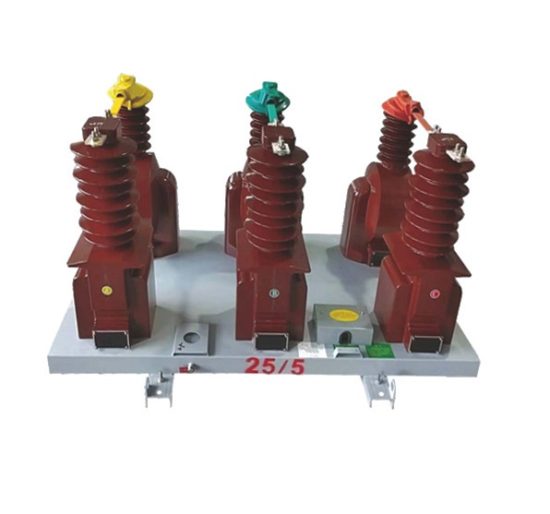
The LSZY-35 is a single-phase, indoor/outdoor rated, cast-resin insulated voltage transformer (VT) designed for accurate voltage measurement and protective relaying in 33 kV (IEC standard) or 35 kV (Chinese domestic system) power networks. Unlike legacy oil-immersed designs, the LSZY-35 employs vacuum pressure impregnation (VPI) epoxy resin technology to fully encapsulate its magnetic core and secondary windings, eliminating fire hazards, oil leakage risks, and environmental contamination concerns. This solid insulation system provides superior dielectric strength, mechanical robustness, and long-term thermal stability under continuous load and transient overvoltage conditions.
Operating Principle of Cast-Resin Insulation
Cast-resin insulation in the LSZY-35 is achieved through a two-stage VPI process where high-purity cycloaliphatic epoxy resin is vacuum-degassed and then pressure-injected into pre-assembled core-winding structures housed in precision aluminum molds. The resin fully penetrates inter-turn and inter-layer voids, creating a monolithic, void-free composite with a relative permittivity of approximately 4.2 and volume resistivity exceeding 1×10¹⁴ Ω·cm at 20°C. This homogeneous structure prevents partial discharge inception below 10 pC at 1.2×Um/√3 (where Um = 38.5 kV), ensuring compliance with IEC 61869-3’s stringent PD limits. The cured resin exhibits a glass transition temperature (Tg) of ≥110°C, enabling stable operation up to 40°C ambient with a 10K hotspot rise margin.
Advantages Over Oil-Immersed Designs
Compared to traditional oil-filled VTs, the LSZY-35 eliminates flammability (achieving UL 94 V-0 rating), requires no oil sampling or tank maintenance, and withstands seismic loads up to 0.5g without internal displacement. Its compact footprint—typically 30% smaller than equivalent oil units—reduces substation real estate costs. Additionally, the absence of breathing mechanisms prevents moisture ingress, maintaining insulation resistance >10,000 MΩ even after 1,000 hours at 95% relative humidity. These attributes make it ideal for urban substations, indoor switchgear, and environmentally sensitive zones such as near water reservoirs or agricultural areas.
Typical Application Overview
The LSZY-35 serves dual roles: providing Class 0.2 or 0.5 accuracy for revenue metering per IEC 62053-22, and Class 3P or 6P accuracy for overvoltage, undervoltage, and directional earth-fault protection schemes. It is commonly deployed in 33/11 kV primary substations, industrial plant switchyards (e.g., steel mills, chemical plants), and grid-connected solar/wind farms where harmonic distortion from inverters demands low phase-angle error (<±10 minutes). Its robust design supports continuous operation at 1.2× rated voltage during system emergencies without degradation.
Technical Specifications
The LSZY-35 adheres to precise electrical and environmental parameters defined by IEC 61869-3 and GB/T 20840.3, ensuring interoperability across global and domestic grids.
| Parameter | Value |
|---|---|
| System Voltage (Um) | 38.5 kV (for 33 kV IEC / 35 kV domestic systems) |
| Primary Rated Voltage | 33,000 / √3 V (phase-to-earth) |
| Secondary Rated Voltages | 100 / √3 V (metering), 100 V (protection) |
| Voltage Ratio | 33,000 / √3 : 100 / √3 : 100 V (dual secondary) |
| Accuracy Classes | Metering: 0.2 / 0.5; Protection: 3P / 6P |
| Rated Output (per secondary) | 30 VA (0.2 class), 50 VA (0.5 class), 100 VA (3P/6P) |
| Insulation Level (LI/AC) | 170 kV lightning impulse / 70 kV power frequency (1 min) |
| Partial Discharge | <10 pC at 1.2 × Um/√3 |
| Core Material | Grain-oriented (GOES) silicon steel, 0.27 mm thickness |
| Frequency | 50 Hz (±0.5 Hz) |
| Ambient Temperature Range | –40°C to +40°C |
| Altitude | ≤1,000 m (derating required above) |
| Relative Humidity | ≤95% (non-condensing) |
Standard Service Conditions
The LSZY-35 is rated for continuous operation under IEC 60060-defined standard atmospheric conditions: ambient temperature between –40°C and +40°C, daily average not exceeding +35°C. At altitudes above 1,000 m, the power frequency withstand voltage must be reduced by 1% per 100 m increment due to decreased air density. For example, at 2,000 m, the AC test voltage becomes 63 kV instead of 70 kV. Humidity tolerance extends to 95% RH provided condensation does not occur; the hydrophobic resin surface prevents tracking even under salt fog (IEC 60507 Class B).
Electrical Performance Tolerances
Voltage error at rated burden must remain within ±0.2% for Class 0.2 and ±0.5% for Class 0.5 across 80–120% of rated voltage. Phase displacement is limited to ±10 minutes (0.2 class) and ±20 minutes (0.5 class). For protection windings, composite error at rated accuracy limit factor (ALF = 5 or 10) must not exceed 3% (3P) or 6% (6P). Burden variation from 25% to 100% of rated VA induces less than 0.1% additional ratio error due to low magnetizing current (<0.5% of rated primary current).
Typical Applications
The LSZY-35’s versatility enables deployment across diverse power infrastructure segments requiring high reliability and metrological integrity.
Substation Secondary Metering
In 33/11 kV primary substations, the LSZY-35 supplies Class 0.2 secondary voltage to static kWh meters for utility billing. Its low phase-angle error ensures accurate reactive energy measurement (Q = VI sinφ), critical for power factor correction tariffs. For instance, in a 20 MVA urban substation feeding commercial districts, three LSZY-35 units (one per phase) interface with IEC 61850-9-2 LE sampled value networks, enabling time-synchronized phasor measurement with ±0.5° angular accuracy. The cast-resin body resists pollution-induced flashovers common in coastal cities like Shanghai or Mumbai.
Industrial Power Distribution
Heavy industries—such as cement plants or data centers—use the LSZY-35 for both revenue metering and motor protection. In a 35 kV switchgear lineup powering 10 MW induction motors, the VT’s 6P protection winding triggers undervoltage relays if bus voltage drops below 85% for >0.5 seconds, preventing motor stalling. The epoxy resin withstands EMI from variable-frequency drives (VFDs), maintaining accuracy despite 5th/7th harmonic content up to 5% THD. Its IP54-rated terminal box prevents dust ingress in harsh environments.
Renewable Energy Integration
Solar photovoltaic (PV) farms rated 10–50 MW utilize LSZY-35 units at the point of interconnection (POI) for grid compliance monitoring. During cloud transients causing rapid voltage ramps (up to 2 kV/s), the VT’s low leakage inductance (<5 µH) ensures faithful waveform reproduction for anti-islanding relays. In wind farms, it supports fault ride-through (FRT) schemes by providing stable voltage signals during symmetrical faults down to 15% residual voltage. The non-flammable design meets NFPA 850 requirements for renewable sites.
Rural and Suburban Distribution Networks
In remote 35 kV radial feeders serving agricultural communities, the LSZY-35 replaces aging oil-filled VTs due to its maintenance-free operation. Mounted on pole-top platforms, it endures temperature swings from –30°C (winter) to +45°C (summer) without oil expansion issues. Its lightweight (≈85 kg) simplifies helicopter-assisted installation in mountainous regions. For smart grid rollouts, the VT integrates with distribution automation terminals (DTUs) via analog outputs or digital interfaces, enabling remote voltage profiling and outage detection.
Compliance with International Standards
The LSZY-35 is engineered to satisfy both global and Chinese regulatory frameworks, ensuring seamless integration into multinational projects.
IEC 61869-3 Compliance Details
Per IEC 61869-3:2011, the LSZY-35 undergoes type tests including temperature rise (≤55 K for resin, ≤60 K for windings), short-circuit withstand (250× rated current for 1 s), and electromagnetic compatibility (EMC) per IEC 61000-4 series. Its insulation coordination aligns with IEC 60071, using a standardized insulation level (SIL) of 170/70 kV. Accuracy verification follows IEC 61869-1 Annex B, with ratio and phase error measured using a calibrated comparator bridge at 25°C ±2°C. The design includes a grounded electrostatic shield between primary and secondary to minimize capacitive coupling errors.
GB/T 20840.3 Alignment
For the Chinese market, the LSZY-35 complies with GB/T 20840.3-2013, which largely harmonizes with IEC 61869-3 but specifies additional requirements: altitude derating curves up to 4,000 m, and mandatory seismic testing per GB/T 13540 (horizontal acceleration 0.3g). Domestic accuracy classes use identical notation (0.2, 0.5, 3P, 6P), though burden definitions reference older GB standards (e.g., 30 VA = 30 volt-amperes at cosφ=0.8 lagging). All units bear the China Compulsory Certification (CCC) mark after third-party validation by CEPREI or SGCC labs.
Key Differences Between IEC and Domestic Standards
While IEC 61869-3 permits optional digital output (IEC 61850-9-2), GB/T 20840.3 mandates analog-only secondary for conventional installations. IEC allows ±10% primary voltage tolerance during accuracy tests; GB requires ±5%. Additionally, GB specifies stricter pollution severity (IV vs. III per IEC 60815) for coastal regions, necessitating longer creepage distances (≥25 mm/kV vs. 20 mm/kV). Despite these nuances, the LSZY-35’s modular design accommodates both regimes through interchangeable terminal blocks and shielding configurations.
On-Site Testing Procedures
Post-installation commissioning ensures the LSZY-35 meets performance guarantees before energization.
Insulation Resistance Test
Using a 2,500 V DC megohmmeter, measure insulation resistance between all windings and ground, and between primary and secondary windings. Acceptance criterion: ≥10,000 MΩ at 20°C. Correct for temperature using RT2 = RT1 × 2(T1–T2)/10. For example, a reading of 5,000 MΩ at 30°C equates to 10,000 MΩ at 20°C and is acceptable. Low values indicate moisture absorption or resin cracking—requiring drying or replacement.
Turns Ratio Test
Apply 100–200 V AC to the primary and measure secondary voltages with a calibrated true-RMS voltmeter. Calculate actual ratio: Vp/Vs. Tolerance: ±0.2% for metering, ±0.5% for protection windings. For a 33,000/√3 : 100/√3 VT, expected secondary is 100 V at 33,000 V primary. A measured 99.85 V yields ratio error = [(99.85 – 100)/100] × 100% = –0.15%, within Class 0.2 limits.
Polarity Test
Verify reducing polarity per IEC 61869-1 Figure 3. Connect a 6–12 V battery across primary terminals (H1+, H2–). Momentarily close the circuit while monitoring secondary with a DC voltmeter (X1+, X2–). A positive kick confirms correct polarity. Incorrect polarity causes 180° phase reversal, leading to metering errors or relay misoperation in differential schemes.
Power Frequency Withstand Voltage Test
Apply 70 kV RMS (50 Hz) between primary and grounded secondary/core for 60 seconds. Use a calibrated test transformer with overcurrent trip set at 1.5× expected capacitive current (typically 10–20 mA). No flashover or disruptive discharge constitutes pass. For routine tests, 80% of type test voltage (56 kV) is permitted per IEC 60060-1.
Open-Circuit Characteristic Test
Gradually increase primary voltage from 0 to 190 V (equivalent to 1.2×33 kV) while measuring secondary voltage and excitation current. Plot Vs vs. Iexc. Knee-point voltage should exceed 150 V (1.1× rated) indicating adequate core saturation margin. Excessive excitation current (>2 mA at rated voltage) suggests core lamination damage or shorted turns.
Preventive Maintenance Guide
Although cast-resin VTs require minimal upkeep, scheduled inspections extend service life beyond 25 years.
Periodic Inspection Protocol
Annually, perform visual checks for: (1) surface cracks or UV degradation (resin yellowing), (2) terminal corrosion or loose bolts (torque: 15 N·m for M8 studs), (3) contamination buildup (clean with deionized water if ESDD >0.1 mg/cm²). Use an infrared camera to detect hotspots >10 K above ambient—indicative of poor connections. Record insulation resistance trends; a 50% drop over 3 years warrants diagnostic testing.
Maintenance Intervals and Fault Diagnosis
Every 5 years, repeat on-site tests: ratio, polarity, and insulation resistance. Common faults include: (1) Secondary open-circuit—causes core saturation and overheating; detected by elevated excitation current. (2) Moisture ingress at terminal seals—lowers insulation resistance; resolved by replacing gaskets. (3) Partial discharge activity—identified via ultrasonic sensors (>20 dB above background); may require replacement if PD exceeds 20 pC. Never operate with secondary open; always short-circuit during disconnection.
| Interval | Action |
|---|---|
| Annual | Visual inspection, IR thermography, insulation resistance |
| 5 Years | Full electrical tests (ratio, polarity, withstand), PD check |
| After Fault | Post-fault ratio and insulation tests before re-energization |
Conclusion
The LSZY-35 cast-resin voltage transformer represents a technically mature solution for 33 kV (IEC) / 35 kV (domestic) networks demanding high accuracy, environmental resilience, and decades-long reliability. Its VPI epoxy resin insulation eliminates the operational liabilities of oil-filled alternatives while delivering metrological performance compliant with IEC 61869-3 and GB/T 20840.3. With grain-oriented silicon steel cores, dual secondary windings (0.2/3P or 0.5/6P), and robust pollution/weather resistance, it excels in applications ranging from urban substations to renewable energy interconnections. Rigorous factory and field testing protocols ensure consistent quality, while minimal maintenance requirements reduce lifecycle costs. Engineered for a service life of 25–30 years under standard conditions, the LSZY-35 provides a future-proof foundation for smart grid evolution, supporting both analog legacy systems and emerging digital substations through adaptable interface options. Its certification to international standards guarantees interoperability across global supply chains, making it a preferred choice for utilities and industrial operators prioritizing safety, accuracy, and sustainability.