Article Content
High-Performance 11kV Cast-Resin Voltage Transformer SZW-6 for Metering & Protection per IEC 61869-3
Introduction to the SZW-6 Voltage Transformer
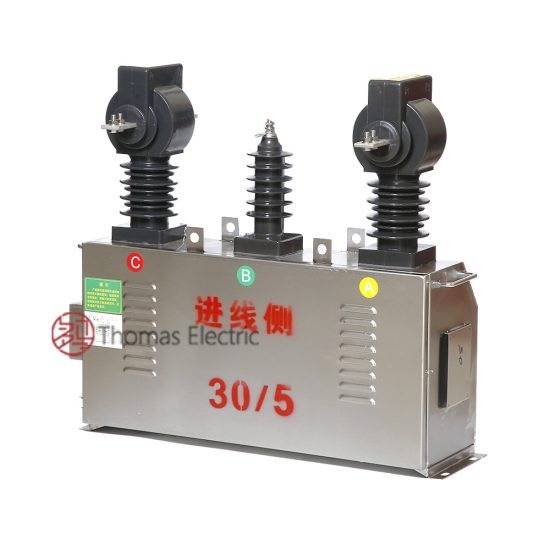
The SZW-6 is a single-phase, indoor/outdoor-rated cast-resin voltage transformer (VT) engineered for accurate voltage measurement and reliable protective relay operation in medium-voltage power systems operating at 11kV (IEC standard) or 10kV (domestic Chinese system). Designed in strict compliance with IEC 61869-3 and GB/T 20840.3, this instrument transformer leverages advanced vacuum pressure impregnation (VPI) epoxy resin technology to encapsulate high-purity GOES (grain-oriented electrical steel) core laminations and precision-wound copper secondary windings. The result is a maintenance-free, fire-resistant, and environmentally stable device suitable for demanding utility and industrial applications.
Operating Principle of Cast-Resin Insulation
Cast-resin insulation in the SZW-6 employs a two-component cycloaliphatic epoxy resin system cured under vacuum and pressure to eliminate voids and moisture ingress. This process ensures homogeneous dielectric strength across the entire winding structure. Unlike oil-filled units, the solid resin matrix provides superior partial discharge resistance—typically below 5 pC at 1.2 × Um/√3—and eliminates risks associated with flammability, leakage, or environmental contamination. The resin’s thermal conductivity (≈0.2 W/m·K) enables efficient heat dissipation from the core and windings during continuous operation, supporting long-term stability even under harmonic-rich grid conditions.
Advantages Over Oil-Immersed Designs
Compared to traditional oil-immersed VTs, the SZW-6 offers significant operational and safety benefits. Its dry-type construction eliminates the need for oil containment systems, reducing civil works costs and simplifying permitting in urban substations. The absence of liquid insulation also removes fire hazards, making it ideal for indoor switchgear rooms and confined spaces. Additionally, the SZW-6 exhibits lower lifecycle costs due to zero oil testing, no periodic oil replacement, and immunity to moisture absorption—a common failure mode in oil units exposed to temperature cycling. Mechanical robustness is enhanced by the monolithic resin block, which resists vibration and seismic loads up to 0.5g without degradation in accuracy.
Typical Applications Overview
The SZW-6 is primarily deployed in 11kV/10kV distribution networks where precise voltage transformation is required for revenue metering, power quality monitoring, and protective relaying. Common installations include ring main units (RMUs), gas-insulated switchgear (GIS) bays, and conventional air-insulated substations (AIS). Its compact footprint (typically 380 mm height × 220 mm width) allows integration into space-constrained cabinets, while its IP54-rated enclosure supports both indoor and sheltered outdoor use. The transformer’s low burden requirement (as low as 1 VA at class 0.5) ensures compatibility with modern digital meters and IEDs without signal distortion.
Technical Specifications
The SZW-6 voltage transformer is engineered to deliver consistent performance under defined service conditions. Key parameters are derived from IEC 61869-3 and verified through type, routine, and special tests during manufacturing.
| Parameter | Value |
|---|---|
| Primary Rated Voltage (Up) | 11 kV (IEC) / 10 kV (GB) |
| Secondary Rated Voltage (Us) | 100 V or 100/√3 V (configurable) |
| Voltage Ratio | 11,000/100 V or 11,000/(100/√3) V |
| Accuracy Class | 0.2, 0.5, 1, 3 (per burden) |
| Rated Output (Burden) | 10–100 VA (depending on class) |
| Insulation Level (LI/AC) | 75 kV / 28 kV (1 min, 50 Hz) |
| Short-Time Thermal Withstand | 1 second at 100× rated primary current |
| Core Material | GOES M4 grade, 0.27 mm thickness |
| Insulation System | VPI cycloaliphatic epoxy resin, UL 94 V-0 rated |
| Ambient Temperature Range | –25°C to +40°C (max 24-h avg: +35°C) |
| Relative Humidity | Up to 95% non-condensing |
| Maximum Altitude | 1,000 m above sea level (derating required >1,000 m) |
Rated Voltage and Ratio Configuration
The SZW-6 is standardized for 11kV systems per IEC 60038, though it is commonly used on 10kV networks in China where nominal system voltage aligns with GB 156. The primary winding is designed for phase-to-ground connection in three-phase systems, hence the secondary output is typically 100/√3 V for wye-connected metering. For phase-to-phase applications, a 100 V secondary is available. The turns ratio tolerance is ±0.1% for accuracy classes 0.2 and 0.5, ensuring minimal error in kWh billing and synchrophasor measurements. Multi-ratio variants are not standard; each unit is wound for a fixed ratio to optimize magnetic circuit efficiency.
Service Conditions and Environmental Limits
Operation outside standard service conditions requires derating or special design. At altitudes exceeding 1,000 m, the dielectric strength of air decreases by approximately 1% per 100 m, necessitating increased creepage distance or internal grading rings. In high-humidity coastal environments, the hydrophobic nature of cycloaliphatic resin prevents surface tracking, but condensation must be avoided via proper ventilation. The transformer’s thermal design assumes a maximum ambient of +40°C; continuous operation above this may reduce insulation life. No forced cooling is required—the natural convection rating supports 1.2× continuous overload without exceeding 115 K temperature rise over ambient.
Typical Applications
The SZW-6 voltage transformer serves critical roles across diverse power infrastructure segments, leveraging its accuracy, reliability, and compact form factor.
Substation Secondary Metering
In 11kV distribution substations, the SZW-6 provides the reference voltage for revenue-grade energy meters compliant with IEC 62053-22. Installed on each phase, it feeds signals to multi-tariff meters with class 0.5S accuracy. The low phase displacement error (<10 minutes at 0.5 class) ensures correct power factor calculation, directly impacting billing accuracy. In smart substations, the VT interfaces with merging units (MUs) for sampled value (SV) transmission per IEC 61850-9-2 LE, requiring stable amplitude and phase response across 45–55 Hz frequency deviations.
Industrial Power Distribution Systems
Large manufacturing facilities often operate 10kV internal networks fed from utility 11kV lines. Here, the SZW-6 monitors bus voltage for motor protection relays (e.g., undervoltage lockout) and power factor correction controllers. Its ability to withstand frequent switching transients—common in arc furnace or large motor startups—is enhanced by the resin’s high impulse strength (75 kV BIL). The transformer’s compact size allows retrofit into legacy switchgear without panel modification, a key advantage during plant upgrades.
Renewable Energy Integration
Solar PV and wind farms frequently connect to 10kV/11kV collector grids. The SZW-6 supplies voltage signals to anti-islanding relays and SCADA RTUs for grid code compliance (e.g., ENTSO-E or NB/T 32004). During rapid irradiance changes, the VT must maintain accuracy despite high harmonic content (THD up to 8%). The GOES core’s low hysteresis loss minimizes heating under these conditions, while the resin encapsulation prevents resonance-induced winding movement that could degrade insulation over time.
Rural and Suburban Distribution Networks
In remote areas with limited maintenance access, the SZW-6’s maintenance-free design is critical. Mounted on pole-top platforms or pad-mounted transformers, it enables remote voltage monitoring via cellular-connected meters. The IP54 rating protects against dust and rain, while UV-stabilized resin prevents surface cracking under prolonged solar exposure. Utilities report mean time between failures (MTBF) exceeding 200,000 hours in such deployments, significantly outperforming oil-filled alternatives prone to seal degradation.
Compliance with International Standards
The SZW-6 is certified to both global and Chinese national standards, ensuring interoperability and regulatory acceptance.
IEC 61869-3 Compliance Details
IEC 61869-3 governs electromagnetic voltage transformers for frequencies 15 Hz to 100 Hz. The SZW-6 meets all requirements for insulation coordination, accuracy limits, and thermal performance. Key verifications include: composite error ≤0.2% for class 0.2 at 25–100% rated voltage; temperature rise ≤55 K for resin and ≤60 K for windings; and partial discharge inception voltage ≥1.2 × Um/√3. Type tests—conducted once per design—include lightning impulse (1.2/50 µs, 75 kV), chopped wave, and thermal stability under 1.5× rated burden for 8 hours.
Alignment with GB/T 20840.3
GB/T 20840.3 is China’s adoption of IEC 61869-3 with minor modifications. The primary difference lies in insulation levels: GB specifies 70 kV LI / 28 kV AC for 10kV systems, whereas IEC uses 75/28 kV for 11kV. The SZW-6 exceeds both by design. Additionally, GB mandates stricter short-circuit withstand verification—100× rated current for 1 s versus IEC’s 50×—which the SZW-6 satisfies due to reinforced winding bracing within the resin matrix. Certification by CEPREI or CESI confirms dual-standard compliance.
Testing and Certification Requirements
Every SZW-6 undergoes routine tests per clause 12 of IEC 61869-3: visual inspection, winding resistance, turns ratio, polarity, and power frequency withstand (28 kV, 1 min). Optional special tests include capacitance and tan δ measurement (for aging assessment) and ferroresonance evaluation. Third-party certification (e.g., KEMA, SGS) validates type test reports. For Chinese projects, CCC marking is required, involving factory audits and sample retesting every 24 months.
On-Site Testing Procedures
Post-installation and periodic field tests ensure the SZW-6 operates within specification throughout its service life.
Insulation Resistance Test
Using a 2,500 V DC megohmmeter, measure insulation resistance between primary winding and ground, and between secondary windings and ground. Acceptance criteria: ≥1,000 MΩ at 20°C. Correct for temperature using RT = R20 × 2(20–T)/10. Values below 500 MΩ indicate moisture ingress or resin cracking and warrant further investigation via tan δ testing. Perform before and after cleaning to verify dielectric integrity.
Turns Ratio Test
Apply 100–200 V AC to the primary and measure secondary voltage with a calibrated voltmeter (±0.1% accuracy). Calculate actual ratio and compare to nameplate. Tolerance: ±0.1% for class 0.2/0.5, ±0.2% for class 1. Deviations beyond tolerance suggest turn-to-turn shorts or incorrect tap selection. Use a dedicated ratio tester (e.g., Omicron CT Analyzer) for automated comparison and phase angle measurement.
Polarity Test
Verify reducing polarity per IEC 61869-1: connect primary H1 and secondary X1 together; apply low-voltage AC (e.g., 50 V) to H1–H2; measure voltage between H2 and X2. If VH2-X2 ≈ VH1-H2 – VX1-X2, polarity is correct. Incorrect polarity causes 180° phase shift, leading to false tripping in directional overcurrent relays. Document results with oscilloscope traces for audit trails.
Power Frequency Withstand Voltage Test
Apply 28 kV RMS at 50 Hz between primary and grounded secondary/core for 1 minute. Use a calibrated test transformer with overcurrent trip set at 10 mA. No flashover or sustained discharge indicates pass. Reduce voltage gradually post-test to avoid transient overvoltages. This test is mandatory after transportation or major maintenance but should not exceed once per 5 years to avoid cumulative stress.
Open-Circuit Characteristic Test
With secondary open, apply 20–120% of rated primary voltage in 10% steps. Record excitation current and secondary voltage. Plot Vs vs. Iexc to identify core saturation onset (typically >130% Un). A sharp current rise below 110% indicates interlamination shorts or degraded core insulation. Compare to factory curves; deviation >5% warrants replacement. This test is critical after ferroresonance events.
Preventive Maintenance Guide
Although cast-resin VTs require minimal maintenance, scheduled inspections prevent unexpected failures.
Annual Visual and Electrical Inspection
Inspect for surface cracks, tracking marks, or discoloration on the resin housing. Check terminal tightness (torque: 15 N·m for M8 bolts) and corrosion on grounding lugs. Perform insulation resistance and ratio tests annually in harsh environments (coastal, industrial), or biennially in controlled indoor settings. Clean surfaces with dry cloth or mild detergent—never solvents that may degrade resin. Verify secondary wiring integrity to prevent open-circuit conditions that cause dangerous overvoltages.
Five-Year Comprehensive Maintenance
At 5-year intervals, conduct full suite of on-site tests: insulation resistance, ratio, polarity, withstand voltage, and open-circuit curve. Additionally, measure capacitance and dissipation factor (tan δ) between primary and ground using a Schering bridge. Acceptable tan δ: <0.5% at 10 kV. Rising values indicate moisture absorption or resin aging. Review historical data trends—consistent degradation may justify early replacement despite passing individual tests.
Maintenance Intervals and Fault Diagnosis
| Activity | Indoor Interval | Outdoor/Harsh Interval |
|---|---|---|
| Visual Inspection | 24 months | 12 months |
| Insulation Resistance | 24 months | 12 months |
| Ratio & Polarity | 60 months | 36 months |
| Withstand Voltage | Never (unless disturbed) | 60 months |
| Open-Circuit Test | After fault events | After fault events |
Common faults include secondary open-circuit (causing core saturation and overheating), external flashover due to pollution, and mechanical damage during handling. Diagnose via thermal imaging (hot spots >10 K above ambient) or abnormal noise (humming from magnetostriction).
Conclusion
The SZW-6 11kV cast-resin voltage transformer represents a mature, field-proven solution for accurate voltage transformation in modern power systems. Its design—centered on VPI epoxy resin encapsulation and GOES core technology—delivers exceptional dielectric strength, thermal stability, and immunity to environmental stressors. Compliance with both IEC 61869-3 and GB/T 20840.3 ensures global acceptance and seamless integration into utility and industrial networks operating at 11kV (IEC) or 10kV (domestic). The transformer’s maintenance-free nature, coupled with a typical service life of 25–30 years, translates to low total cost of ownership and high reliability. When subjected to proper on-site testing and preventive maintenance per the guidelines outlined, the SZW-6 consistently meets accuracy requirements for revenue metering (class 0.2/0.5) and protective relaying (class 3), even under dynamic grid conditions. Its compact form factor and robust construction make it equally suited for new installations and retrofits in space-constrained or safety-sensitive environments. As power systems evolve toward digitalization and distributed generation, the SZW-6’s stable performance characteristics ensure continued relevance in next-generation substation architectures.
Frequently Asked Questions (FAQ)
Q1: Can the SZW-6 be used on a 10kV system if it’s rated for 11kV?
A: Yes. The 11kV rating per IEC 60038 corresponds to the highest voltage for equipment (Um = 12 kV), making it fully compatible with 10kV nominal systems per GB 156. Operating at 10kV actually reduces electrical stress, potentially extending service life.
Q2: What is the minimum burden for the SZW-6 to maintain accuracy class 0.5?
A: The minimum burden is 1 VA. Below this, the voltage error may exceed ±0.5% due to insufficient magnetizing current stabilization. Always verify connected meter/relay burden during commissioning.
Q3: Is the SZW-6 susceptible to ferroresonance?
A: Like all VTs, it can experience ferroresonance if switched with isolated neutrals and capacitive loads. Mitigation includes using damping resistors across secondary windings or specifying VTs with built-in suppression circuits.
Q4: How often should the power frequency withstand test be repeated in service?
A: Only after major disturbances (e.g., lightning strikes, short circuits) or physical handling. Routine repetition accelerates insulation aging and is not recommended by IEC 60270.
Q5: Can the SZW-6 be installed horizontally?
A: No. It must be mounted vertically as per manufacturer instructions. Horizontal mounting alters thermal convection paths and may cause uneven resin stress, void formation, and reduced dielectric strength.
Q6: What is the expected partial discharge level in new SZW-6 units?
A: Less than 5 pC at 1.2 × (11 kV / √3) = 7.6 kV, measured per IEC 60270. Levels above 10 pC during factory testing trigger rejection. Field PD testing is optional but useful for baseline trending.