Contenido del artículo
IEC 61869-2 Certified 11kV Current Transformer UNKNOWN for Metering & Protection Applications
Introduction to the UNKNOWN Current Transformer
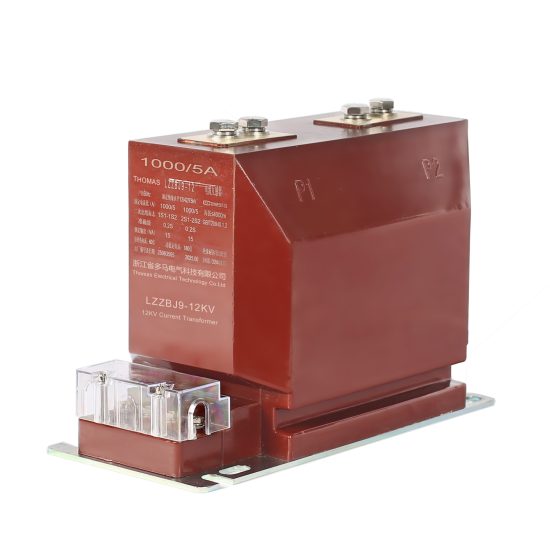
The UNKNOWN 11kV cast-resin current transformer (CT) is engineered for high-reliability operation in medium-voltage power systems, delivering precise current transformation for both metering and protective relaying functions. Designed in strict accordance with IEC 61869-2 and GB/T 20840.2, this instrument transformer leverages advanced vacuum pressure impregnation (VPI) epoxy resin technology to ensure long-term dielectric integrity and mechanical robustness under demanding environmental conditions.
Operating Principle of Cast-Resin Insulation
Cast-resin insulation in the UNKNOWN CT employs a two-stage VPI process where the wound core—fabricated from grain-oriented electrical steel (GOES)—is fully encapsulated in cycloaliphatic epoxy resin under vacuum and pressure. This eliminates air voids and moisture ingress pathways, resulting in a homogeneous dielectric structure with a relative permittivity (εr) of approximately 3.8–4.2 and volume resistivity exceeding 1×10¹⁴ Ω·cm at 20°C. The resin system provides a thermal class of 130°C (Class B per IEC 60085), enabling continuous operation at ambient temperatures up to +40°C with a 10K hotspot allowance. Unlike oil-filled alternatives, the solid insulation eliminates fire hazards, reduces maintenance overhead, and ensures stable performance across humidity ranges of 5%–95% RH non-condensing.
Advantages Over Oil-Immersed Designs
Compared to traditional oil-immersed CTs, the UNKNOWN cast-resin design offers superior environmental resilience, particularly in outdoor or coastal substations where salt fog and pollution accelerate degradation. The absence of liquid insulation eliminates risks of leakage, tank corrosion, and flammability—critical for indoor GIS or urban substations with space constraints and fire safety mandates. Additionally, the compact footprint (typical dimensions: 280 mm height × 180 mm width × 120 mm depth) facilitates retrofitting into existing 11kV switchgear without structural modifications. Dielectric recovery after partial discharge events is instantaneous due to the non-tracking nature of cycloaliphatic resin, whereas oil systems may suffer permanent breakdown if contaminants accumulate. Long-term aging tests per IEC 60674 confirm <5% capacitance drift over 25 years under continuous rated voltage stress.
Typical Application Overview
The UNKNOWN CT serves dual roles: Class 0.5S for revenue metering and 5P20 for protection coordination in 11kV (IEC) / 10kV (domestic) networks. It is commonly deployed in utility distribution substations, industrial plant switchyards, wind farm collector systems, and solar PV inverters interfacing with the grid. Its robust construction supports both indoor panel mounting and outdoor pole-top installations, with IP54-rated secondary terminal boxes protecting against dust and water ingress. The transformer’s low remanence (<10% of saturation flux density) ensures rapid reset after fault clearance, critical for directional overcurrent and differential protection schemes requiring high transient fidelity.
Technical Specifications
The UNKNOWN 11kV cast-resin current transformer is characterized by stringent electrical and mechanical parameters aligned with international standards. Below is a comprehensive specification table followed by service condition details.
| Parameter | Value |
|---|---|
| Rated System Voltage (Um) | 12 kV (IEC); 11.5 kV (GB) |
| Maximum Operating Voltage | 12 kV |
| Primary Current (Ip) | 50 A to 3150 A (standard ratios) |
| Secondary Current (Is) | 1 A or 5 A |
| Accuracy Class – Metering | 0.2S, 0.5S (per IEC 61869-2) |
| Accuracy Class – Protection | 5P10, 5P20 |
| Rated Burden | 5 VA to 30 VA (at cos φ = 0.8 lag) |
| Short-Time Thermal Current (Ith) | 20 kA for 1 s (rms) |
| Dynamic Withstand Current | 50 kA peak |
| Insulation Level (LI/AC) | 75 kV / 28 kV (1 min, 50 Hz) |
| Partial Discharge Level | <10 pC at 1.2 Um/√3 |
| Ambient Temperature Range | −25°C to +40°C |
| Altitude Limit | ≤1000 m above sea level (derating required >1000 m) |
| Core Material | GOES M4 grade, 0.27 mm thickness |
| Insulation System | VPI cycloaliphatic epoxy resin |
Standard Service Conditions
The UNKNOWN CT is rated for standard service conditions as defined in IEC 61869-1: ambient temperature between −25°C and +40°C, relative humidity up to 95% (non-condensing), and installation altitude not exceeding 1000 meters. At altitudes above 1000 m, the dielectric strength must be derated by 1% per 100 m increment above 1000 m. For example, at 2000 m, the power frequency withstand voltage is reduced from 28 kV to 25.2 kV. The transformer is designed for continuous operation under unbalanced three-phase systems with harmonic distortion up to THDI = 15%, provided the fundamental frequency remains within 49.5–50.5 Hz. Condensation-prone environments require supplementary heating in the terminal box to maintain internal temperature ≥5°C above dew point.
Electrical Performance Parameters
Key electrical characteristics include a magnetizing impedance (Zm) of ≥500 Ω at 5% of rated current for 0.5S class units, ensuring minimal ratio error under light-load metering conditions. The knee-point voltage (Vk) for 5P20 cores exceeds 200 V, guaranteeing linear response up to 20× rated current during fault transients. Ratio error tolerance is ±0.75% for 0.5S class at 100% In, tightening to ±1.5% at 20% In. Phase displacement is limited to ±30 minutes at rated current. Burden compatibility extends to modern digital relays and smart meters with input impedances as low as 0.1 Ω, eliminating the need for auxiliary matching transformers in most applications.
Typical Applications
The UNKNOWN 11kV cast-resin current transformer is deployed across diverse power infrastructure segments where accuracy, reliability, and compliance are non-negotiable.
Substation Secondary Metering
In utility-owned 11kV/0.4kV distribution substations, the UNKNOWN CT provides Class 0.5S current signals to revenue-grade energy meters (e.g., IEC 62053-22 compliant devices). Its low phase error ensures accurate reactive energy billing, while thermal stability minimizes seasonal calibration drift. Installation typically involves mounting directly onto the primary busbar of ring main units (RMUs) or metal-clad switchgear, with secondary leads routed to a secure metering cabinet. The transformer’s immunity to external magnetic fields (tested per IEC 61869-2 Annex D) prevents interference from adjacent conductors carrying unbalanced loads.
Industrial Power Distribution
Heavy industries—such as cement plants, steel mills, and data centers—utilize the UNKNOWN CT for both energy management and motor protection. In a typical 11kV motor feeder, a 5P20-rated unit feeds inputs to a multifunction relay (e.g., SEL-751) for overload, short-circuit, and ground-fault detection. The CT’s high saturation margin accommodates inrush currents up to 8× rated without core remanence affecting subsequent fault detection. Its cast-resin housing resists chemical exposure from industrial atmospheres containing SO2 or NOx, validated through 1000-hour salt spray testing per IEC 60068-2-11.
Renewable Energy Integration
Wind and solar farms employ the UNKNOWN CT at the point of interconnection (POI) to monitor export/import power and enable anti-islanding protection. In a 10 MW solar plant, multiple UNKNOWN units (e.g., 1250/1 A, 5P20) feed SCADA systems and synchrophasor measurement units (PMUs). The transformer’s fast transient response (rise time <100 µs) captures sub-cycle anomalies during grid disturbances, supporting grid code compliance (e.g., ENTSO-E requirements). Outdoor UV-resistant resin formulation prevents surface cracking under prolonged solar exposure, with color stability maintained per ISO 4892-2 xenon-arc testing.
Rural and Suburban Distribution Networks
For rural electrification projects, the UNKNOWN CT’s maintenance-free design reduces operational costs in remote locations. Mounted on pole-top reclosers or pad-mounted transformers, it enables remote load profiling via cellular-connected meters. The 10kV domestic equivalent rating ensures compatibility with legacy infrastructure while meeting modern IEC 61869-2 accuracy demands. Its lightweight construction (≈8.5 kg) simplifies manual handling during installation, and the integrated lifting lug complies with IEC 61869-2 mechanical strength requirements for transport and erection.
Compliance with International Standards
The UNKNOWN current transformer is certified to IEC 61869-2:2012 (Instrument transformers – Part 2: Additional requirements for current transformers) and harmonized with China’s GB/T 20840.2-2014 standard.
IEC 61869-2 Certification Details
Full compliance with IEC 61869-2 encompasses type tests, routine tests, and special tests. Type tests include temperature rise (≤60 K for windings), short-circuit withstand (20 kA/1 s), and impulse voltage (75 kV BIL). Routine tests performed on every unit include power frequency withstand (28 kV/1 min), partial discharge (<10 pC at 1.2×12/√3 kV), and turns ratio verification (±0.25% tolerance). The certification body issues a test report referencing IEC 61869-2 Clause 7.3 for accuracy verification under burden variations from 25% to 100% of rated VA. Environmental testing includes thermal cycling (−25°C to +70°C, 10 cycles) to validate resin-core adhesion integrity.
Alignment with GB/T 20840.2
While IEC 61869-2 governs global markets, GB/T 20840.2 adapts requirements for Chinese grid operators. Key alignments include identical accuracy classes (0.2S, 0.5S, 5P) and short-time current ratings. However, GB/T 20840.2 mandates additional seismic testing (horizontal acceleration 0.3g) for transformers installed in earthquake-prone regions like Sichuan. The UNKNOWN model meets both standards through a unified design, with minor labeling differences: IEC units display “11kV” while GB-compliant units show “10kV” on nameplates, reflecting nominal system voltages (11kV vs. 10kV) despite identical insulation levels (12kV Um).
Testing and Certification Requirements
Certification requires third-party validation by an ISO/IEC 17025-accredited laboratory. Tests include:
- Ratio and polarity verification using calibrated bridge circuits (uncertainty ≤0.05%)
- Dielectric tests with calibrated sphere gaps per IEC 60060-1
- Partial discharge mapping using IEC 60270-compliant detectors
Each unit receives a unique serial number traceable to raw material batches (resin lot, GOES coil ID). Certificates include waveform plots of excitation curves and burden test results.
On-Site Testing Procedures
Post-installation verification ensures the UNKNOWN CT performs within specifications before energization.
Insulation Resistance Test
Using a 2500 V DC megohmmeter, measure insulation resistance between primary-to-secondary and primary-to-ground. Acceptance criterion: ≥1000 MΩ at 20°C. Correct for temperature using RT = R20 × 2(20−T)/10. Values below 500 MΩ indicate moisture ingress or resin microcracks requiring further investigation via tan δ measurement.
Turns Ratio Test
Apply 1–5 V AC at 50 Hz to the secondary winding and measure induced primary voltage (open-circuit method). Calculate actual ratio = Vp/Vs. Tolerance: ±0.25% for metering class, ±0.5% for protection class. Deviations beyond tolerance suggest turn-to-turn shorts or incorrect tap selection.
Polarity Test
Verify reducing polarity using a 1.5 V DC battery and analog ammeter. Momentarily connect (+) to P1 and (−) to P2; the ammeter connected to S1–S2 should deflect positively. Incorrect polarity compromises differential protection schemes and causes metering sign errors.
Power Frequency Withstand Voltage Test
Apply 28 kV RMS at 50 Hz between primary and grounded secondary/enclosure for 1 minute. Use a calibrated test transformer with overcurrent trip set at 1.5× expected capacitive current (typically 5–10 mA). Any flashover or sustained current increase >20% indicates insulation failure.
Excitation (Saturation) Characteristic Test
Gradually increase AC voltage on the secondary (primary open) while recording current. Plot Vs vs. Is to identify knee-point voltage (Vk). For 5P20 cores, Vk must exceed 200 V. A flattened curve below 150 V suggests core degradation or excessive air gaps.
Preventive Maintenance Guide
Although cast-resin CTs are largely maintenance-free, periodic checks extend service life beyond 25 years.
Annual Visual and Electrical Inspection
Inspect for surface tracking, UV-induced chalking, or mechanical damage. Clean terminals with isopropyl alcohol; torque secondary screws to 1.2 N·m. Perform insulation resistance and ratio tests annually. Record values in a logbook to detect trends—e.g., a 30% drop in IR over two years warrants partial discharge analysis.
Five-Year Comprehensive Maintenance
Every 60 months, conduct:
- Partial discharge scan at 1.2 Um/√3 (acceptance: <15 pC)
- Burden verification using calibrated shunt resistors
- Terminal box seal integrity check (replace gaskets if hardened)
In coastal areas, rinse housing with deionized water to remove salt deposits.
Fault Diagnosis and Troubleshooting
Common issues include:
- High ratio error: Caused by core saturation (check burden) or turn shorts (perform excitation test)
- Low insulation resistance: Indicates moisture—bake at 70°C for 24 h if feasible
- No output: Verify secondary circuit continuity; check for open windings via ohmmeter (expected: 0.1–2 Ω)
Never operate with secondary open-circuited—this induces dangerous overvoltages (>10 kV) that can puncture resin insulation.
Conclusion
The UNKNOWN 11kV cast-resin current transformer represents a benchmark in medium-voltage instrumentation, combining IEC 61869-2-certified accuracy with rugged, maintenance-free construction. Its VPI epoxy resin encapsulation and GOES core deliver exceptional dielectric strength, thermal stability, and transient fidelity—critical for modern digital substations and renewable integration. By supporting dual metering (0.5S) and protection (5P20) functions in a single unit, it reduces lifecycle costs while ensuring compliance across global and domestic grids (11kV IEC / 10kV GB). Rigorous factory testing and straightforward field verification protocols guarantee reliable operation for 25–30 years, even in harsh environments. Utilities and industrial operators benefit from its compact form factor, fire-safe design, and immunity to environmental stressors, making it an optimal choice for new installations and legacy system upgrades alike. As power networks evolve toward smarter, more resilient architectures, the UNKNOWN CT provides the foundational measurement integrity required for accurate billing, effective protection, and grid stability.