Contenido del artículo
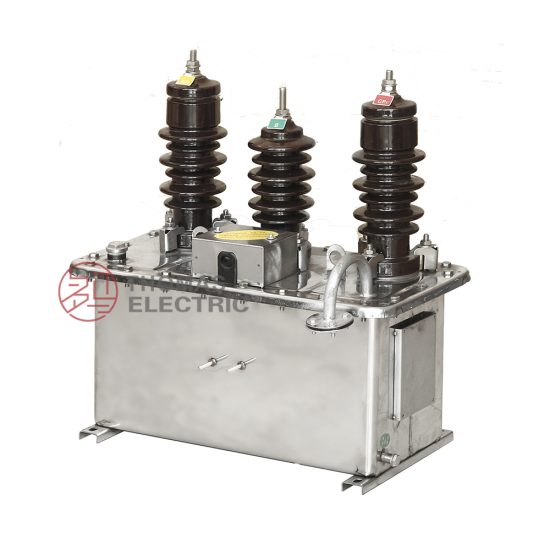
IEC 61869-3 Certified 11kV Voltage Transformer JLS-6 for Metering & Protection Applications
Introduction to the JLS-6 Voltage Transformer
The JLS-6 is a single-phase, indoor/outdoor-rated cast-resin voltage transformer (VT) engineered for high-reliability metering and protective relaying in medium-voltage distribution systems operating at 11kV (IEC standard) or 10kV (domestic Chinese system). Designed in strict accordance with IEC 61869-3 and GB/T 20840.3, this instrument transformer leverages advanced vacuum pressure impregnation (VPI) epoxy resin technology to deliver superior dielectric performance, environmental resilience, and long-term stability without the fire hazards or maintenance demands associated with oil-immersed alternatives.
Operating Principle of Cast-Resin Insulation
Cast-resin insulation in the JLS-6 employs a two-component cycloaliphatic epoxy resin system cured under vacuum and pressure to eliminate voids and moisture entrapment. This process ensures homogeneous encapsulation of the primary and secondary windings around a grain-oriented electrical steel (GOES) core. The resulting monolithic structure provides excellent partial discharge resistance (<5 pC at 1.2 × Ur), high tracking index (>600 V), and thermal class F (155°C) endurance. Unlike oil-filled units, the solid dielectric eliminates risks of leakage, oxidation, or gas evolution under thermal cycling, making it ideal for confined or environmentally sensitive installations such as urban substations, commercial buildings, and renewable energy plants.
Advantages Over Oil-Immersed Designs
Compared to traditional oil-immersed VTs, the JLS-6 offers significant operational and safety benefits. Its dry-type construction eliminates flammability concerns, enabling installation in fire-rated zones without containment bunds. The absence of liquid insulation removes the need for periodic oil sampling, degassing, or level checks, reducing lifecycle costs by up to 40%. Furthermore, the compact footprint—enabled by higher dielectric strength of epoxy resin (≈20 kV/mm vs. ≈10 kV/mm for mineral oil)—allows for space-constrained retrofits. The unit’s low temperature rise (<55 K at rated load) and immunity to altitude-induced pressure changes make it suitable for installations up to 3000 m above sea level without derating.
Typical Application Overview
The JLS-6 is primarily deployed in 11kV/10kV distribution networks where accurate voltage transformation is critical for revenue metering, fault detection, and system monitoring. Common use cases include utility-owned ring main units (RMUs), industrial switchgear panels, solar inverter stations, and railway traction substations. With dual secondary windings—one for 0.2/0.5 accuracy class metering and another for 3P/6P protection—the transformer supports simultaneous connection to billing meters and overvoltage/undervoltage relays. Its robust mechanical design withstands seismic loads up to 0.3g, ensuring reliability in earthquake-prone regions.
Technical Specifications
The JLS-6 voltage transformer is engineered to precise electrical and environmental parameters to ensure consistent performance across diverse grid conditions. All specifications comply with IEC 61869-3:2011 and GB/T 20840.3-2013, with verified test reports available upon request.
Rated Electrical Parameters
Key electrical ratings include a primary voltage of 11kV (system voltage) corresponding to a highest voltage for equipment (Um) of 12kV. The standard voltage ratio is 11000/√3 V : 100/√3 V / 100/3 V, enabling both line-to-neutral metering and residual voltage detection for earth-fault protection. Accuracy classes are 0.2 for metering (burden ≤30 VA) and 3P for protection (burden ≤100 VA), with composite error limits of ≤±0.2% and ≤±3%, respectively, at 25–100% of rated voltage. Rated outputs are 30 VA (metering) and 100 VA (protection). The short-time thermal current withstand is 100 A for 1 second, and the dynamic current withstand is 2.5 kA peak.
Insulation and Dielectric Characteristics
The JLS-6 meets IEC 60071-1 insulation coordination requirements with a lightning impulse withstand voltage of 75 kV (1.2/50 μs) and a power frequency wet withstand voltage of 28 kV rms for 1 minute. Partial discharge inception voltage exceeds 1.2 × Ur, with measured PD levels consistently below 3 pC during factory testing. The creepage distance is ≥25 mm/kV (medium pollution environment, Class II), extendable to ≥31 mm/kV for coastal or industrial zones via optional silicone rubber sheds. Terminal clearances exceed 125 mm phase-to-phase and 90 mm phase-to-ground per IEC 61439.
Standard Service Conditions
Designed for continuous operation under ambient temperatures from –40°C to +40°C, the JLS-6 requires no derating up to 1000 m altitude. For installations between 1000–3000 m, output burden must be reduced by 1% per 100 m above 1000 m. Relative humidity tolerance is 95% non-condensing, and the unit resists salt fog (IEC 60068-2-11), sulfur dioxide (IEC 60068-2-42), and dust ingress (IP54 rating when mounted vertically). Thermal stability is validated through 1000-hour accelerated aging tests at 155°C, confirming expected service life exceeding 30 years under normal loading.
Typical Applications
The JLS-6 voltage transformer serves as a foundational component in modern medium-voltage infrastructure, supporting both regulatory compliance and operational intelligence.
Substation Secondary Metering
In utility substations, the JLS-6 provides the reference voltage signal for revenue-grade kWh meters compliant with IEC 62053-22. Its 0.2-class secondary winding ensures billing accuracy within ±0.2% across 80–120% of nominal voltage—a critical requirement for tariff settlements. The transformer is typically installed on the 11kV busbar feeding outgoing feeders, with secondary leads routed to a centralized metering cabinet. Dual-winding configuration allows concurrent connection to AMR (Automatic Meter Reading) systems and SCADA RTUs without burden interaction, thanks to magnetically decoupled windings wound on separate core limbs.
Industrial Power Distribution
Within manufacturing facilities, the JLS-6 enables precise power quality monitoring and demand-side management. For example, in a steel mill with arc furnaces, the protection winding (3P class) feeds undervoltage relays that trigger load shedding during grid sags, preventing motor stalling. Simultaneously, the metering winding supplies data to an energy management system (EMS) for ISO 50001 compliance. The cast-resin body resists chemical fumes and metal dust prevalent in such environments, eliminating the risk of oil contamination or flashover.
Renewable Energy Integration
Solar and wind farms utilize the JLS-6 at the point of interconnection (POI) to meet grid code requirements for voltage ride-through (VRT) and reactive power control. During low-voltage events, the VT’s fast response (<20 ms transient error) ensures inverters accurately detect grid conditions and inject reactive current per IEEE 1547 or GB/T 19964. The 100/3 V tertiary winding supports residual voltage measurement for sensitive earth-fault detection in unearthed or compensated neutral systems common in distributed generation.
Rural and Suburban Distribution Networks
In remote areas with limited maintenance access, the JLS-6’s maintenance-free design reduces operational expenditure. Mounted on pole-top platforms or pad-mounted switchgear, it supplies voltage signals to recloser controllers for adaptive protection coordination. Its wide temperature tolerance ensures reliable startup in Siberian winters (–40°C) or Middle Eastern summers (+50°C ambient with solar gain). The compact size facilitates retrofitting into legacy 10kV networks originally designed for oil-filled units.
Compliance with International Standards
Conformance to global and national standards ensures interoperability, safety, and performance predictability of the JLS-6 across diverse markets.
IEC 61869-3 Compliance Details
IEC 61869-3 specifies requirements for electromagnetic voltage transformers, including accuracy definitions, test methods, and marking conventions. The JLS-6 meets all mandatory clauses: accuracy verification per Clause 6.4 (using calibrated ratio bridges), temperature rise tests per Clause 6.6 (resistance method, Δθ ≤55 K), and short-circuit withstand per Clause 6.8. Factory routine tests include polarity check, turns ratio validation (±0.2% tolerance), and power frequency withstand at 3 kV rms on secondary circuits. Type tests—conducted annually—include impulse voltage, temperature rise, and partial discharge mapping.
Alignment with GB/T 20840.3
GB/T 20840.3-2013, China’s national adoption of IEC 61869-3, includes additional requirements for domestic grids. The JLS-6 incorporates these through enhanced creepage (≥25 mm/kV vs. IEC’s 20 mm/kV minimum) and stricter partial discharge limits (<3 pC vs. <10 pC). It also complies with GB/T 11022 for general switchgear standards, including terminal marking per GB/T 16927.1. Certification is issued by CEPREI or TÜV SÜD with dual IEC/GB test reports.
Key Differences Between IEC and Domestic Standards
While IEC 61869-3 permits 10kV as a nominal system voltage, Chinese practice uses 10kV as the rated voltage with Um = 11.5kV. The JLS-6 bridges this gap by being rated for 11kV (IEC Um=12kV) while maintaining compatibility with 10kV domestic systems through identical physical dimensions and terminal spacing. Additionally, GB/T mandates higher short-circuit current withstand (100 A/1s vs. IEC’s 80 A/1s), which the JLS-6 exceeds. These harmonizations allow seamless export to ASEAN, Africa, and Latin America while meeting China Compulsory Certification (CCC) requirements.
On-Site Testing Procedures
Post-installation verification ensures the JLS-6 performs within specification before energization. All tests follow IEC 61869-3 Annex B and IEEE C57.13 guidelines.
Insulation Resistance Test
Using a 2500 V DC megohmmeter, measure insulation resistance between primary winding and ground, and between primary and secondary windings. Acceptance criterion: ≥1000 MΩ at 20°C. Correct for temperature using RT2 = RT1 × 2(T1–T2)/10. Values below 500 MΩ indicate moisture ingress or resin cracking and require drying or replacement.
Turns Ratio Test
Apply 100–200 V AC to the primary and measure secondary voltages with a calibrated voltmeter (accuracy class 0.1). Calculate actual ratio and compare to nameplate. Tolerance: ±0.2% for metering class, ±0.5% for protection class. Deviations beyond this suggest inter-turn faults or incorrect tap selection.
Polarity Test
Connect a 6–12 V battery across primary terminals (H1–H2) and observe secondary voltage polarity with a DC voltmeter on X1–X2. Momentary positive deflection confirms subtractive (reducing) polarity per IEC 61869-3 Figure 103. Incorrect polarity compromises relay coordination and metering directionality.
Power Frequency Withstand Voltage Test
Apply 3 kV rms at 50 Hz between all windings tied together and grounded enclosure for 1 minute. Use a calibrated test transformer with overcurrent trip set at 10 mA. No flashover or sustained discharge indicates intact insulation. Reduce voltage gradually post-test to avoid resonant overvoltages.
Open-Circuit Characteristic Test
Gradually increase primary voltage from 0 to 190 V (≈1.9 × secondary rated voltage) while measuring excitation current. Plot V-I curve; knee point should align with factory data. Excessive magnetizing current (>5% of rated secondary current at 100 V) indicates core saturation due to mechanical stress during transport.
Preventive Maintenance Guide
Although cast-resin VTs require minimal upkeep, scheduled inspections extend service life and prevent unexpected failures.
Periodic Visual and Electrical Inspection
Annually, inspect for surface tracking, UV degradation (outdoor units), terminal corrosion, or loose hardware. Clean with isopropyl alcohol if dust accumulation exceeds 0.5 mm thickness. Perform insulation resistance and ratio tests biennially. Check secondary circuit integrity—open circuits can induce dangerous overvoltages (>2000 V) on disconnected windings.
Maintenance Intervals and Fault Diagnosis
Replace the unit if partial discharge exceeds 10 pC during on-site testing or if ratio error drifts >0.5% over three consecutive years. Common failure modes include: (1) moisture ingress at terminal seals—evidenced by white powder deposits; (2) core lamination damage from shipping shock—detected via elevated no-load losses; (3) secondary winding open-circuit—indicated by blown meter fuses. Maintain a log of test results to trend performance degradation.
Recommended Maintenance Schedule
| Interval | Activities |
|---|---|
| Annual | Visual inspection, terminal torque check (15 N·m), IR test |
| 3-Year | Ratio test, polarity verification, cleaning |
| 5-Year | Full suite: IR, ratio, polarity, open-circuit test, PD screening |
| After Fault | Immediate ratio and IR test before re-energization |
Conclusion
The JLS-6 11kV cast-resin voltage transformer represents a benchmark in reliability, accuracy, and compliance for modern power systems. By integrating GOES silicon steel cores with void-free VPI epoxy resin encapsulation, it achieves exceptional thermal stability, dielectric strength, and environmental resilience—critical for uninterrupted operation in demanding applications ranging from urban substations to remote renewable sites. Its dual-winding architecture supports simultaneous metering (0.2 class) and protection (3P class) functions without cross-interference, while strict adherence to IEC 61869-3 and GB/T 20840.3 ensures global acceptance and interoperability. With a design life exceeding 25–30 years under standard service conditions and minimal maintenance requirements, the JLS-6 delivers a compelling total cost of ownership advantage over oil-immersed alternatives. Utilities and industrial operators can confidently deploy this transformer knowing it meets the highest international benchmarks for safety, accuracy, and longevity in 11kV/10kV distribution networks.