Article Content
For Substation Metering & Protection: JDJ-3 11kV Cast-Resin Voltage Transformer per IEC 61869-3
Introduction to the JDJ-3 Voltage Transformer
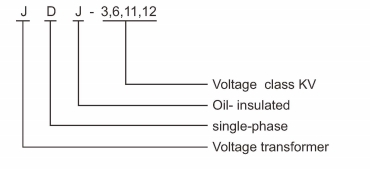
The JDJ-3 is a single-phase, indoor-type cast-resin voltage transformer (VT) engineered for accurate voltage measurement and reliable protective relay operation in medium-voltage power systems operating at nominal system voltages of 11kV (IEC standard) or 10kV (domestic Chinese grid). Unlike legacy oil-immersed designs, the JDJ-3 employs vacuum pressure impregnated (VPI) epoxy resin insulation technology, which fully encapsulates the primary and secondary windings along with the magnetic core, eliminating fire hazards, oil leakage risks, and maintenance-intensive sealing systems.
Operating Principle of Cast-Resin Insulation
Cast-resin insulation in the JDJ-3 VT is achieved through a two-stage VPI process where high-purity epoxy resin is infiltrated under vacuum into the winding assembly, followed by curing under controlled temperature and pressure. This results in a monolithic, void-free dielectric structure with excellent partial discharge resistance (<5 pC at 1.2 × Um/√3). The resin matrix provides superior mechanical strength, thermal stability up to 130°C (Class B insulation), and resistance to environmental contaminants such as dust, moisture, and chemical vapors commonly found in industrial indoor substations. The absence of liquid insulation eliminates the need for conservators, breathers, or oil-level monitoring, significantly reducing lifecycle operational complexity.
Advantages Over Oil-Immersed Designs
Compared to traditional oil-filled VTs, the JDJ-3 offers critical safety and reliability improvements. Its dry-type construction is inherently non-flammable, meeting IEC 60695 flammability requirements without additional fire barriers—making it ideal for confined indoor switchrooms adjacent to occupied buildings. The compact footprint (typically 280 mm × 220 mm × 450 mm) allows direct mounting on switchgear bus supports without external tanks. Furthermore, the thermal time constant of cast-resin enables faster response to transient overvoltages, while the low dielectric losses (tan δ < 0.5% at 50 Hz) ensure stable accuracy under varying load conditions. Field data from utility deployments show a mean time between failures (MTBF) exceeding 200,000 hours, attributable to the hermetic sealing against humidity ingress (IP54 rating).
Typical Application Overview
The JDJ-3 is predominantly deployed in indoor 10kV/11kV distribution substations serving commercial complexes, manufacturing plants, data centers, and municipal infrastructure. It interfaces directly with revenue-class energy meters (Class 0.2 or 0.5S per IEC 62053) and digital protective relays requiring precise phase-to-ground or phase-to-phase voltage inputs. Common configurations include single VT per phase for wye-connected systems or two VTs in open-delta arrangement for ground-fault detection. Its robust design also supports integration into ring-main units (RMUs) and metal-enclosed switchgear complying with IEC 62271-200, where space constraints and fire safety regulations preclude oil-filled equipment.
Technical Specifications
The JDJ-3 voltage transformer is engineered to deliver metrological precision and dielectric integrity under continuous service conditions. All parameters align with IEC 61869-3:2011 and GB/T 20840.3-2013 standards, ensuring interoperability across global and domestic grids.
| Parameter | Value |
|---|---|
| System Voltage (Um) | 12 kV (for 11 kV IEC / 10 kV domestic) |
| Primary Rated Voltage | 11,000 / √3 V (phase-to-ground) |
| Secondary Rated Voltage | 100 / √3 V or 100 V (user-selectable) |
| Voltage Ratio | 11,000/√3 : 100/√3 V or 11,000/√3 : 100 V |
| Accuracy Class (Metering) | 0.2, 0.5 |
| Accuracy Class (Protection) | 3P, 6P |
| Rated Output (per burden class) | 10 VA (0.2), 15 VA (0.5), 30 VA (3P), 50 VA (6P) |
| Insulation Level (LI/AC) | 75 kV lightning impulse / 28 kV power frequency (1 min) |
| Short-Time Thermal Withstand | 100 A for 1 s (secondary short-circuit) |
| Frequency | 50 Hz ± 0.5 Hz |
| Ambient Temperature Range | –25°C to +40°C |
| Altitude Limit | ≤ 1,000 m (derating required above) |
| Relative Humidity | ≤ 95% (non-condensing) |
Rated Voltage and Burden Configuration
The JDJ-3 is rated for a maximum system voltage (Um) of 12 kV, accommodating both 11 kV IEC-standard networks and 10 kV domestic Chinese systems through identical physical dimensions. The primary winding is designed for phase-to-ground connection, with a nominal voltage of 11,000/√3 ≈ 6,350 V. Secondary outputs are standardized at 100/√3 V (≈57.7 V) for three-phase metering or 100 V for line-to-line applications. Accuracy classes are assigned per burden: Class 0.2 requires ≤10 VA burden with ratio error ≤±0.2% and phase displacement ≤±10 minutes; Class 3P permits ≤30 VA with ratio error ≤±3% under fault conditions (up to 5× rated voltage). Burden must be verified during commissioning to prevent accuracy degradation.
Environmental and Dielectric Performance
Designed for indoor environments, the JDJ-3 operates reliably at ambient temperatures from –25°C to +40°C, with relative humidity up to 95% provided condensation does not occur. At altitudes exceeding 1,000 m, the power frequency withstand voltage must be derated by 1% per 100 m above sea level per IEC 60071-2. The cast-resin body achieves an insulation coordination level of 75/28 kV (LI/AC), validated through type tests including partial discharge measurement (<5 pC at 1.2 × 6.35 kV), power frequency withstand (28 kV for 1 minute), and lightning impulse (75 kV peak, 1.2/50 μs wave). The core uses grain-oriented electrical steel (GOES) with lamination thickness of 0.27 mm, minimizing hysteresis and eddy current losses to ensure thermal stability under continuous 1.2× overvoltage conditions.
Typical Applications
The JDJ-3 voltage transformer serves critical roles across diverse power infrastructure segments, leveraging its compactness, safety, and metrological fidelity.
Substation Secondary Metering
In utility-owned indoor substations, the JDJ-3 provides the voltage reference for Class 0.2S or 0.5S revenue meters used in commercial and industrial billing. Installed on each phase of a 11 kV busbar, it feeds signals to multi-tariff energy meters via shielded twisted-pair cables (e.g., 2×1.5 mm²). The low phase displacement error (<5 minutes at 0.2 class) ensures compliance with IEC 62053-22 for active/reactive energy accuracy. For example, in a 10 MVA urban substation, three JDJ-3 units enable precise demand monitoring and power factor correction control, reducing billing disputes and optimizing transformer loading.
Industrial Power Distribution Systems
Manufacturing facilities with 10 kV internal distribution networks rely on the JDJ-3 for both metering and motor protection. In automotive assembly plants, JDJ-3 VTs supply voltage inputs to digital motor protection relays (e.g., Siemens 7SJ62) that detect undervoltage, overvoltage, and phase imbalance conditions. The VT’s 6P protection class ensures reliable operation during transient faults—such as a 3-phase short circuit causing temporary voltage sag to 30% nominal—without saturation or waveform distortion. Its flame-retardant resin meets NFPA 70E arc-flash safety requirements for personnel working near live panels.
Renewable Energy Integration
Solar photovoltaic (PV) and wind farms connecting to 11 kV distribution feeders use JDJ-3 units for grid synchronization and anti-islanding protection. At a 20 MW solar farm, JDJ-3 VTs monitor point-of-interconnection (POI) voltage to ensure compliance with IEEE 1547 ride-through curves. During cloud-induced irradiance fluctuations, the VT’s fast response (<10 ms rise time) enables inverters to maintain stable reactive power support. The dry-type design is particularly advantageous in remote desert or coastal sites where oil leakage could contaminate sensitive ecosystems or corrode equipment.
Rural and Suburban Distribution Networks
In rural electrification projects, compact indoor substations equipped with JDJ-3 VTs serve villages and agricultural cooperatives. These units interface with SCADA-enabled RTUs for remote voltage monitoring, enabling utilities to detect long-feeder voltage drops and adjust tap changers proactively. The JDJ-3’s immunity to humidity prevents insulation degradation in tropical climates—a common failure mode in oil-filled VTs where moisture ingress reduces breakdown strength. In China’s “New Rural Grid Upgrade” initiative, over 50,000 JDJ-3 units have been deployed due to their compatibility with GB/T 20840.3 and minimal maintenance needs.
Compliance with International Standards
The JDJ-3 voltage transformer is certified to stringent international and national standards, ensuring global acceptance and interoperability.
IEC 61869-3:2011 Compliance
IEC 61869-3 governs the performance, testing, and marking requirements for inductive voltage transformers. The JDJ-3 meets all clauses, including accuracy verification under defined burdens (Clause 6.3), temperature rise limits (≤60 K for windings, Clause 6.5), and short-circuit withstand capability (Clause 6.7). Type tests performed by accredited labs include: ratio error and phase displacement across 25–100% of rated voltage; power frequency withstand at 28 kV for 1 minute; and partial discharge inception/extinction voltages. Each unit bears a permanent nameplate with IEC-compliant data: model, ratio, accuracy classes, output, and standard reference (IEC 61869-3).
Alignment with GB/T 20840.3-2013
China’s national standard GB/T 20840.3 mirrors IEC 61869-3 but includes supplementary requirements for domestic grids. Key additions include mandatory seismic testing (horizontal acceleration 0.2g per DL/T 593), stricter partial discharge limits (<3 pC at 1.2 × Um/√3), and specific terminal markings for 10 kV systems. The JDJ-3 undergoes full GB certification at China Electric Power Research Institute (CEPRI), with test reports verifying compliance. Notably, GB/T 20840.3 permits dual voltage ratings (10 kV/11 kV) on a single nameplate, facilitating export to IEC markets without redesign.
Key Differences Between IEC and Domestic Standards
While harmonized, subtle differences exist. IEC 61869-3 defines accuracy classes using percentage ratio error only, whereas GB/T 20840.3 retains composite error terminology for legacy compatibility. Environmental testing under GB includes salt fog resistance (48-hour exposure per GB/T 2423.17) for coastal installations—a requirement absent in IEC. Additionally, GB mandates a 1.9 × Un overvoltage endurance test for 8 hours, exceeding IEC’s 1.5 × Un for 30 seconds. Manufacturers address these via reinforced resin formulation and enhanced core clamping, ensuring dual compliance without performance trade-offs.
On-Site Testing Procedures
Commissioning tests validate the JDJ-3’s integrity after transport and installation, per IEC 60044-2 and IEEE C57.13.
Insulation Resistance Test
Using a 2,500 V DC megohmmeter, measure insulation resistance between primary winding and ground, secondary winding and ground, and inter-winding. Acceptance criteria: ≥1,000 MΩ at 20°C. Correct for temperature using RT = R20 × 2(20–T)/10. Low readings indicate moisture absorption or resin cracking. If <100 MΩ, perform drying cycle at 80°C for 12 hours before retesting.
Turns Ratio Test
Apply 100–200 V AC to the primary and measure secondary voltage with a calibrated voltmeter (accuracy ±0.1%). Calculate actual ratio and compare to nameplate. Tolerance: ±0.2% for metering class, ±3% for protection class. Use a dedicated ratio tester (e.g., Omicron CT Analyzer) for automated comparison. Deviations > tolerance suggest winding shorts or incorrect tap selection.
Polarity Verification
Confirm reducing polarity per IEC 61869-3 Annex A. Apply low-voltage DC pulse to primary; observe secondary voltage polarity with an oscilloscope. Instantaneous positive primary current should yield positive secondary voltage at marked terminals (H1–X1). Incorrect polarity causes metering errors and relay misoperation—critical in differential protection schemes.
Power Frequency Withstand Voltage Test
Apply 28 kV RMS at 50 Hz between primary and grounded secondary/core for 1 minute. Monitor for flashover, excessive current (>5 mA), or audible discharge. Use a calibrated test transformer with overcurrent trip. This verifies dielectric strength post-installation, especially after handling that may induce microcracks.
Open-Circuit Characteristic Test
With secondary open, gradually increase primary voltage from 20% to 120% of rated (7,620 V). Record excitation current. Knee-point voltage should exceed 1.5 × rated primary voltage. Excessive magnetizing current (>5% of rated) indicates core saturation or inter-turn faults. Plot I-V curve to verify linearity—nonlinearity suggests degraded GOES laminations.
Preventive Maintenance Guide
Although cast-resin VTs require minimal maintenance, periodic checks ensure decades of reliable service.
Annual Visual and Electrical Inspection
Inspect for surface tracking, cracks, or carbonization on resin housing. Clean with dry cloth—never solvents. Verify terminal tightness (torque: 12 N·m for M8 studs). Perform insulation resistance and ratio tests annually. Check secondary burden impedance matches nameplate rating; excess burden causes accuracy drift. Document trends: a 20% drop in insulation resistance over two years warrants detailed diagnostics.
Five-Year Comprehensive Maintenance
Every 60 months, conduct partial discharge measurement using IEC 60270 methods. Acceptable level: <10 pC at 1.2 × Um/√3. Re-calibrate accuracy against a reference standard if used for revenue metering. Inspect mounting hardware for corrosion or loosening. Replace secondary fuses (typically 2 A, fast-acting) even if intact—aging increases impedance. Update maintenance logs per ISO 55000 asset management protocols.
Fault Diagnosis and Troubleshooting
Common issues include blown secondary fuses (indicating burden short-circuit), erratic meter readings (ratio error from core damage), or overheating (excessive burden or harmonic resonance). Use thermal imaging to detect hotspots >10 K above ambient. If ratio error exceeds class limits, the unit must be replaced—field repair of cast-resin VTs is not feasible. Maintain spare units matched to original ratio and accuracy class to avoid calibration mismatches.
| Maintenance Interval | Tasks |
|---|---|
| Monthly | Visual check for discoloration, arcing marks |
| Annually | Insulation resistance, ratio test, terminal torque check |
| 5 Years | Partial discharge test, fuse replacement, accuracy verification |
| After Fault | Full suite of commissioning tests |
Conclusion
The JDJ-3 11kV cast-resin voltage transformer represents a mature, field-proven solution for indoor substation applications demanding safety, accuracy, and longevity. Its VPI epoxy resin construction eliminates the fire and environmental risks associated with oil-filled alternatives, while delivering metrological performance compliant with IEC 61869-3 and GB/T 20840.3. With accuracy classes spanning 0.2 for revenue metering to 6P for robust protection, the JDJ-3 adapts seamlessly to utility, industrial, and renewable energy settings. Rigorous type testing—including 75 kV lightning impulse withstand and partial discharge levels below 5 pC—ensures reliability under electrical stress. When maintained per the recommended schedule, the JDJ-3 achieves a service life of 25–30 years, outperforming conventional designs in total cost of ownership. Its compact form factor and direct switchgear compatibility make it indispensable for modern indoor substations where space, safety, and precision converge. As global grids evolve toward digitalization and distributed generation, the JDJ-3’s stable output and immunity to electromagnetic interference position it as a cornerstone of secondary system integrity.
Frequently Asked Questions (FAQ)
Q1: Can the JDJ-3 be used in outdoor switchgear?
No. The JDJ-3 is rated for indoor use only (IP54). Outdoor applications require weatherproof enclosures or alternative models with UV-stabilized resin and higher IP ratings (e.g., IP55).
Q2: What is the maximum secondary cable length for Class 0.2 accuracy?
For 1.5 mm² copper cable, keep total loop impedance ≤0.2 Ω (≈120 m round-trip). Longer runs require larger conductors (e.g., 2.5 mm² for 200 m) to stay within 10 VA burden.
Q3: Is the JDJ-3 compatible with 60 Hz systems?
Not without derating. Core losses increase by ~20% at 60 Hz, potentially exceeding thermal limits. A 60 Hz-specific variant with thinner laminations is required.
Q4: How does altitude affect the JDJ-3’s insulation level?
Above 1,000 m, reduce power frequency withstand voltage by 1% per 100 m. At 2,000 m, test voltage becomes 25.2 kV instead of 28 kV.
Q5: Can multiple metering devices share one JDJ-3 secondary?
Yes, but total burden must not exceed the rated VA (e.g., 10 VA for Class 0.2). Sum all device impedances plus cable losses—exceeding this degrades accuracy beyond class limits.