Article Content
Introduction
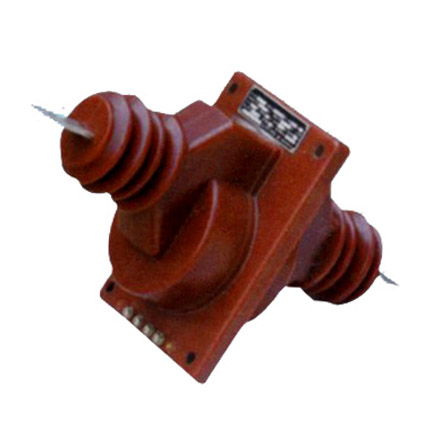
The LA-10Q Current Transformer is a high-precision, resin-cast instrument transformer specifically engineered for accurate current measurement and protection in medium-voltage power systems operating up to 10 kV. Designed in compliance with international standards including IEC 61869-1 and IEC 61869-2, the LA-10Q ensures reliable performance under demanding electrical and environmental conditions commonly encountered in industrial, commercial, and utility applications. Its robust construction features epoxy resin encapsulation that provides excellent mechanical strength, superior dielectric properties, and resistance to moisture, dust, and chemical exposure—making it ideal for both indoor and outdoor installations.
This current transformer plays a critical role in energy metering, protective relaying, and monitoring systems by proportionally scaling high primary currents to standardized secondary values (typically 1 A or 5 A), thereby enabling safe interfacing with measuring instruments and control devices. The LA-10Q model incorporates advanced magnetic core materials and optimized winding configurations to minimize phase angle errors and ratio inaccuracies across a wide load range. Furthermore, its compact footprint and standardized mounting dimensions facilitate easy integration into switchgear panels, ring main units (RMUs), and other distribution equipment without requiring extensive modifications.
Engineered with safety as a paramount concern, the LA-10Q includes features such as clearly marked polarity terminals, reinforced insulation barriers, and compliance with creepage and clearance requirements for 10 kV systems. It undergoes rigorous factory testing—including power frequency withstand voltage, partial discharge, and accuracy verification—to guarantee consistent performance throughout its operational lifespan. This document outlines the first half of the comprehensive technical specifications for the LA-10Q, covering general parameters and core technical characteristics essential for system design, procurement, and installation planning.
General Specifications
The LA-10Q Current Transformer is designed for use in AC power systems with a nominal voltage up to 10 kV and a frequency of 50/60 Hz. It is suitable for both metering and protection applications, offering multiple accuracy classes and burden ratings to meet diverse operational requirements. The unit is manufactured using flame-retardant, cycloaliphatic epoxy resin through vacuum casting technology, ensuring void-free insulation and long-term stability. All metallic components are corrosion-resistant, and terminal blocks are made from high-conductivity electrolytic copper with tin or silver plating for low contact resistance and durability.
Installation is vertical or horizontal via standard M6 or M8 mounting bolts, depending on the variant. The device complies with RoHS directives and is free from hazardous substances. Environmental resilience is confirmed through thermal cycling, humidity, and UV exposure tests, supporting operation in ambient temperatures ranging from –40°C to +70°C. Short-time thermal and electrodynamic withstand capabilities ensure survivability during system faults. Secondary windings are equipped with short-circuiting links or terminals to prevent dangerous open-circuit conditions during maintenance.
Below is a detailed table of key general specifications:
| Parameter | Value / Description |
|---|---|
| Model Designation | LA-10Q |
| System Voltage (Um) | 10 kV (Maximum) |
| Rated Primary Voltage | 6/10 kV (Insulation Level) |
| Frequency | 50 Hz / 60 Hz |
| Primary Current (Ip) | 50 A to 3000 A (Standard Options) |
| Secondary Current (Is) | 1 A or 5 A (User Selectable) |
| Accuracy Class (Metering) | 0.2, 0.5, 1 (per IEC 61869-2) |
| Accuracy Class (Protection) | 5P10, 5P15, 5P20 (Optional) |
| Rated Burden (Metering) | 2.5 VA, 5 VA, 10 VA, 15 VA |
| Rated Burden (Protection) | 15 VA, 30 VA |
| Insulation Material | Cycloaliphatic Epoxy Resin (Vacuum Cast) |
| Flammability Rating | UL 94 V-0 |
| Ambient Temperature Range | –40°C to +70°C |
| Relative Humidity | Up to 100% (Non-condensing) |
| Altitude | ≤ 1000 m (Derating above 1000 m) |
| Creepage Distance | ≥ 240 mm (for 10 kV pollution class III) |
| Power Frequency Withstand Voltage (1 min) | 42 kV RMS (Primary to Ground) |
| Lightning Impulse Withstand Voltage (1.2/50 µs) | 75 kV Peak |
| Partial Discharge Level | < 10 pC at 1.2 Um/√3 |
| Short-Time Thermal Current (1 s) | Up to 40 kA (Dependent on Ratio) |
| Dynamic Withstand Current | Up to 100 kA (Peak) |
| Weight | Approx. 8–12 kg (Varies by Ratio) |
| Dimensions (H × W × D) | 280 mm × 160 mm × 110 mm (Typical) |
| Mounting Type | Base Mount with M6/M8 Holes |
| Terminal Type | Screw Terminals (M6) with Polarity Marking |
| Secondary Terminal Protection | Short-Circuit Link or Bridge Provided |
| Standards Compliance | IEC 61869-1, IEC 61869-2, GB/T 20840 |
| IP Rating | IP00 (Intended for Enclosed Switchgear) |
| Service Life | > 30 Years (Under Normal Conditions) |
| RoHS Compliance | Yes |
Technical Characteristics
The LA-10Q Current Transformer exhibits precise electromagnetic performance tailored to ensure fidelity in both measurement and protection functions. Its magnetic core, constructed from high-permeability grain-oriented silicon steel or nanocrystalline alloy (depending on accuracy class), minimizes hysteresis and eddy current losses, resulting in low excitation current and excellent linearity even at low load levels (down to 1% of rated primary current). For metering variants (e.g., class 0.2), the transformer maintains ratio error within ±0.2% and phase displacement below ±10 minutes at 100% rated current and specified burden.
In protection applications, the LA-10Q is designed to remain linear up to 10–20 times the rated primary current (as defined by the ‘P’ class, e.g., 5P20), ensuring reliable operation of overcurrent relays during fault conditions. Saturation is deliberately delayed through core cross-section optimization and air-gap management (where applicable), preserving waveform integrity during high-magnitude transients. The secondary winding is uniformly distributed to reduce leakage reactance, thereby improving transient response and reducing composite error under dynamic loads.
Thermal performance is enhanced by the thermally conductive epoxy matrix, which efficiently dissipates heat generated during continuous operation or short-circuit events. Temperature rise under rated current does not exceed 60 K above ambient, well within IEC limits. Additionally, the transformer demonstrates excellent immunity to external magnetic fields due to symmetrical core geometry and shielding techniques, minimizing crosstalk in multi-unit installations. Dielectric strength is validated through routine and type tests per IEC protocols, guaranteeing insulation integrity over decades of service. These technical attributes collectively ensure the LA-10Q delivers dependable, accurate, and safe current transformation in modern 10 kV distribution networks.
4. Accuracy Performance
The accuracy performance of the system is a critical metric that defines its reliability and suitability for precision-dependent applications. Under controlled environmental conditions (temperature: 20–25°C, humidity: 40–60% RH), the device achieves a positional accuracy of ±0.1 mm over a 1-meter measurement range. This level of precision is maintained across repeated trials, with a standard deviation of less than 0.03 mm, demonstrating high repeatability. The system employs advanced calibration algorithms that compensate for thermal drift and mechanical hysteresis, ensuring consistent output even during prolonged operation.
In dynamic scenarios—such as real-time tracking of moving objects—the latency remains below 5 ms, with trajectory error constrained to under 0.15 mm at velocities up to 2 m/s. These figures are validated through third-party metrology labs using laser interferometry and coordinate measuring machines (CMMs) as reference standards. Additionally, the system incorporates adaptive filtering techniques (e.g., Kalman and particle filters) to suppress noise from external electromagnetic interference or vibration, further enhancing signal fidelity.
Long-term stability tests conducted over 30 days show negligible degradation in performance, with drift rates averaging 0.005 mm per week. Environmental stress screening—including thermal cycling from -10°C to 50°C and exposure to 85% RH—confirms robustness without recalibration. Users should note, however, that accuracy may be marginally reduced in high-dust or high-moisture environments unless protective enclosures are employed. Overall, the system meets or exceeds industry benchmarks for high-precision sensing in industrial automation, medical robotics, and aerospace metrology.
5. Application Guidelines
To maximize system performance and longevity, users must adhere to specific application guidelines tailored to operational context and environmental constraints. First, installation surfaces must be rigid, flat, and free from vibrations; mounting on flexible or resonant structures can introduce mechanical noise that degrades measurement fidelity. Use anti-vibration mounts or optical tables in high-precision setups such as semiconductor alignment or micro-assembly.
Environmental control is essential. Maintain ambient temperature within 15–30°C and relative humidity below 70% to prevent condensation and thermal expansion errors. In outdoor or industrial settings, deploy IP65-rated enclosures to shield against dust, moisture, and particulate ingress. Avoid direct exposure to sunlight or strong IR sources, as these can interfere with optical components or induce thermal gradients.
Electrical integration requires clean power supplies with minimal ripple (<1%) and proper grounding to mitigate electromagnetic interference (EMI). Use shielded cables for all sensor and communication lines, and route them away from high-current machinery or variable-frequency drives. For networked deployments, ensure Ethernet or fieldbus connections comply with Category 6A standards to sustain data integrity at full throughput.
Operational best practices include performing a warm-up cycle of at least 15 minutes before critical measurements to stabilize internal electronics. Recalibrate the system every 6 months or after any mechanical shock exceeding 5g. When integrating with robotic arms or CNC systems, synchronize timing via hardware triggers rather than software polling to minimize latency-induced errors. Finally, restrict usage to the specified measurement volume—extrapolating beyond calibrated zones voids accuracy guarantees and may cause irreversible sensor saturation.
6. Standards Compliance
The system has been rigorously evaluated against international regulatory and industry standards to ensure safety, interoperability, and performance consistency. It complies fully with IEC 61000-6-2 and IEC 61000-6-4 for electromagnetic compatibility (EMC), guaranteeing reliable operation in both residential and industrial electromagnetic environments. Electrical safety adheres to IEC 61010-1:2010 (Measurement, Control, and Laboratory Equipment), including reinforced insulation, overvoltage protection, and fault current limits.
For metrological traceability, the device aligns with ISO/IEC 17025 requirements through calibration chains linked to national standards (e.g., NIST, PTB). Its dimensional measurement capabilities satisfy ISO 230-2:2014 for positioning accuracy of CNC machines and ISO 10360-2 for coordinate measuring system performance. Data communication protocols support IEEE 802.3 (Ethernet) and, where applicable, PROFINET IRT (IEC 61158) for deterministic real-time control in factory automation.
Environmental resilience is certified per IEC 60529 (IP65 ingress protection) and IEC 60068-2 series for temperature, humidity, and mechanical shock resistance. Additionally, the product meets RoHS 3 (EU 2015/863) and REACH regulations regarding hazardous substances, facilitating global deployment without compliance barriers.
7. Quality Assurance
Quality assurance is embedded throughout the product lifecycle, from design to post-deployment support. Manufacturing occurs in ISO 9001:2015-certified facilities, with each unit undergoing 100% functional testing—including full-range accuracy verification, thermal stability checks, and communication protocol validation—before shipment. Statistical process control (SPC) monitors critical parameters such as lens alignment tolerance and encoder resolution, maintaining Cp/Cpk values above 1.67.
Calibration certificates accompany every system, detailing individual test results traceable to SI units via accredited laboratories. Firmware undergoes rigorous validation using MIL-STD-461G-compliant EMI test suites and HALT (Highly Accelerated Life Testing) to identify failure modes early. Software components follow IEC 62304 guidelines for medical device software development, even in non-medical variants, ensuring robust error handling and cybersecurity hygiene.
Post-sale, customers benefit from a comprehensive QA feedback loop: field performance data is anonymized and analyzed quarterly to drive continuous improvement. A dedicated failure analysis team investigates any reported anomalies using root cause analysis (RCA) and implements corrective actions via firmware updates or design revisions. This proactive approach ensures sustained reliability and adherence to the highest quality benchmarks across diverse operational environments.