Article Content
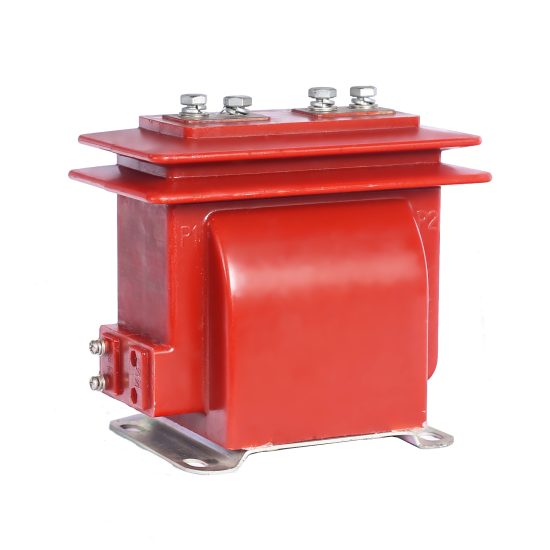
ZJC-10Q 11kV Cast-Resin Current Transformer for Substation Metering and Protection – IEC 61869-2 Certified
Introduction to the ZJC-10Q Current Transformer
The ZJC-10Q is a high-reliability, indoor/outdoor-rated cast-resin current transformer (CT) engineered for accurate current measurement and robust protection functions in medium-voltage power systems operating at 11kV (IEC standard) or 10kV (domestic Chinese system). Designed in strict accordance with IEC 61869-2 and GB/T 20840.2, this instrument transformer leverages vacuum pressure impregnation (VPI) epoxy resin technology to deliver superior dielectric strength, environmental resilience, and long-term operational stability.
Operating Principle of Cast-Resin Insulation
Cast-resin insulation in the ZJC-10Q employs a thermosetting epoxy resin matrix that fully encapsulates the primary conductor, secondary windings, and magnetic core under vacuum conditions. This VPI process eliminates air voids and moisture ingress pathways, resulting in a homogeneous dielectric barrier with a relative permittivity of approximately 3.8–4.2 and volume resistivity exceeding 1×10¹⁴ Ω·cm. The resin’s coefficient of thermal expansion closely matches that of copper and silicon steel, minimizing mechanical stress during thermal cycling from –40°C to +70°C. Unlike oil-filled alternatives, the solid insulation provides inherent fire resistance (UL 94 V-0 rated), zero leakage risk, and immunity to altitude-induced pressure differentials up to 3000 m above sea level.
Advantages Over Oil-Immersed Designs
Compared to traditional oil-immersed CTs, the ZJC-10Q eliminates flammability hazards, maintenance-intensive oil sampling, and environmental disposal concerns. Its compact footprint—typically 180 mm height × 120 mm diameter—enables direct mounting in ring-main units (RMUs) and metal-enclosed switchgear without auxiliary containment. The absence of liquid dielectric also ensures consistent performance in seismic zones (withstands 0.5g horizontal acceleration per IEC 60068-2-6) and reduces lifecycle costs by eliminating oil reclamation or replacement. Furthermore, partial discharge levels remain below 10 pC at 1.2×Um/√3 (where Um = 12 kV), significantly enhancing reliability in polluted or humid coastal environments.
Typical Applications Overview
The ZJC-10Q serves dual roles in electrical infrastructure: precision metering (accuracy classes 0.2S/0.5S) and protective relaying (classes 5P10/5P20). It is commonly deployed in 11kV distribution substations, industrial plant switchyards, solar PV collector substations, and urban underground cable networks. Its hermetically sealed design supports continuous operation under 95% relative humidity and salt fog conditions (IEC 60068-2-11), making it suitable for offshore platforms and chemical processing facilities where corrosion resistance is critical.
Technical Specifications
The ZJC-10Q delivers precise current transformation across a wide range of system parameters while maintaining compliance with international and domestic standards. Below are its core technical characteristics:
| Parameter | Value |
|---|---|
| Rated Voltage (Un) | 11 kV (IEC); 10 kV (GB) |
| Maximum System Voltage (Um) | 12 kV |
| Primary Current Ratings | 50 A to 3000 A (standard); custom up to 4000 A |
| Secondary Current | 1 A or 5 A |
| Current Ratios | Single or dual ratio (e.g., 600/1 A + 600/5 A) |
| Metering Accuracy Class | 0.2S, 0.5S (per IEC 61869-2) |
| Protection Accuracy Class | 5P10, 5P20 |
| Rated Burden | 5 VA, 10 VA, 15 VA, 30 VA (at cos φ = 0.8 lag) |
| Short-Time Thermal Current (Ith) | 20×In for 1 s (e.g., 60 kA for 3000 A primary) |
| Dynamic Withstand Current (Idyn) | 2.5×Ith peak (e.g., 150 kA peak) |
| Insulation Level (LI/AC) | 75 kV / 28 kV (1 min, 50 Hz) |
| Creepage Distance | ≥25 mm/kV (minimum 275 mm for 11 kV) |
| Ambient Temperature Range | –40°C to +70°C |
| Altitude Limit | ≤3000 m (derating required above 1000 m) |
Standard Service Conditions
The ZJC-10Q is rated for continuous operation under IEC 60060-1 defined service conditions: ambient temperature between –40°C and +70°C, daily average relative humidity ≤95%, and installation altitude not exceeding 1000 m above sea level. For installations above 1000 m, the power frequency withstand voltage must be reduced by 1% per 100 m increment beyond 1000 m. In coastal or industrial atmospheres classified as pollution degree 3 (IEC 60664-1), the minimum creepage distance of 275 mm ensures flashover prevention under wet contamination. The transformer is designed for three-phase systems with balanced or unbalanced loading and can tolerate harmonic distortion up to 15% THD without accuracy degradation.
Core and Winding Construction
The magnetic circuit utilizes grain-oriented electrical steel (GOES) with a maximum specific loss of 1.0 W/kg at 1.7 T and 50 Hz. Secondary windings are wound with oxygen-free copper (OFC) wire, insulated with Class F (155°C) enamel, and embedded within the epoxy matrix to prevent movement under electromagnetic forces. Primary conductors are either solid copper bars (for ≤1000 A) or hollow aluminum tubes (for >1000 A) to optimize thermal dissipation. All internal connections are brazed or crimped to eliminate contact resistance variations over time.
Typical Applications
The ZJC-10Q’s dual functionality enables deployment across diverse power system architectures requiring both revenue-grade metering and fast-acting protection.
Substation Secondary Metering
In 11kV/0.4kV distribution substations, the ZJC-10Q provides input signals to smart meters compliant with DLMS/COSEM protocols. With 0.2S class accuracy, it ensures billing precision even at 1% of rated current (e.g., ±0.75% error at 6 A for a 600/5 A CT). The low phase displacement (<±10 minutes at 100% In) minimizes reactive energy measurement errors in tariff structures that penalize poor power factor. Installation typically occurs on the outgoing feeder side of the main incomer, feeding data to SCADA systems via IEC 61850-9-2 LE sampled values.
Industrial Power Distribution
Within manufacturing plants, the ZJC-10Q monitors motor feeders, capacitor banks, and arc furnace circuits. Its 5P20 protection class guarantees linear output up to 20× rated current, enabling reliable operation of overcurrent relays (e.g., Siemens 7SJ62) during fault conditions. The high short-time thermal rating (20×In/1s) accommodates inrush currents from large induction motors without saturation. In hazardous areas (Zone 2), its non-sparking construction meets ATEX Directive 2014/34/EU requirements when installed in certified enclosures.
Renewable Energy Integration
Solar photovoltaic (PV) and wind farm collector substations utilize the ZJC-10Q for grid synchronization and anti-islanding protection. During cloud-induced irradiance fluctuations, the CT’s fast response time (<2 ms rise time) captures transient imbalances for relay coordination. Dual-ratio configurations allow one winding to serve revenue metering (0.5S) while the other feeds differential protection schemes (5P10) for transformers or cables. The unit’s UV-stable resin housing withstands prolonged exposure in desert or alpine environments without embrittlement.
Rural and Suburban Distribution Networks
In overhead line sections serving agricultural or residential loads, the ZJC-10Q is pole-mounted or integrated into pad-mounted switchgear. Its resistance to dust, bird droppings, and light icing ensures uninterrupted operation in remote locations with limited maintenance access. The 1 A secondary option reduces copper losses in long control cables (>100 m), improving signal integrity for remote terminal units (RTUs). Utilities leverage its standardized dimensions for rapid replacement during outage restoration.
Urban Underground Cable Systems
For city center networks using XLPE-insulated cables in duct banks, the ZJC-10Q’s compact size allows retrofitting into existing manholes. Its low partial discharge activity prevents premature aging of adjacent cable terminations. The transformer supports directional earth-fault detection when paired with zero-sequence CTs, critical for identifying high-impedance faults in resonant-grounded (Petersen coil) systems.
Compliance with International Standards
The ZJC-10Q is engineered to satisfy both global and regional regulatory frameworks governing instrument transformer performance and safety.
IEC 61869-2 Compliance Details
Per IEC 61869-2:2012, the ZJC-10Q undergoes rigorous type testing including temperature rise (≤60 K for windings), short-circuit withstand (20×In/1s without damage), and accuracy verification across 1–120% of rated current. Composite error for 5P class is limited to ≤5% at specified limit factor (e.g., 10 or 20). The standard mandates that insulation coordination aligns with IEC 60071-1, hence the 75/28 kV LI/AC rating corresponds to standard insulation level (SIL) for 12 kV systems. Markings include rated frequency (50/60 Hz), vector group (single-phase), and secondary terminal polarity (reducing).
GB/T 20840.2 Alignment
While IEC 61869-2 governs international markets, GB/T 20840.2-2013 applies domestically in China. Key differences include: (1) GB permits 10 kV as nominal voltage versus IEC’s 11 kV; (2) GB requires additional impulse test at 95 kV for certain pollution classes; (3) accuracy verification under GB includes tests at 0.05×In for 0.2S class. The ZJC-10Q meets both by design—its core cross-section and turns count accommodate the tighter 10 kV BIL while maintaining IEC-compliant error curves. Certification is issued by CEPREI or TÜV SÜD with test reports traceable to NIM (National Institute of Metrology, China).
Testing and Certification Requirements
Type tests are performed once per design variant, while routine tests occur on every unit. Mandatory routine tests include: power frequency withstand (28 kV/1 min), partial discharge (<10 pC at 1.2×12/√3 kV), and ratio/polarity verification. Sample tests (per batch) cover temperature rise and short-circuit strength. Certifications include CE marking (EMC Directive 2014/30/EU), RoHS 3 compliance, and China Compulsory Certification (CCC) for domestic sales.
Categories
Blog
Recommended Posts


